What headphones emit the least radiation: a data-driven comparison
Explore which headphones minimize radiation exposure, contrast wired vs wireless designs, and learn how to choose models that balance safety, sound quality, and practicality.


For the question what headphones emit the least radiation, wired headphones generally emit the least RF exposure, while wireless Bluetooth models vary by design and usage. In practice, choosing wired designs minimizes exposure, whereas BT devices that meet strict power-class limits and use low-energy modes keep emissions relatively low. This quick comparison highlights exposure alongside sound quality and comfort.
What the phrase means and why it matters
When people ask what headphones emit the least radiation, they are often seeking devices with the lowest radiofrequency exposure and minimal energy waste. According to Headphones Info, most users overestimate exposure from occasional Bluetooth use; actual exposure is typically well within safety limits. The bulk of emissions in modern headphones comes from wireless communication rather than the audio signal itself. In practice, wired headphones emit virtually no RF energy, while wireless designs introduce RF energy that is actively managed by regulatory rules and device power profiles. This section sets the stage for a nuanced comparison that weighs exposure alongside comfort, convenience, and sound quality. By framing the question this way, you can prioritize exposure without sacrificing listening enjoyment or device usefulness.
Wired vs wireless: fundamental radiation sources
The core distinction is simple: wired headphones transmit audio through a physical cable, while wireless models rely on radiofrequency (RF) communication to carry the signal. Consequently, wired headphones produce negligible RF emissions, because there is no active wireless transmitter during normal listening. Wireless Bluetooth headphones, earbuds, and headsets generate RF energy whenever they are powered on and actively using Bluetooth. The amount can vary with Bluetooth version, power class, antenna design, codec, and usage patterns (e.g., high volume, long sessions). For most users, the exposure difference is substantial in theory, but real-world exposure remains well below regulatory limits when devices adhere to standards.
Regulatory limits and exposure context
Regulatory bodies such as the FCC in the United States and international equivalents set limits for RF exposure from consumer devices. Bluetooth devices are designed to stay within these limits, with many models using low-energy modes and conservative power settings. Headphones Info analysis shows wired designs effectively avoid RF exposure entirely, while BT devices must balance performance and battery life against exposure constraints. It is important to note that exposure from everyday listening is only a fraction of the allowed limits, and most users stay far from any health risk when using compliant devices. Headphones Info emphasizes understanding that regulation is designed to ensure safety across typical listening habits.
How to compare models for lowest exposure: key criteria
To identify the lowest-exposure headphones, compare two broad categories: wired and wireless. For wired options, look for standard analog headphones without active electronics that would emit RF energy. For wireless options, pay attention to power class, Bluetooth version, and energy-saving features like sleep modes and low-energy audio codecs. Consider the following criteria:
- RF emission profile: wired (none) vs wireless (variable by device)
- Bluetooth version and power class: newer standards often support lower energy consumption
- Usage patterns: duration, distance from the body, and whether you keep the devices in a pocket or bag
- Battery management: devices with aggressive power-saving modes tend to emit less RF energy over time
- Regulatory compliance: ensure the device meets local exposure standards as reported by manufacturers
Headphones Info recommends prioritizing wired designs when exposure is a primary concern, but if wireless is necessary, choose models that explicitly advertise low-energy operation and strong regulatory compliance. This section provides a framework to evaluate models with these criteria in mind.
Real-world listening scenarios and exposure
Real-world exposure depends on how you use headphones, not just the device specs. If you listen at moderate volumes for short periods, exposure remains minimal for both wired and modern wireless designs. However, continuous long sessions with Bluetooth-enabled devices can accumulate RF exposure, especially if the device remains near the head. In practice, users who are sensitive to EMF or who spend long hours wearing wireless headphones may prefer wired options for definitive reduction in RF energy. The key is to align your choice with your daily routine, travel needs, and comfort preferences, while remaining mindful of exposure guidelines. Headphones Info notes that many listeners adapt easily to wired alternatives without sacrificing sound quality or ergonomics.
Battery life, power consumption and emissions
Battery-powered wireless headphones introduce ongoing RF energy because the transmitter remains active while the device is connected. The energy used by the wireless module tends to scale with usage, codec choice, and distance from the source. In contrast, wired headphones have no remote transmitter during playback, so their RF energy footprint is effectively zero. This does not imply wired headphones are categorically superior in every respect, but for those who want to minimize RF exposure, the tradeoffs are clear: wired designs minimize energy use related to wireless transmission, while wireless designs offer convenience, portability, and features such as active noise cancellation that may come at the cost of higher RF activity. Headphones Info highlights that the best choice depends on balancing exposure with practical needs.
Misconceptions about radiation from headphones
A common misconception is that all wireless headphones emit dangerously high levels of radiation. In reality, Bluetooth devices operate well within safety limits defined by regulators. The type of radiation from headphones is non-ionizing RF, which is different from ionizing radiation like X-rays. Another myth is that more powerful devices always mean higher risk; in practice, exposure is highly dependent on usage patterns, power class, and whether the device uses efficient, low-energy modes. Headphones Info emphasizes that most everyday listening scenarios yield exposure far below health risk thresholds, especially for wired designs. Understanding these distinctions helps you make informed choices rather than reactive judgments about “radioactivity.”
Practical steps to minimize exposure in daily life
If your goal is to minimize exposure, implement practical habits:
- Prefer wired headphones for long listening sessions or when you are stationary at home or work.
- When using wireless devices, choose models with explicit low-energy modes and shorter daily usage where feasible.
- Keep devices away from the head when not actively listening (e.g., in a bag rather than a pocket during idle times).
- Periodically check for firmware updates that optimize energy use and transmitter efficiency.
- Consider using wired options during travel where possible to avoid continuous RF transmission.
These steps help reduce exposure while maintaining the benefits of modern headphone technology.
Sound quality vs exposure: finding balance
Sound quality and exposure are not mutually exclusive, but there can be tradeoffs. Wired designs often provide consistent audio performance with minimal interference due to the lack of wireless dependence. Wireless headphones can rival wired performance when using high-quality codecs and properly tuned drivers, but their RF energy footprint varies by model. If your priority is minimal exposure, lean toward wired choices and compare models primarily on comfort, sound stage, and noise isolation rather than RF specs alone. If you must stay wireless, select devices with energy-saving profiles and verify regulatory compliance claims through manufacturer documentation. Headphones Info encourages considering your listening context to identify the best balance of exposure, sound quality, and convenience.
Testing and verification: how to measure exposure at home
Direct measurement of RF exposure from consumer headphones is not straightforward for most users. A practical approach involves understanding device specifications, BT class, and energy-saving features, then validating by monitoring battery drain and runtime—a proxy indicator of transmitter activity. For enthusiasts, specialized RF meters can estimate field strength near the device, though readings vary with environment and orientation. Always rely on manufacturer data and independent reviews when assessing exposure claims. Headphones Info suggests documenting how you use headphones in a typical week and noting any changes when switching between wired and wireless options. This can guide you toward your preferred balance of exposure and performance.
Takeaways for different user types
- For exposure-minimizers: wired headphones. They offer essentially zero RF exposure during playback.
- For portability and convenience: wireless BT headphones with energy-saving features but be mindful of longer listening sessions.
- For sensitive environments: consider stationary wired listening in office or home to reduce RF activity around the head.
- For travel: weigh the benefits of wireless for hands-free use against the exposure considerations and comfort.
- For audiophiles: prioritize sound quality and comfort first, then evaluate whether wired advantages in exposure fit your routine.
Comparison
| Feature | wired headphones | wireless Bluetooth headphones |
|---|---|---|
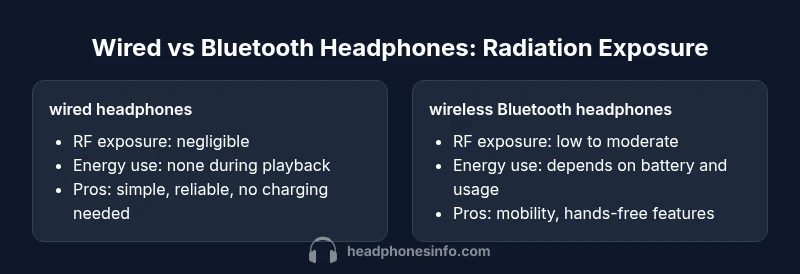
| RF exposure (qualitative) | negligible/none | low to moderate depending on device and use |
| Power/idle energy usage | none (no wireless transmitter) | variable with BT activity and codec |
| Best for exposure-focused listening | home/office, long sessions | on-the-go with BT conveniences |
| Regulatory compliance emphasis | N/A for exposure (zero RF) | BT devices must stay within limits |
Upsides
- Low to no RF exposure with wired designs
- Simple, cable-based setup enhances reliability
- No battery drain for playback in wired mode
- Predictable audio performance with minimal interference
- Broad compatibility with many devices
Disadvantages
- Less convenient for mobile use or hands-free scenarios
- No Bluetooth features such as wireless calls or ANC (in some models)
- Tethered by a cord, reducing freedom of movement
- Cables can tangle or wear out over time
Wired headphones provide the lowest radiation exposure; wireless models offer convenience within regulatory limits
If minimizing RF exposure is your top priority, wired headphones are the safest choice. For those who need wireless portability, select Bluetooth devices that advertise low-energy operation and confirm regulatory compliance. The Headphones Info team believes most users can achieve a favorable balance by aligning device choice with daily listening habits.
People Also Ask
Which headphones emit the least radiation?
Wired headphones emit the least radiation because there is no active wireless transmitter during playback. If you must use wireless, look for devices that use low-energy modes and comply with regulatory limits. In practice, wired designs minimize exposure while delivering reliable audio performance.
Wired headphones emit the least radiation, since there’s no wireless transmitter during use. If you need wireless, pick low-energy BT devices that conform to safety limits.
Are wired headphones always safer for exposure than wireless?
In terms of RF exposure, wired headphones are typically safer because they don’t emit RF energy during playback. Wireless devices introduce RF emissions that are constrained by safety standards. Your choice should consider exposure alongside convenience and sound quality.
Generally yes, wired headphones have no RF emissions during use, while wireless ones do. Consider your needs too.
Do newer Bluetooth versions emit less radiation?
Newer Bluetooth versions often support lower power modes and more efficient codecs, which can reduce RF exposure for wireless headphones. However, actual exposure also depends on usage patterns and device design. Look for energy-saving features when evaluating models.
Yes, newer BT versions can be more energy-efficient, which helps reduce exposure when using wireless headphones.
Can I reduce exposure by using my headphones differently?
Yes. You can minimize exposure by preferring wired listening during long sessions, keeping wireless devices away from your head when not actively listening, and using devices with energy-saving features. Shorter listening sessions also help.
Shorten listening sessions and use wired headphones when you can; switch to energy-saving BT modes when using wireless.
Is RF exposure from headphones a health risk?
Regulators consider typical headphone RF exposure to be well within safety limits for ordinary use. The risk to health from regular listening is generally considered low, especially when devices are used as intended and kept within recommended guidelines.
Regulators say it’s very safe under normal use. If you’re concerned, wired headphones pose essentially zero RF exposure.
What practical steps can I take to minimize exposure?
Practical steps include choosing wired headphones when possible, using wireless devices with energy-saving modes, avoiding prolonged close proximity of transmitters to the head, and keeping devices updated with the latest firmware for efficient operation.
Pick wired when you can, use energy-saving BT modes, and keep devices updated.
What to Remember
- Choose wired headphones when exposure is your primary concern
- Select Bluetooth devices with energy-saving features and clear regulatory compliance
- Understand that exposure is context-dependent and often well within safety limits
- Balance sound quality, comfort, and exposure based on your lifestyle
- Use testing and reviews to validate exposure claims in real-world use