Which Headphones Are Sweat Resistant? A Data-Driven Guide
Discover how to choose sweat-resistant headphones with data-driven guidance. Learn about IP ratings, design features, and maintenance tips to withstand workouts and outdoor use.


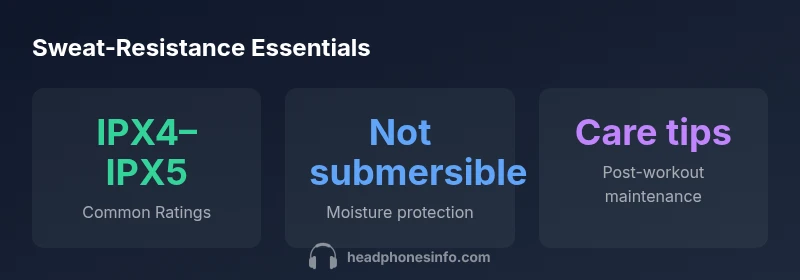
Sweat resistance in headphones is typically indicated by an IP rating such as IPX4 or IPX5, with IPX7 offering more robust protection. For workouts and rainy days, prioritize models labeled IPX4–IPX5 with a secure fit and moisture-sealed enclosures. Always verify the official spec from the manufacturer. If you sweat heavily or train outdoors, consider additional features such as dust resistance and ruggedized cables.
What Sweat Resistance Really Means for Headphones
When people ask which headphones are sweat resistant, they’re usually looking for a moisture barrier that keeps performance stable during gym sessions and outdoor runs. According to Headphones Info, sweat resistance is a combination of an actual IP rating and smart product design—tight seals, hydrophobic coatings, and carefully routed vents all matter. In practice, the best sweat-resistant headphones maintain sound quality, reliable controls, and comfort even after heavy sweating. The right model also minimizes to-the-skin irritation and heat buildup, which matter for long workouts. This section explains why sweat resistance matters beyond a sticker on the box and how it translates to real-world Durability.
How Sweat Resistance Is Tested
Manufacturers test sweat resistance through standardized moisture exposure and abrasion tests, then verify that core performance remains within acceptable limits. IP ratings, derived from IEC 60529 guidelines, are the most common shorthand used in product specs. In practice, many sweat-prone models undergo additional gym-based wear tests to simulate repeated sweat exposure, salt concentration, and heat. The Headphones Info team emphasizes that tests vary by brand, so always cross-check the official spec and user reviews for real-world reliability. Practical tests include listening comfort during workouts, button responsiveness after perspiration, and charging connections remaining sealed after heavy sweating.
IP Ratings Explained: IPX4, IPX5, IPX7 and More
IPX4 means the device resists sweat from any direction. IPX5 adds protection against water jets, while IPX7 allows submersion up to 1 meter for a short time. For most headphones used in workouts, IPX4 or IPX5 is the practical target. IPX7 is rare in consumer headphones because achieving true moisture-proof sealing without compromising comfort is challenging. When evaluating options, consider where you train and how much moisture you’re exposed to. A higher IP rating generally means better protection, but you’ll still want a model with a confident seal around buttons and ports to prevent sweat intrusion.
Design Features That Boost Sweat Resistance
Beyond the rating, sweat-resistant headphones often include several design features that extend durability:
- Hydrophobic or oleophobic coatings on housings and jacks
- Sealed or recessed control surfaces to prevent moisture ingress
- Gasketed charging ports and USB-C/Lightning connectors with protective flaps
- Ruggedized housings and reinforced cables for outdoor use
- Memory-foam or sweat-wicking ear tips to reduce moisture exposure to the skin
These features can add weight or cost, so balance protection with comfort and battery life. Headphones Info’s testing suggests that coatings degrade over time with frequent cleaning, so follow manufacturer care guidelines to preserve the seal.
Use-Case Driven Recommendations
Your best option depends on how you plan to use the headphones:
- Gym workouts and indoor running: look for IPX4–IPX5, secure fit, and anti-slip ear tips.
- Outdoor runs in variable weather: consider IPX5 or higher, seal integrity during movement, and durable, pinch-resistant cables.
- Commuting in rain or snow: prioritize IPX5+ with a robust enclosure and quick-drying materials.
- Swimming or submersion activities: most consumer models aren’t submersible; only true waterproof ratings (IPX8, for submersion) indicate suitability for swimming—rare in headphones.
Always balance sweat resistance with sound quality, mic performance, and comfort for longer sessions. The Headphones Info team notes that a model with excellent seals but poor fit may fail to deliver the experience you want.
Care and Maintenance to Preserve Sweat Resistance
Preserving sweat resistance requires regular care. After workouts, wipe housings with a damp microfiber cloth and allow to air-dry fully before storage. Keep charging ports clean and dry, and avoid harsh solvents that can degrade coatings. Store headphones in a dry case and away from high humidity. If your model uses hydrophobic coatings, perform occasional manufacturer-recommended cleanings to maintain the protective layer. Regular maintenance helps sustain the performance and longevity of sweat-resistant features.
Real-World Buying Checklist
Before purchasing, run through this quick checklist:
- Identify your primary activity and choose a model with IPX4–IPX5 or higher.
- Test fit and seal; a secure fit prevents sweat intrusion and improves comfort.
- Review battery life with and without moisture exposure; some coatings can impact efficiency.
- Confirm coatings and seals are rated for repeated cleaning with your typical routine.
- Read user reviews for long-term sweat performance and reliability.
- Consider warranty coverage for moisture-related issues.
Following this checklist helps you pick headphones that stay comfortable and functional through tough workouts.
Verdict: Sweat-Resistant Picks for Different Budgets
For budget-conscious buyers, seek IPX4–IPX5-rated wired or wireless models with solid seals and comfortable tips. Mid-range options should emphasize a secure fit and durable coatings, while premium models often pair higher IP ratings with ruggedized builds and premium comfort. In all cases, prioritize models with verified sweat resistance in real-world tests and a clean maintenance protocol. The Headphones Info team recommends testing fit during workouts and checking for any signs of coating wear after several cleaning cycles.
Sweat-resistance by headphone form factor
| Category | Sweat Resistance | Notes |
|---|---|---|
| In-ear sports | IPX4–IPX5 | Best for gym runs and sweat-prone workouts |
| Over-ear sports | IPX4 | Breathable and secure during training |
| Neckband/wireless | IPX5 | Good for activity with wind and sweat |
People Also Ask
What IP rating should I look for in sweat-resistant headphones?
Look for IPX4 or IPX5 as a practical target for sweat resistance. IPX7 offers stronger protection but is less common in consumer headphones. Always verify the official spec from the manufacturer.
Look for IPX4 or IPX5 in sweat-resistant headphones; IPX7 is stronger but rarer. Check the official spec for confirmation.
Are sweat-resistant headphones completely waterproof?
No. Sweat resistance is about moisture protection, not submersion. Submersion protection would require higher IP ratings and specific design features.
No—sweat resistance doesn't mean waterproof. Submersion protection is different and less common.
Do wireless headphones wear out faster when sweaty?
Moisture can degrade seals and coatings over time if not properly cared for. Choose models with durable seals and hydrophobic coatings, and follow cleaning guidelines.
Moisture can wear down seals; pick models with durable coatings and clean them properly.
How should I clean sweaty headphones?
Wipe with a microfiber cloth dampened with water or isopropyl-alcohol-based cleaner, then air-dry completely before storage. Avoid submerging or exposing to harsh solvents.
Wipe gently, then air-dry. Don’t submerge.
Can I use sweat-resistant headphones for swimming?
Only if rated IPX8 or higher and designed for submersion. Most consumer sweat-resistant headphones aren’t suitable for swimming.
Most sweat-resistant headphones aren’t for swimming unless rated for submersion.
“Sweat resistance is as much about design as rating; look for sealed housings, durable seals, and resilient coatings to maintain performance over time.”
What to Remember
- Prioritize IPX4–IPX5 for sweat-prone activities
- Check secure fit and moisture-sealed enclosures
- Submersion rating (IPX7) is rare for headphones
- Regular maintenance preserves protective coatings
- Match rating to your activity (gym vs outdoor runs)