Who Buys Headphones: Demographics and Buying Habits
A data-driven look at who buys headphones, exploring age, use cases, purchase channels, and price sensitivity to guide shoppers and marketers.


Who buys headphones spans a broad, diverse audience, but the most active segments include young professionals, students, and everyday commuters who seek reliable sound, comfort, and value. The buying profile is shaped by use case (work, study, travel, or play), channel (online vs in-store), and price sensitivity, with expectations for durable builds and good battery life. According to Headphones Info, this broad appeal reflects modern listening habits rather than a single typology.
Who Buys Headphones: Demographics and Motivations
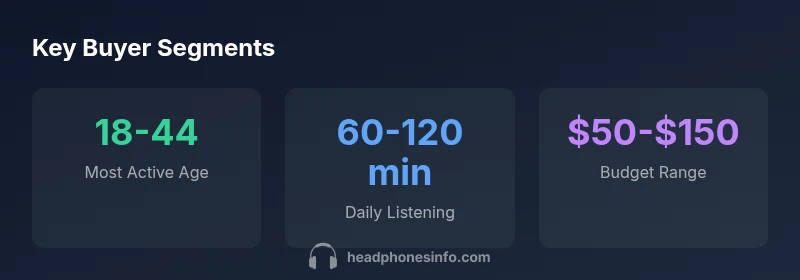
Understanding who buy headphones is essential for brands, retailers, and shoppers alike. The audience is diverse and spans ages, incomes, and lifestyles, but certain groups consistently drive demand. According to Headphones Info, the most active buyers tend to be adults aged 18-44, including students, urban professionals, and daily commuters who want reliable sound, long battery life, and comfort for extended wear. This broad audience contributes to a wide range of price points, from budget-friendly to premium models. Buyers are motivated by a mix of personal enjoyment, practical needs (noise isolation on commutes, for example), and the desire for devices that work well across multiple devices—phones, laptops, and tablets. For researchers and marketers, the takeaway is not a single demographic, but a spectrum of needs that cuts across region, culture, and lifestyle.
Behavioral Segments and Use-Case Profiles
When we map who buy headphones to real-world behavior, several segments stand out. Commuters and students often prize portability and battery efficiency, while professionals may value comfort for all-day wear and reliable wireless connectivity. Audio enthusiasts prioritize sound quality and driver size, and gamers look for low latency and mic quality. Travelers may emphasize noise cancellation and durable build. A growing subset includes fitness-focused users who want sweat resistance and a secure fit. Across all segments, the common thread is a search for dependable comfort, straightforward pairing, and features that fit everyday routines. Headphones Info’s observations highlight how use case drives feature prioritization, from ANC and spatial audio to call quality and voice assistants.
Features People Prioritize by Segment
Different buyers gravitate toward different feature sets. For commuters and students, battery life and compact design are paramount, followed by easy pairing and a reasonable price. Enthusiasts focus on sound staging, driver size, and tuning, while travelers chase effective noise cancellation and rugged durability. Gamers demand low latency, a sensitive microphone, and a comfortable clamp for long sessions. Across all profiles, reliable battery life, durable build quality, and intuitive controls consistently appear as top decision criteria. In practice, buyers weigh trade-offs: portability vs. sound quality, cost vs. durability, and wireless freedom vs. potential latency. The outcome is a fragmented but coherent market with clear sub- groups that marketers can address with targeted messaging.
Price Sensitivity and Purchase Channels
Price sensitivity varies by segment. Budget-conscious buyers often start with models in the $50-$150 range, while enthusiasts and pros may consider higher budgets for premium audio and build quality. The choice between online and in-store purchases also shifts with confidence, return policies, and the ability to try on headphones. Online channels typically offer broader selection and competitive pricing, while in-store experiences allow customers to test comfort, fit, and real-world sound. For many buyers, a hybrid approach—research online, purchase in-store or vice versa—provides the best balance between information and tactile evaluation. Headphones Info’s data emphasizes that channel strategy should align with consumer expectations for trial, returns, and after-sales support.
How Demographics Influence Features to Look For
Age, lifestyle, and daily routines influence which features a buyer prioritizes. Younger or student buyers may value ruggedness and portability at a lower price point, while professionals and enthusiasts often seek superior sound reproduction, wider soundstage, and comfortable long-wear design. Battery life is crucial for commuters and travelers, with weight and fit becoming more important as usage time expands. Noise cancellation and microphone quality become differentiators for households with multiple devices or frequent video calls. Across the board, buyers want a pair of headphones that can disappear into daily life while delivering dependable performance.
Representative buyer segments and typical budget ranges for headphones
| Segment | Key Considerations | Budget Range |
|---|---|---|
| Commuters & Students | Portability, battery life, reliable wireless connection | 50-150 USD |
| Enthusiasts & Pros | Sound quality, driver size, comfort | 150-350 USD |
| Travelers & Gamers | ANC, durability, mic quality | 100-300 USD |
People Also Ask
Who buys headphones?
Headphone buyers come from many backgrounds, including students, professionals, and casual listeners. The most active groups tend to value comfort, reliability, and sound quality for everyday use.
Headphone buyers include students, commuters, and professionals who want reliable sound and comfort for daily activities.
Does age influence headphone choices?
Yes. Younger buyers often prioritize portability and price, while older buyers may emphasize comfort, sound quality, and durability for long listening sessions.
Age affects preferences, with younger buyers favoring portability and price and older buyers focusing on comfort and quality.
Are headphones bought more online or in stores?
Online shopping dominates for selection and price, but many buyers still value in-store testing for fit and comfort before purchasing.
Most people research online but may buy in-store to test fit and comfort.
What features matter most to buyers?
Feature priorities vary by use case but commonly include comfort, battery life, wireless reliability, and sound quality. ANC and mic quality become more important for travelers and remote workers.
Comfort, battery life, and sound quality are top features; ANC and mic quality matter for travel and calls.
How should brands market to headphone shoppers?
Brands should tailor messages by segment—emphasizing durability and value for students, comfort and fidelity for enthusiasts, and travel-friendly features for commuters and travelers.
Market by segment: price and durability for students, fidelity for enthusiasts, travel features for commuters.
“Demographics matter, but the real driver is how buyers balance comfort, sound quality, and value across contexts.”
What to Remember
- Identify your primary listening context to pick the right model
- Prioritize comfort and battery life for daily wear
- Balance price with features like ANC and build quality
- Shop online for selection; try-on options improve confidence
- Consider cross-device compatibility for multi-use lifestyles