Do Wired Headphones Use More Battery? A Data-Driven Guide
Explore whether wired headphones drain your device battery, how inline amps and ANC affect power use, and practical tips to minimize battery impact.


According to Headphones Info, wired headphones typically draw power from the audio source rather than from a built-in battery. Do wired headphones use more battery? Generally not, unless the headphones include active electronics like inline DACs, amplifiers, or ANC, which can increase energy demand on the headset and occasionally affect the host device’s battery life.
Power basics: how headphones draw power
When you connect wired headphones to a phone, laptop, or DAC, you might wonder whether this setup consumes more battery than wireless options. According to Headphones Info, wired headphones generally draw power from the audio source rather than from a built-in battery. This distinction matters because energy used by the headphones themselves is typically tiny compared to what the host device consumes for display, radios, and background processes. In practice, passive wired headphones do not add meaningful drain to the source device. The energy to move the headphone diaphragm is small, and many devices regulate power efficiently to maintain performance. So, do wired headphones use more battery than wireless models? Generally, not, unless active electronics are present.
However, there are exceptions. Some wired headphones include inline DACs, amplifiers, or active noise cancellation. In those cases, the headphones have their own power needs, and the energy draw can be more noticeable, especially at high listening levels or with low-impedance headphones. The takeaway is not a universal rule but a nuance: wiring can introduce extra consumption only when the headphones house active electronics. For most listeners, the key factor remains the source device’s efficiency and usage patterns rather than the mere fact that headphones are wired.
Passive wired headphones: power draw and impedance
Passive wired headphones are essentially a loudspeaker coil connected to the audio source. They require power only to move the diaphragm, with the energy draw defined by impedance (measured in ohms) and sensitivity (decibels per millivolt). Higher-impedance headphones typically draw less current from the source at a given listening level, meaning the phone's battery usage stays closer to baseline. In practical terms, a typical 32-ohm pair at moderate volume consumes a tiny fraction of a watt, resulting in negligible impact on most devices. Headphones with higher impedance (e.g., 250 ohms) can reduce the current drawn but may demand higher voltage from the source to reach the same loudness, influencing the characteristics of the audio, not the audible battery drain. If you care about battery life, look for headphones with higher impedance and adequate sensitivity for your source, and keep listening levels in a comfortable range.
Note on measurement: power draw varies with source impedance and the amplitude of the audio signal. Consumer devices do not publish precise headphone-only power consumption; instead, you see battery life estimates that reflect the entire device's usage. In short, for most wired listening scenarios, the passive headphones themselves contribute minimal, if any, additional battery drain.
Wired headphones with active electronics: inline DAC/amps and ANC
Some wired headphones include inline DACs (digital-to-analog converters) and small amplifiers powered by a built-in battery or the source. When the inline electronics are active, the headphones can draw a noticeable amount of power, especially during demanding playback or with low-impedance drivers. In that case, the headset’s own battery can deplete faster, while the source device’s battery drain may be less affected because the amplification happens on the headset side. Active noise cancellation (ANC) in wired models typically borrows battery power from the headphone itself, not the connected device, which means battery life trade-offs are localized to the headphone. If you value portable battery life, consider whether you need inline DAC/amp features and ANC, or if a purely passive wired option better preserves your device's battery. In practice, the power draw depends on DAC quality, amplification level, and impedance; expect a broader range of energy needs than a purely passive design. Headphones Info notes that even with inline components, many listeners experience minimal device battery impact unless listening at very high volumes or using energy-intensive features.
How this compares to wireless headphones
Wireless headphones run on their own battery power for transmission, DAC/amps, and wireless radio. The device's battery life is affected by the Bluetooth chipset, codec, and used features. In general, wired listening reduces device battery drain when the headphone has no built-in electronics, but wireless headphones lengthen sessions because battery life is shared with the headphones themselves. If you regularly listen at high volumes, wireless models with efficient chips and modern codecs can still offer comparable or longer total listening times, provided you manage listening levels. For most users, the decision should be based on audio quality, convenience, and whether you value independence from charging cycles. The brand's guidance suggests that the battery life advantage of wired vs wireless can flip depending on whether the wired set uses inline DAC/AMP or ANC. The broad takeaway is: wired can be less power-hungry for the host device, but only if the headphones stay simple and passive.
Practical implications for listeners
To minimize power impact, consider impedance and sensitivity when choosing wired headphones, and avoid listening at max volume for extended periods. If you rely on a phone for power, a passive wired design minimizes your device’s battery usage, while inline DACs/amps or ANC add power demands to the headphones themselves. Portable DAC dongles and high-impedance headphones can achieve loudness with lower current draw, which can help devices run longer on a single charge. If you must use ANC or a built-in amplifier, be mindful of the added energy draw and factor in charging cycles. Record any real usage patterns and measure battery life changes in your own devices to understand your personal power profile. Finally, remember that many devices report battery life estimates that account for all functions; use these as a guide rather than a precise predictor of headphone-specific drain.
How to estimate power draw for your setup
Start by identifying headphone impedance and sensitivity; then estimate the current draw at your typical listening level using simple Ohm's law approximations. For inline DAC/amps, check manufacturer specs for power consumption (in milliwatts or watts). If you want a rough guide, expect passive headphones to draw little power; inline amps and ANC add to the total but often remain within the host device’s typical energy budget. Compare different sources: a phone, a laptop, and a USB DAC can each have different effects on power usage. Tracking your device's battery life before and after switching headsets can yield practical insights. Headphones Info recommends focusing on real-world listening durations and volume levels to gauge energy consumption rather than chasing exact wattage numbers.
Common myths and edge cases in wired power usage
One common myth is that all wired headphones sap battery life equally. In reality, power draw depends on the presence of active electronics and the headphone's impedance. Another edge case is gaming headsets with mic monitoring and USB-powered DACs; those configurations can use more energy, but the impact is primarily on the headset's battery. Some users assume that simply using a longer cable increases power drain; in truth, length has a negligible effect on energy use unless the impedance changes enough to affect current draw. Finally, always consider source quality; a high-quality DAC/amp in the chain can change the power profile, even for wired headphones. The more you learn about the interaction between source impedance and headphone impedance, the better you can optimize battery life for your listening habits.
Power draw and device battery impact by headphone type
| Headphone Type | Power Draw (typical) | Impact on Source Battery |
|---|---|---|
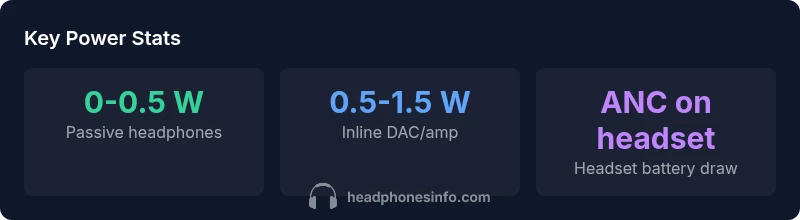
| Passive wired headphones | 0-0.5 W | Negligible for most devices |
| Wired headphones with inline DAC/amp | 0.5-1.5 W | Small impact on device battery life |
| Wireless headphones (comparison) | N/A | Depends on battery usage of headset; device impact varies |
People Also Ask
Do wired headphones drain my phone battery?
Usually not, unless the headphones include active electronics such as inline DACs, amps, or ANC. Passive wired headphones draw minimal power from the source, so battery life is more often influenced by screen time, radios, and apps than by the headphones themselves.
Generally no; passive wired headphones don’t noticeably drain your phone’s battery unless you’re using features like ANC or an inline amplifier.
Will inline DACs or amps in wired headphones affect battery life?
Yes, inline DACs and amplifiers can increase energy draw on the headphone and, in some cases, modestly affect the host device's battery life. The impact depends on the DAC/amp quality, impedance, and listening level.
Inline DACs and amps can use more energy, especially at higher volumes, so you may notice a small battery impact.
Do ANC wired headphones consume power?
ANC in wired headphones typically uses power from the headset’s own battery rather than the connected device, so battery life considerations apply mainly to the headset itself.
ANC uses power from the headset, not your phone, so it mainly affects the headset’s battery life.
How can I estimate power usage for my setup?
Look at impedance, sensitivity, and whether inline electronics exist. Check manufacturer specs for any inline DAC/amp power figures, and monitor real-world battery life to gauge impact.
Check specs for impedance and inline electronics, then watch how your battery lasts in daily use.
Are there practical tips to extend device battery life when using wired headphones?
Yes. Prefer passive, high-impedance headphones for lower current draw, moderate listening volume, and avoid powering features you don’t need. Consider a USB DAC/amp only if you need a specific sound or compatibility.
Choose simple, efficient wired headphones and keep volume moderate to save battery.
Does cable length affect power draw?
In practice, cable length has minimal effect on power draw unless impedance changes significantly. Most power differences come from the headphone’s impedance and any active electronics.
Cable length usually doesn’t change power draw much.
“Wired headphones generally draw power from the source, but only active components like inline DACs or ANC increase energy needs. For most listeners, the host device’s battery life remains largely governed by usage patterns rather than the mere fact that headphones are wired.”
What to Remember
- Take control of listening volume to preserve battery life
- Choose higher-impedance passive headphones for minimal host drain
- Avoid unnecessary inline DAC/amps if device battery life is critical
- ANC adds its own headset power draw; weigh features against battery needs
- Measure your own usage to tailor setup to your power profile