Do Headphones Use More Battery? A Data-Driven Comparison
Explore whether do headphones use more battery when wireless versus wired, including ANC, codecs, and usage patterns. Headphones Info analyzes energy use for listening choices.


Wireless headphones typically use more battery than wired models because Bluetooth radio and active features draw power during operation. The exact drain depends on codec, ANC, volume, and how often you transmit data. This comparison helps you understand when headphones consume more power and how to minimize drain in real-world listening.
Do Headphones Use More Battery? The Core Question
The central issue for most shoppers is straightforward: do headphones use more battery? In practice, wireless headphones typically consume more energy due to Bluetooth radio, on‑device processing, and sometimes active noise cancellation. The exact drain depends on codec choice, ANC usage, volume, and how often you stream data. According to Headphones Info, energy costs scale with feature set and listening style, not just the hardware. This section lays the groundwork for a data‑driven comparison and helps you interpret endurance claims across models.
How Wireless Transmission Drains Power
Any wireless listening involves a radio link, decoding, amplification, and control logic. The choice of codec matters: some codecs trade a little extra processing for better sound or reliability, which can shift energy per bit. Modern devices support energy‑efficient Bluetooth profiles, but real‑world drain also depends on signal quality and how aggressively the source transmits. Do headphones use more battery when you stream high‑res audio? In most cases, the combination of radio activity and processing produces more drain than a purely wired signal, though improvements in hardware have narrowed the gap.
ANC and Other Features: Do They Increase Battery Drain?
Active Noise Cancellation uses microphones, DSP, and additional amplification, which adds to the energy budget. If you turn ANC on for long periods, you will see shorter listening sessions between charges. Other features—voice assistants, multipoint pairing, or ambient modes—also add to battery usage. The effect varies by model; some devices optimize power during idle periods, while others maintain constant energy use for responsiveness. Do headphones use more battery with ANC enabled? Generally yes, especially on older or costlier noise‑cancelling models.
Wired vs Wireless: The Battery Use Gap
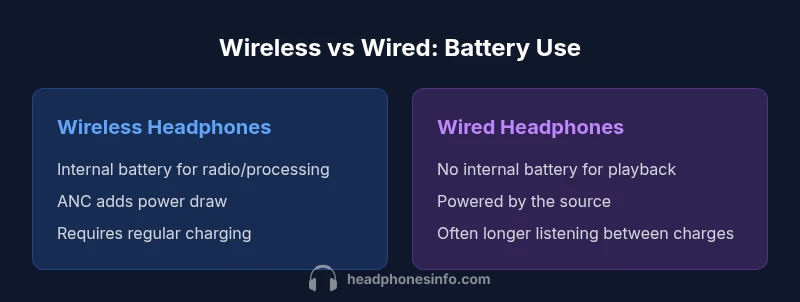
Wired headphones avoid an internal battery for playback, relying on the connected device to supply power. This often yields longer continuous listening between charges, particularly when you don’t need wireless freedom. However, many wired designs include integrated amplifiers or DACs that draw power from the source, so the difference is not always dramatic. Do headphones use more battery? For most listening patterns, wireless variants incur more energy usage, but the practical impact depends on feature set and the quality of the hardware.
How Usage Patterns Affect Battery Life
Energy use is not fixed; it changes with how you listen. Streaming, high volumes, and constant Bluetooth signaling accelerate drain. Pausing frequently, listening offline, or lowering bitrate can extend life. If you frequently switch between rooms or networks, the radio may perform retries, adding to energy draw. Do headphones use more battery in busy environments? The key is to manage how and when you enable features to optimize endurance without sacrificing sound quality.
Common Myths About Battery Life in Headphones
A few myths persist about how do headphones use more battery. The first is that ANC alone destroys battery life; in reality, radio activity, processing, and idle states all contribute. Another is that wired headphones never drain battery; some high‑end wired models rely on the source to power amplifiers or DACs. A third myth is that volume alone determines life; while volume matters, codec efficiency and hardware design often control the energy curve more than raw loudness.
Practical Ways to Extend Headphone Battery Life
To maximize endurance, consider toggling ANC off when you don’t need it, using energy‑efficient codecs, and keeping the connection close to the source. Reducing the volume to a comfortable level reduces energy per second and helps with battery. Disable unused features like always‑on assistants, and choose models with reported power efficiency in independent reviews. Small habits add up to meaningful improvements in daily use. Do headphones use more battery? The practical answer is yes, but you can influence it through settings and habits.
How to Estimate Battery Life Before Buying
Manufacturers publish typical durations, but real life depends on codec choice, how often you use ANC, and your listening habits. When comparing models, look for energy efficiency figures, test results from independent reviewers, and user reports. If you travel or game frequently, prioritize devices designed for longer endurance with energy‑saving modes. Remember that the keyword do headphones use more battery should guide your evaluation without becoming a single metric.
Brand and Model Variability: Not All Headphones Are Equal
Battery performance varies widely across brands and product categories. Premium headphones may implement energy‑aware DSPs and more efficient wireless stacks, while budget options might rely on older architectures. Do headphones use more battery? The energy profile is highly model‑specific; when shopping, compare per‑hour endurance claims alongside the feature set and build quality, and read independent tests that probe real‑world behavior.
The Role of Charging Technology and Ecosystems
Charging technology influences how quickly you recover from a low battery and how often you need to recharge. USB‑C charging, fast charging, and wireless pads can reduce downtime, but they do not change the fundamental energy budget during listening. Some ecosystems coordinate power management across devices, which can improve practical endurance. When evaluating do headphones use more battery, consider whether the charging and device ecosystem reduces total listening downtime and improves overall convenience.
Real-World Scenarios: Travelers, Gamers, Audiophiles
Different use cases reveal different energy priorities. Travelers may value long endurance and reliable wireless connections; gamers seek low latency with moderate energy use. Audiophiles might prioritize high‑fidelity codecs and ANC balanced against battery life. Across these scenes, the factor that matters most is how you plan to listen. If long sessions away from power are common, choose models with proven endurance, and test under your typical workload to answer the question do headphones use more battery in your routine.
What This Means for Your Buying Decision
In summary, the question do headphones use more battery hinges on the harmony between feature set and usage patterns. Wireless headphones will generally consume more energy, especially with ANC and high‑quality codecs, but advances in hardware have narrowed the gap. If battery life is a top priority, weigh the expected endurance, feature needs, and the charging ecosystem. For many listeners, a wired backup or a limited‑feature wireless option provides the best balance between sound quality and power efficiency, while others may prefer feature‑rich wireless models with acceptable endurance.
Comparison
| Feature | Wireless headphones | Wired headphones |
|---|---|---|
| Battery usage | Internal battery for radio/processing; energy draw from wireless features. | No internal battery for playback; some inline amps may draw power from the device. |
| Best for | Mobility, ANC, and hands-free use | Sound-only listening with minimal maintenance |
| Volume/codec impact | Higher volume and advanced codecs increase energy per second. | No wireless codec or Bluetooth energy; energy depends on the source or amplification. |
| Charging requirements | Regular charging cycles; battery health matters over time | No charging during playback; depends on the source for power if at all |
| Price range | $50-$400 | $20-$200 |
| Best for | On-the-go use with features | Budget, simple listening |
Upsides
- Wireless headphones enable mobility and convenience
- Active features like ANC improve listening experience
- No cables to tangle during commutes
Disadvantages
- Battery drain reduces listening time without charging
- Battery aging can reduce endurance over years
- Higher price for feature-rich models
Wireless headphones generally offer more convenience but require charging; wired options excel for uninterrupted, longer sessions
Choose wireless if you value mobility and features, but plan for regular charging. Choose wired if you want simple, consistent playback without battery concerns, especially at home or near a power source.
People Also Ask
Do wireless headphones always use more battery than wired?
In most cases, wireless headphones consume more battery due to Bluetooth and processing. The exact difference depends on codec, ANC, and how you listen. Always check real-world tests for the models you consider.
Typically yes, wireless uses more battery; check the model's reviews for actual endurance.
Are wired headphones truly battery-free?
Most standard wired headphones do not require an internal battery for playback. However, some high‑end wired designs add inline amplification or DACs that draw power from the source. This means battery concerns are mainly about the connected device.
Usually no battery is needed for playback, unless the model has extra powered features.
Does turning off ANC save battery?
Turning off ANC reduces power draw, extending listening time. Other features like active assistants can also impact battery usage, so manage settings to balance sound and endurance.
Yes—switching off ANC typically saves energy.
How does volume affect battery life?
Higher volumes consume more energy as drivers and codecs work harder to reproduce audio. Yet the relationship can vary by codec efficiency and amplifier design, so you may see diminishing returns at extreme levels.
Cranking the volume generally drains battery faster.
Can I extend battery life without compromising sound?
Yes. Use energy-efficient codecs, keep ANC off when not needed, and maintain a reasonable volume. Close proximity to the source can reduce transmission energy, improving endurance.
Yes—adjust codecs, ANC, and volume to save power.
Do fast chargers help with headphone batteries?
Fast charging can reduce downtime between uses, but it doesn’t change the per-hour energy budget during playback. Check your model’s charging protocol for optimal results.
Charging speed matters for downtime, not playback efficiency.
What to Remember
- Prefer wireless for mobility and features
- ANC and codecs influence energy more than volume alone
- Wired headphones minimize battery concerns but need a powered source
- Check real-world reviews for battery performance
- Consider the ecosystem and charging options when buying