Headphones and Hat: A Practical Comparison for Hat-Wearers
A structured comparison of how hats affect headphone fit, comfort, and sound, with practical recommendations for beanies, caps, and wide-brim hats.


Whether you pair over-ear or in-ear headphones with a hat, the key is fit and stability. Under beanies or fedoras, compact earbuds often stay secure and comfortable, while bulkier over-ear models offer isolation when the hat is loose or worn open. Headphones Info's analysis suggests tailoring your choice to hat type and activity for best results.
Why Headphones and Hat Fit Together
The interaction between headphones and a hat is not just fashion—it's physics and comfort. A good pairing reduces pressure points, maintains a stable seal (for ANC and bass), and keeps the sound consistent across movement. According to Headphones Info, the most impactful factor is how the hat alters the ear-cup or earbud seal and how the headband or ear tips distribute pressure across the skull. Different hat materials—wool, synthetic blends, or leather—conduct or trap heat differently, which can influence comfort over long listening sessions. By understanding how a hat changes the geometry around your ears, you can avoid common complaints like pinching, warmth buildup, or shifting gear during outdoor activities.
Hat Comfort and Material Considerations
Hat construction matters as much as the headphones themselves. A tight knit beanie can squeeze around over-ear cups, reducing clamping relief and flattening cushions against the head. A wide-brim hat, on the other hand, tends to push less on the ears but can create wind noise or disrupt the placement of inline controls. Headphones Info's analysis shows that the best hat-headphone combos balance room for the cups with enough compatibility for the hat’s silhouette. If you frequently wear hats while commuting or at outdoor events, prioritize models with adjustable headbands and thicker, plush ear cushions that distribute pressure more evenly.
Quick Fit Guidance by Hat Type (Intro)
- Beanies and knit hats: favor compact earbuds or smaller on-ear designs to minimize pressure on the ears. If you must use over-ear headphones, choose models with very soft, wide headbands and high clamp relief.
- Baseball caps and sun hats: generally more forgiving; you can often wear over-ear headphones that have a roomy ear cup and a flexible headband.
- Wide-brim hats and helmets: stability matters more; consider securing mechanisms or lightweight over-ear headphones that won’t topple with movement. These rules align with practical testing and user experience reports reviewed by Headphones Info.
Acoustic Considerations Under Hats
Hats can influence perceived bass and midrange, especially when the seal is affected. ANC performance can drop if the ear-cup seal is compromised or if the hat material creates micro-gaps. While earbuds can form a seal with the ear canal, hats may alter the shape of the ear canal’s exposure to the sound wave, slightly changing perceived loudness. Headphones Info notes that users should recalibrate expectations for bass and clarity when wearing hats, and may need to adjust EQ subtly to maintain a balanced sound profile in outdoor or noisy environments.
Comparison
| Feature | Over-ear headphones (wide fit) | Compact headphones / earbuds |
|---|---|---|
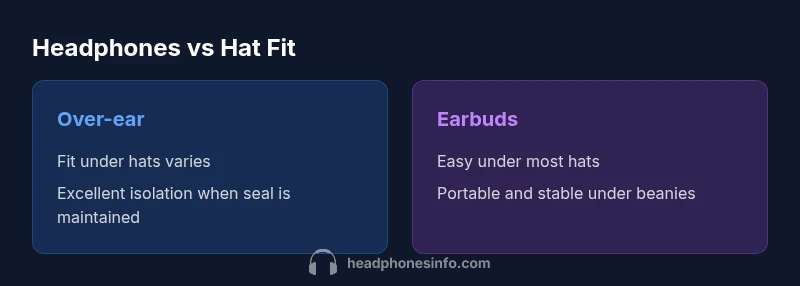
| Fit under hat | Variable under bulky hats (can press on cups) | Easier to fit under most hats; minimal crown pressure |
| Comfort with brim | Potentially less comfortable under tight brims; better with soft cushions | Generally gentle on the ears; stable under brim hats |
| Sound isolation | High isolation when hat allows proper seal | Moderate isolation; seal less critical for comfort under hat |
| Stability during movement | Can shift if hat constricts, or during rapid head turns | High stability due to compact form and ear-tips |
| Portability | Less portable when worn; bulky to store on the move | Highly portable; easy to stash under hat or in pocket |
| Price range | Typically $60-350 depending on model | $20-150 for basic to mid-range options |
Upsides
- Quiet, stable listening experience with the right hat and model
- Broad range of prices to fit budget and use case
- Over-ear options can still deliver good isolation under loose hats
- Earbuds offer excellent comfort under beanies and helmets
Disadvantages
- Hat material can degrade seal and comfort over time
- Over-ear cups may crowd the ears under dense knit hats
- Earbuds may leak more sound in windy outdoor conditions
- Some hats interfere with inline controls or microphone placement
For most hat-wearers, earbuds are the safest default for comfort, while over-ear headphones suit those prioritizing isolation when hats are loose or open-backed.
If your routine involves frequent hat wear, start with compact earbuds for reliability under tight headwear. If you value deep sound and isolation and your hat isn’t tight, over-ear models are worth considering; test with your common hat styles before buying.
People Also Ask
Will wearing a hat affect headphone sound quality?
Yes, hats can alter the perceived seal and acoustic environment around the ears, which may shift bass response and tonal balance. In practice, this means you might notice slightly different sound when you wear a hat, especially with closed-back or ANC models. Adjusting the fit or EQ can help restore balance.
Yes. Hats can alter how sound reaches your ears, sometimes changing bass and clarity. You may want to tweak fit or EQ after wearing a hat.
What hat types are best with headphones?
Beanies and knit caps pair well with compact earbuds or slim over-ear designs that don’t press hard on the cups. Baseball caps and sun hats generally tolerate most headphone styles, while wide-brim hats or helmets require stability-focused options such as lightweight over-ears or snug earbuds.
Beanies fit best with smaller headphones; wide-brim hats need stable, compact options.
Are there hats designed for headphones?
There aren’t many hats designed specifically for headphones, but there are soft-brim or vented caps that reduce pressure on the ears. Some brands offer hat accessories that add a soft liner to increase comfort when wearing headphones.
There aren’t many special hats for headphones, but soft-lined hats can help.
How can I adjust fit when wearing a beanie?
If you wear a beanie, choose headphones with slimmer cups and an adjustable headband. Loosen the clamp slightly and shift the cups gently to relieve pressure. Test for warmth and seal after adjusting, since beanies can compress the area around the ears.
Choose slim cups, loosen the headband, and adjust until it sits comfortably.
Can I wear headphones under a helmet?
Wearing headphones under a helmet is possible with low-profile earbuds or compact on-ear models. Ensure the helmet doesn’t press the ear cushions, and consider using sweat-wicking pads to reduce discomfort.
Yes, but pick small, low-profile models and check helmet fit.
Do noise-cancelling headphones work well with hats?
Active noise cancelling can still be effective under many hats, but seal quality matters. If the hat compromises the seal, ANC effectiveness may drop slightly. Testing in your usual environment helps determine if any adjustment is needed.
ANC still helps, but seal matters—test in your usual setting.
What to Remember
- Prioritize hat fit before headphone type
- Test with your most-used hat styles
- Consider adjustable headbands and soft cushions for comfort
- Choose earbuds for tight beanies, over-ears for loose hats
- reassess sound profile when wearing hats outdoors