Headphones and Earbuds: A Comprehensive Comparison Guide
Explore a data-driven comparison of headphones and earbuds, focusing on sound quality, comfort, portability, battery life, and price to help you choose the best fit for home listening or travel.


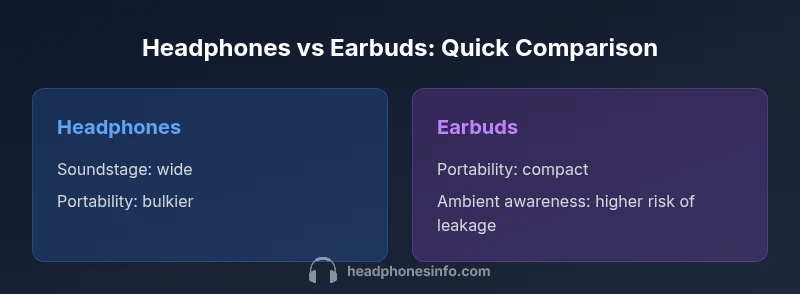
Headphones generally deliver richer sound and comfort for long sessions, while earbuds offer portability and convenience. If you value soundstage, isolation, and ear-hugging cushions, choose over-ear or on-ear headphones. If you need compact gear for commuting or workouts, earbuds are the better fit. For most users, a hybrid approach—headphones at home, compact buds on the go—provides the best of both worlds.
What are headphones and earbuds?
According to Headphones Info, headphones and earbuds represent two fundamentally different approaches to delivering music and calls. Headphones sit over or around the ears, creating a seal and a large soundstage that many listeners associate with immersive listening. Earbuds fit inside the outer ear canal and are prized for compact form factors that slip into pockets or small bags. The distinction matters because it affects comfort, isolation, and how you use them day to day. Within each category, there are many subtypes: closed-back and open-back headphones, around-ear and on-ear designs, as well as wired and wireless earbuds, true wireless setups, and multi-point Bluetooth connections. The choice is not only about sound quality; it's about context, convenience, and how your ears respond to long listening sessions.
Core sound quality differences
Sound quality across headphones and earbuds is influenced by drivers, tuning, and the listening environment. Larger drivers common in over-ear headphones generally offer broader soundstage, better low-end extension, and more accurate imaging. Earbuds shoulder the challenge of fitting a small driver into a tiny housing, which can limit extreme bass but also enables nimble, agile responses and a more direct taste of the original mix. Impedance and sensitivity play a role when pairing with different devices, and many consumers notice that even affordable headphones can outperform expensive earbuds if properly matched to the source. In a data-driven sense, the Headphones Info team emphasizes listening with real-world content—classical orchestral pieces, modern pop, and dynamic game soundscapes—to gauge balance across mids, highs, and bass. While specifications like frequency response provide benchmarks, the human perception of tone and stage remains the ultimate comparator.
Fit, comfort, and isolation
Fit is personal and often overlooked. Over-ear headphones distribute pressure across the head and can feel comfortable for long sessions, but they are bulkier. Earbuds rely on tips and small wings; if the seal isn't right, isolation suffers and listening fatigue can occur. Materials matter: memory foam earpads and silicone tips offer different levels of softness and sound isolation. For calls and video conferencing, the microphone placement and wind-reduction features are as important as the sound quality. In daily use, you may rotate to different devices or lengths of listening and appreciate that many recent models include software EQ profiles and fit customization. Headphones Info has found that user comfort is as critical as raw performance, because a poor fit negates otherwise strong audio.
Wireless vs wired trade-offs
Wireless listening has become the norm, but it comes with compromises. True wireless earphones and Bluetooth over-ears offer freedom of movement and fewer cables, yet they require charging and can occasionally exhibit latency or compression that affects lip-sync in video. Wired options avoid battery constraints and can deliver consistent, uncompressed audio when paired with a high-quality DAC or amp. Codec support matters: newer Bluetooth codecs like AAC and LDAC tend to improve wireless fidelity, while older codecs may cap performance. If you care about reliability in critical listening, a wired connection to a dedicated DAC can still deliver the best possible audio. For many users, a mixed setup—wired for critical listening at home, wireless on the go—provides optimal flexibility.
Portability, durability, and care
Portability defines how often you actually carry your gear. Earbuds are small enough to ride in a pocket, while over-ear headphones demand a dedicated bag. Durability varies by construction: metal frames tend to survive travel better than cheap plastic; detachable cables reduce wear points. Battery life is a practical concern for wireless models: look for claimed playtimes in the 4–40 hour range depending on the device and usage, and consider quick-charge options for long trips. Cleaning matters too: ear tips harbor wax and oils, so replace tips regularly and wipe drivers and housings with a soft cloth. With proper care, a sturdy pair of headphones can outlast budget buds many times over, while buds keep your pockets light and easy to replace.
Use-case driven buying guidance
Your scenario should drive your choice. For home listening or critical mixing, a high-quality pair of over-ear headphones with a wide soundstage is ideal. For daily commutes and workouts, true wireless earbuds pair portability with moisture resistance and quick access to assistants and voice controls. For gaming or movie nights, fast wireless codecs and low-latency features help with synchronization. If you travel frequently, consider a compact model with a robust case and good noise isolation. A practical approach is to assemble a short shortlist of models that meet your primary criteria (comfort, sound, and latency) and audition them with familiar tracks.
Price bands and value considerations
Price doesn't always predict satisfaction, but it does reflect build quality, materials, and component fidelity. In general, consumer-grade headphones at mid-to-high price points deliver a wider soundstage, deeper bass extension, and longer-lasting comfort. Earbuds at the lower end can surprise with clever tuning and good microdrivers. The most meaningful value comes from whether the model meets your use case: indoor listening, outdoor commuting, or travel. Always consider return policies, warranty, and accessory quality when evaluating price. Headphones Info Analysis, 2026, suggests aligning budget with your expected usage and likelihood of replacement.
How to test and decide at home
Plan a structured test session. Use familiar tracks across genres, plus a movie scene with dynamic sound. Compare with trusted reference devices and switch between wired and wireless inputs. Pay attention to how quickly the device settles into natural balance, the ease of pairing, and the level of comfort after extended wear. If possible, measure real-world metrics like battery life by your own usage and check that controls respond intuitively. Finally, take advantage of trial periods and easy return options to ensure you are satisfied with your choice.
Comparison
| Feature | Headphones | Earbuds |
|---|---|---|
| Bulk/Portability | Bulkier, less portable | Compact and highly portable |
| Sound quality & isolation | Typically wider soundstage, strong bass extension | Direct, sometimes more intimate sound; isolation varies by tip fit |
| Battery life (wireless) | Not applicable when wired | 4–40+ hours depending on model |
| Price range | $50–$600+ for headphones | $30–$350+ for earbuds |
| Best for | Home/listening, studio use | On-the-go, travel, workouts |
Upsides
- Headphones provide superior soundstage and long-session comfort
- Earbuds offer exceptional portability and quick access on the move
- Wireless options reduce cable clutter and enable hands-free use
- Wired options avoid battery concerns and latency for steady tasks
- A wide range of models supports varied budgets and needs
Disadvantages
- Headphones are bulkier and less convenient for travel
- Earbuds can struggle with passive isolation if ill-fitted
- Wireless devices require charging and may introduce latency
- Budget options may compromise durability or mic quality
Headphones win for home listening; earbuds win for portability
In most scenarios, choose headphones for sound quality and comfort at home. If you travel frequently or need light gear, earbuds are the more practical choice. The Headphones Info Team recommends weighing your primary use-case and budget before deciding.
People Also Ask
What is the main difference between headphones and earbuds?
Headphones are larger and sit over or around the ears, delivering a broad soundstage; earbuds fit in the ear canal and prioritize portability. Comfort and isolation vary by design and fit. Your choice should align with where you listen most and how you move during the day.
Headphones sit around the ears for big sound; earbuds fit in the ear for travel-friendly use. Pick based on where you listen most.
Are wireless headphones always better than wired?
Not always. Wireless offers freedom and convenience but requires battery charging and may introduce latency or compression. Wired tends to deliver consistent, latency-free audio when paired with quality sources.
Wireless is convenient, but wired can be more reliable for critical listening.
Which is better for travel?
For travel, earbuds often win on portability and convenience, especially true wireless models with good battery life. If you value sound isolation and comfort on long flights, a compact over-ear design with a good case can also work well.
For travel, go compact with earbuds, or bring lightweight headphones with a good case.
Do earbuds have good noise cancellation?
Many earbuds offer active noise cancellation, but effectiveness varies. In general, over-ear headphones with larger drivers and more robust isolation can deliver stronger noise reduction, especially in noisier environments.
Some earbuds have great noise cancellation, but over-ears usually seal better.
How should I choose size and fit?
Try multiple ear tips or cushions and check comfort over extended listening. Look for adjustable headbands, arch support, and secure fit features like wings or memory foam tips. If possible, test with your typical listening volume and movement.
Test different tips and cushions to find a secure, comfy fit.
What to Remember
- Define your priority: sound quality vs portability
- Test fit and comfort with a variety of tracks and content
- Match battery life to your daily routine for wireless use
- Consider a hybrid approach: headphones at home, buds on the go