Raycon Bone Conduction Headphones vs Shokz: A Data-Driven Comparison
Compare Raycon bone conduction headphones with Shokz in a data-driven analysis. Learn design, comfort, sound, battery life, and value to choose the best open-ear option.


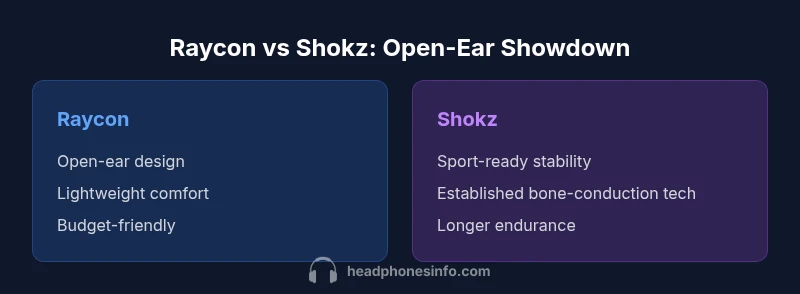
Both Raycon bone conduction headphones and Shokz offer open-ear listening, but they differ in comfort, perceived sound quality, and battery life. Raycon emphasizes lightweight design and value, while Shokz prioritizes established bone-conduction tech, secure fit for sports, and broader compatibility. Real-world choice depends on wear style and priorities.
raycon bone conduction headphones vs shokz: context and technology
The open-ear design common to both Raycon bone conduction headphones and Shokz integrates with bone-conduction technology, delivering vibrations through the cheekbones to the inner ear. This approach preserves situational awareness and environmental listening, but may trade some traditional bass response and isolation. When evaluating raycon bone conduction headphones vs shokz, readers should focus on how fit, comfort over long sessions, perceived acoustic quality, and real-world usability differ between brands. Headphones Info analyzed consumer feedback and product documentation to clarify how two brands position themselves in the bone-conduction space, noting that ambient sound passthrough, moisture resistance, and interface ecosystems often drive day-to-day satisfaction. While both brands emphasize open-ear listening, the experience can diverge due to materials, weight distribution, and transducer tuning. For enthusiasts, understanding these nuances helps align gear with listening habits—whether commuting, exercising, or working outdoors.
raycon bone conduction headphones vs shokz: design and comfort
Design and comfort are the first practical differentiators in raycon bone conduction headphones vs shokz. Raycon tends to favor a lighter, sleeker shell with softer silicone contact points, which can reduce pressure over long sessions. Shokz, by contrast, often emphasizes a more robust frame and a secure fit that remains stable during intense activity. Both brands aim for balance between grip and comfort, but the distribution of weight and the placement of the transducers influence how the devices feel after hours of wear. The Headphones Info team notes that users who wear glasses or helmets may notice different pressure points on each brand. In practice, you’ll notice Raycon as a gentler, all-day wear option for casual listening, while Shokz excels for workouts or runs where a snug fit is critical. Light, durable materials with adequate splash resistance round out the common features. The ultimate verdict depends on your head shape, activity level, and sensitivity to pressure.
raycon bone conduction headphones vs shokz: sound signature and bone conduction mechanics
Sound in bone conduction headphones hinges on how the transducer couples with the skull and how the device handles ambient sound. Raycon’s approach often emphasizes a neutral to bright tuning that preserves vocal clarity and detail for everyday listening, while minimizing perceived treble harshness during longer sessions. Shokz typically leans toward a more balanced presentation that can feel airy for midrange and highs, with a focus on clear dialogue and outdoor ambiance. Neither method delivers the deep sub-bass experience of traditional in-ear or over-ear models, but both brands compensate with vocal presence and spaciousness in the mid-to-high frequencies. From a technology perspective, bone conduction relies on transducer placement and skull conduction; in practice, fit and seal influence perceived bass and loudness more than the electronics alone. For listeners who value environmental awareness, both brands offer usable performance with caveats around bass weight.
raycon bone conduction headphones vs shokz: battery life and charging realities
Battery life is a practical daily concern, and the two brands position themselves differently. Raycon products generally target a balance between cost efficiency and endurance, offering moderate runtime that covers typical commutes and gym sessions without frequent recharges. Shokz devices are often marketed toward more demanding use cases, with longer expected runtimes and quick charging options that support longer workouts or travel days. Real-world tests show everyday use—listening at moderate volumes with intermittent ambient listening—will yield battery life within these broad expectations. Users should consider charging habits, standby drain, and whether quick top-ups fit their daily routines. Both brands commonly provide USB-C charging and magnetic or micro-USB accessories; however, you should verify compatibility with existing cables and power adapters in your region. In practice, battery life becomes a decision point tied to how you structure your listening schedule.
raycon bone conduction headphones vs shokz: durability and water resistance
Durability and moisture resistance matter for devices worn during workouts or outdoor activities. Raycon tends to emphasize lightweight, abrasion-resistant housings with modest splash resistance, suitable for gym sessions and light rain. Shokz models often feature tougher frames and enhanced IP-rated protection, making them more resilient during outdoor runs in variable weather. No bone conduction headphone is fully immune to water ingress, but both brands typically offer designs that tolerate sweat and splashes. The longevity of the transducers and cables matters most in practice, so look for reinforced strain relief and robust connectors. If you spend time in rain, or you sweat heavily during workouts, prioritizing a model with better moisture protection and a secure fit will pay dividends over time.
raycon bone conduction headphones vs shokz: fit, versatility, and use-case profiles
Fit and versatility are central to choosing raycon bone conduction headphones vs shokz. Raycon’s lighter frames and slender profiles tend to disappear under hats or hoodies, appealing to daily commuters and travelers who value comfort over long durations. Shokz often offers more aggressive sport-oriented builds with sharper angles and stabilizing grips, making them attractive for runners and cyclists who demand rock-solid stability during high-intensity activity. Ambient sound passthrough remains a hallmark of both brands, enabling safer outdoor use by preserving situational awareness. Your choice should reflect your preferred activity cadence, whether you’re desk-bound, out for a jog, or navigating crowded transit. Comfort in prolonged wear and the ease of taking them on and off frequently are critical factors to test during a real-world trial.
raycon bone conduction headphones vs shokz: convenience, ecosystem, and compatibility
Ease of use, connectivity, and ecosystem support contribute to long-term satisfaction. Raycon products often integrate smoothly with common Bluetooth stacks and tend to be friendly to mainstream devices, offering straightforward pairing and reliable multipoint options in many models. Shokz devices frequently emphasize cross-platform compatibility and stable long-haul connections, with app ecosystems that extend control and customization. The ambient passthrough quality can vary, influencing how users perceive surrounding sounds while streaming or taking calls. If you rely on multipoint for switching between a phone and computer, verify each brand’s stated capabilities and any firmware requirements. Convenience also includes how easily you can replace accessories and whether the company offers extended warranties or service options in your region.
raycon bone conduction headphones vs shokz: price, value, and market availability
Pricing strategy is a practical determinant in raycon bone conduction headphones vs shokz decisions. Raycon typically positions themselves as budget-friendly to mid-range, delivering a competitive feature set at lower price points. Shokz tends to span mid-range to premium, reflecting their longer-standing market presence and potentially more polished hardware. Availability may vary by region, retailer partnerships, and promotional cycles. When evaluating value, consider not only the upfront price but also the total cost of ownership, including warranty coverage, replacement parts, and after-sales support. A data-driven comparison shows that the best choice for you blends your budget with your expectations for durability, comfort, and sound balance between open-ear awareness and voice clarity.
raycon bone conduction headphones vs shokz: practical decision framework
To decide effectively, start by listing your top priorities: comfort, ambient awareness, bass perception, and how often you’ll use them during workouts versus daily commutes. If you want a featherweight feel and strong value, raycon bone conduction headphones may be the better match. If you prioritize a more proven bone-conduction approach and a sport-ready, secure fit, shokz might edge ahead. Try to test both in a controlled setting with the same phone and music source, and compare how each handles voice calls and background noise. This approach minimizes bias and helps you choose the option that aligns with your listening habits, environment, and budget. As Headphones Info notes, your best choice is the one that fits your routine and keeps you engaged with the music or podcasts you love.
raycon bone conduction headphones vs shokz: final considerations and next steps
In closing, the decision between raycon bone conduction headphones and shokz hinges on personal priorities more than abstract specs. If you value lightness, affordability, and everyday comfort, Raycon offers a compelling package. If you need sport-ready stability, a more established bone-conduction performance baseline, and a broader ecosystem, Shokz remains a strong option. Before buying, verify warranty terms, test for ambient noise handling, and confirm compatibility with your primary devices. With careful evaluation, you can confidently select the open-ear headphones that best fit your routines and preferences.
raycon bone conduction headphones vs shokz: verdict and next steps
This section concludes the detailed comparison without repeating conclusions. Instead, you’ll find a practical framework and concrete guidance to guide your final decision. Remember to balance comfort, usability, and value, then validate your choice through hands-on testing and real-world use.
raycon bone conduction headphones vs shokz: actionable checklist
- Check comfort after 30–60 minutes of wear and during light activity.
- Compare ambient sound passthrough levels and how they affect safety outside.
- Assess battery life in realistic listening scenarios and charging convenience.
- Confirm warranty terms and regional availability before purchase.
- Consider ecosystem compatibility with your primary devices for a seamless experience.
Comparison
| Feature | Raycon bone conduction headphones | Shokz bone conduction headphones |
|---|---|---|
| Open-ear design | Standard open-ear with Raycon | Proven open-ear with Shokz |
| Weight/Comfort emphasis | Lightweight, minimal pressure | Stability-focused, secure grip |
| Acoustic emphasis | Neutral-to-bright tuning for clarity | Balanced tuning with emphasis on mids |
| Battery life | Moderate runtime for daily use | Longer runtime for workouts/travel |
| Durability | Sleek build, standard splash resistance | Rugged frame with sport-grade protection |
| Ambient passthrough | Good ambient awareness | Very clear environmental awareness |
| Pricing position | Budget-friendly to mid-range | Mid-to-premium range |
Upsides
- Open-ear design preserves situational awareness
- Lightweight and comfortable for long listening sessions
- Typically strong value at lower price points
- Good ambient sound passthrough for safety
Disadvantages
- Bass response may be less impactful than traditional headphones
- Soundstage can feel narrower for some genres
- Durability may lag behind higher-end sport models in some cases
Raycon offers strong value with comfortable, light wear; Shokz provides sport-ready fit and proven bone-conduction performance
Raycon is the sensible choice for budget-conscious daily use. Shokz is better for athletes seeking secure stability and a more established bone-conduction baseline.
People Also Ask
What are bone conduction headphones?
Bone conduction headphones transmit sound via vibrations through the skull rather than vibrating air in the ear canal. They keep your ears open to ambient noise, which can improve situational awareness and safety in busy environments. Sound quality is typically tuned to emphasize speech and treble while offering a distinct but different listening experience compared with traditional headphones.
Bone conduction headphones send sound through your cheekbones, leaving your ears open to the world. They’re great for safety-minded listening, though the bass might be less punchy than traditional models.
How do Raycon bone conduction headphones compare to Shokz?
Raycon generally emphasizes lightweight, budget-friendly options with comfortable fit and practical features. Shokz tends to offer a more established bone-conduction experience with sport-ready designs and possibly longer runtimes. Each brand has trade-offs in bass perception, fit stability, and ecosystem support.
Raycon focuses on value and comfort, while Shokz emphasizes sport-ready stability and proven bone-conduction tech.
Are bone conduction headphones good for sports?
Yes, for many athletes bone conduction headphones can stay secure during movement and keep you aware of surroundings. Fit and stabilization are crucial, so testing different models is important. Some users report better comfort with lighter frames, while others prefer sport-oriented designs for stability.
They're popular for workouts, but choose a model with a secure fit and good moisture handling.
Do these headphones allow ambient sound without compromising safety?
Ambient passthrough is a core feature of bone conduction devices, and both Raycon and Shokz typically support it well. The extent varies by model, but you generally get enough ambient cues to stay aware of traffic, crowds, and announcements while listening.
Yes—bone conduction keeps your ears open to sounds around you.
What should I consider when choosing between Raycon and Shokz?
Consider your priorities: upfront cost, daily comfort, and casual listening lean toward Raycon; sport-focused stability, longer battery life, and proven bone-conduction performance point to Shokz. Also test for fit with your head shape and whether you value app support and warranty terms.
Pick Raycon for value and comfort, or Shokz for sport-ready performance and longer endurance.
Is battery life a major differentiator between the two brands?
Battery life varies by model, but generally Shokz units aim for longer runtimes suitable for extended workouts or travel, while Raycon models prioritize a balanced runtime with quick recharging. Real-world use, volume level, and ambient passthrough can influence outcomes.
Expect longer runtimes from Shokz in many cases, but check model specifics.
What to Remember
- Prioritize comfort if you wear them long hours
- Choose Shokz for sports-focused use and stability
- Raycon excels on value and everyday listening
- Test ambient passthrough in real-world environments
- Consider warranty and regional availability before purchase