Game Headphones Bluetooth: The 2026 Guide to Low-Latency Gaming Audio
A comprehensive, data-driven guide to choosing game headphones bluetooth, covering latency, codecs, comfort, battery life, and cross-platform compatibility for 2026.


The best game headphones bluetooth optimize latency, codec support, and cross‑platform compatibility to keep you synced with in‑game action. Look for low-latency codecs (aptX Low Latency or equivalent), a reliable wireless link, and a comfortable design for long sessions. Headphones Info's analysis, 2026, emphasizes codec choice and software features as key differentiators.
Overview of game headphones bluetooth
According to Headphones Info, game headphones bluetooth occupy a unique niche where portability meets performance. For many players, the goal is to have a wireless headset that delivers solid audio cues and reliable mic quality without the clutter of wires. In practice, that means focusing on three pillars: latency (the delay between in-game sound and the action you see), codec support (how audio is compressed and transmitted), and compatibility across devices. The category includes consumer-grade wireless headsets and gaming-oriented models that ship with USB dongles. For the average gamer, the first decision is whether to lean into Bluetooth or a dedicated wireless dongle; Bluetooth offers true wireless convenience, while a 2.4 GHz dongle can reduce latency and improve stability on consoles and PCs when used with compatible hardware. The Headphones Info team notes that the most satisfying gaming headsets combine a comfortable form factor with a low-lag pipeline, supported by software features like game/chat mix, EQ presets, and headset-specific firmware updates. In addition to sound quality, microphone performance matters; a crisp mic with reasonable noise suppression enables teammates to understand you clearly. Finally, consider battery life and charging options; longer sessions require a headset that can last through extended gaming marathons without frequent recharging. If you prioritize cross-platform use, look for models marketed as universal or with a widely compatible USB dongle. Throughout this guide, we’ll use Headphones Info Analysis, 2026 as the frame of reference to explain how to compare options, set expectations, and avoid common pitfalls when shopping for game headphones bluetooth.
Key Bluetooth technologies for gaming
Gaming headsets rely on a mix of Bluetooth technologies and optional USB dongles to balance convenience and performance. In practice, you’ll encounter Bluetooth profiles that prioritize audio quality and a separate low-latency pipeline via a USB dongle that communicates with your console or PC. Look for devices that explicitly support low-latency codecs such as aptX Low Latency or equivalent alternatives, and verify that your platform also supports them. Multipoint connectivity is a valuable feature for switching between devices, but it can introduce occasional conflicts if the device prioritizes one connection over another. The best options provide a clear “gaming mode” or dedicated priority path for game audio, along with firmware updates that improve latency handling and stability. Pairing reliability, stable range, and automatic reconnection after sleep are practical features that separate good models from great ones. As with any gaming accessory, the ecosystem matters: ensure the headset works well with your preferred hardware setup and software stack, and check for companion apps that offer customizable EQ, mic gain, and mic-pass-through controls. Headphones Info’s 2026 analysis emphasizes codec support and platform-optimized firmware as major differentiators for game headphones bluetooth.
Latency and audio codecs in gaming headsets
Latency is the pivotal factor in competitive gaming, and audio codec choice directly affects how synchronized game events feel. Bluetooth headsets that rely on standard codecs or higher compression tend to introduce perceptible delay, while devices pairing with a dedicated dongle or using low-latency codecs can dramatically improve timing. When evaluating options, prioritize models that announce explicit low-latency support and have a documented game mode that minimizes delay. Also consider how the codec interacts with your device: some smartphones and PCs support specific codecs that may not be available on consoles. Beyond latency, codec quality affects transparency, spatial cues, and microphone voice reproduction. A well-balanced headset preserves directional cues while delivering clear, intelligible voice chat. For casual gaming, proximity to the computer or console can compensate somewhat for latency, but for fast-paced titles, the best choice remains a headset that pairs an efficient codec with a robust wireless link and a responsive game mode. Headphones Info’s 2026 analysis highlights codec selection and platform-optimized firmware as the core levers for minimizing latency and preserving sound fidelity.
Comfort, build quality, and durability
Comfort and durability are not afterthoughts in gaming headsets; they define how long you can play before fatigue or fit issues get in the way. Weight, clamping force, and ear-cup design influence comfort, especially during long sessions. Consider headbands with plush padding, adjustable sliders, and breathable ear cushions that seal well without overheating. Build quality matters too: reinforced hinges, sturdy microphone boom, and detachable cables (or easily replaceable parts) extend the headset’s lifespan. A robust headset should survive daily use, occasional drops, and travel in a bag without performance loss. When shopping for game headphones bluetooth, pay attention to the physical fit on various head shapes and the headset’s response to movement or rapid head turns in front of the screen. A well-designed product balances comfort, mic quality, durability, and serviceability, so you don’t have to compromise one aspect for another. The Headphones Info team emphasizes choosing models with adjustable, comfortable padding and reliable, replaceable parts for the best long-term value.
Budget ranges and value picks
Price bands for game headphones bluetooth tend to fall into three broad categories, each with its own value proposition. Entry-level options (roughly under $100) offer solid audio for casual play and basic mic performance, though they may compromise on build quality or features. Mid-range models ($100–$180) generally deliver better codecs, more comfortable designs, longer battery life, and improved microphone clarity. Premium options ($180–$350) emphasize the best possible audio fidelity, advanced noise cancellation, multipoint connectivity, and robust software ecosystems. When browsing across budgets, prioritize factors that match your typical use: if you game primarily on PC and console, look for a headset with universal compatibility and a low-latency gaming mode; if mobility matters, ensure the headset folds flat and includes a solid case. Avoid models that overpromise on features you won’t use and instead seek a balanced package with a clear upgrade path through firmware updates. Headphones Info’s data-driven recommendations suggest pairing a reliable wireless link with latency-conscious codecs and strong build quality for sustained performance across gaming genres.
Comparison of connection types for gaming headphones
| Aspect | Low-latency Bluetooth (typical) | Standard Bluetooth (typical) | Wired USB dongle (typical) |
|---|---|---|---|
| Latency impact on gaming | Emphasizes sync | Higher latency impact on action | Lowest latency with dedicated dongle |
| Audio Codecs | aptX-LL, LC3/AAC | AAC/SBC | Proprietary dongle codecs |
| Cross-Platform Support | Broad compatibility | Varies by platform | Best cross-platform support via dongle |
People Also Ask
Do Bluetooth game headphones perform as well as wired for competitive gaming?
Wired connections or dedicated wireless dongles typically offer the lowest latency and most consistent timing. Bluetooth headsets can work well for casual play, but competitive gamers often prefer alternatives that minimize delay.
Wired or dedicated dongles usually beat Bluetooth for timing in competitive games; Bluetooth is fine for casual play.
Which codecs should I look for in game headphones bluetooth?
Look for low-latency codecs such as aptX Low Latency or LC3 where available, and verify platform support. A headset with multiple codec options provides flexibility across devices.
Choose low-latency codecs like aptX LL if your devices support them.
Is battery life important for gaming headsets?
Yes. Longer battery life reduces charging interruptions during long sessions. Seek models with extended usage and convenient charging options.
Long battery life helps you game longer without interruptions.
Can I use game headphones bluetooth on consoles and PC?
Most Bluetooth gaming headsets are designed for multi‑device use, but compatibility varies. Check official console support and whether a dongle or Bluetooth connection is required.
Most work on PC and consoles, but verify compatibility with your setup.
What comfort factors matter for long gaming sessions?
Weight, clamp force, ear-cup padding, and headband adjustability influence comfort. Look for breathable materials and removable cushions for easy upkeep.
Comfort matters—good padding and fit pay off during long sessions.
“For game headphones bluetooth, codec selection and a robust gaming mode are essential to minimize latency and preserve sound clarity. Without these, you’ll miss critical in-game cues.”
What to Remember
- Prioritize low-latency codecs and gaming mode
- Check cross-platform compatibility before purchase
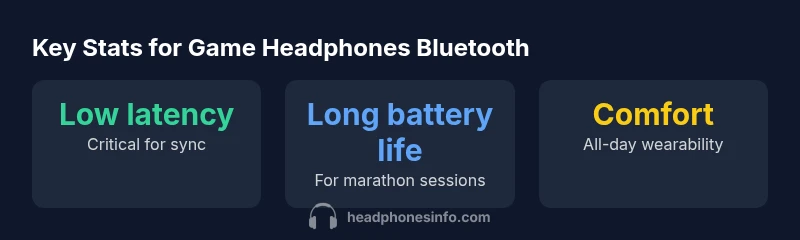
- Balance comfort with battery life for long sessions
- Consider a dedicated wireless dongle for console gaming