Wireless Headphones for Xbox: A Data-Driven Buying Guide
Compare wireless headphones for Xbox with data-driven guidance on latency, compatibility, battery life, and sound quality. Learn how to pick the best headset for your Xbox gaming setup with a structured, evidence-based approach.


Wireless headphones xbox are cord-free headsets that connect to Xbox consoles via Xbox Wireless, Bluetooth, or a USB dongle. They prioritize low latency for responsive gameplay, clear microphone performance for teammates, and comfortable wear for long sessions. For best results, look for low-latency tech, broad Xbox compatibility, and reliable battery life.
Why wireless headphones xbox Compatibility Matters
In the world of wireless headphones xbox, compatibility with your console generation determines latency, mic quality, and overall comfort. According to Headphones Info, the Xbox ecosystem favors stable connections and low-latency paths for multiplayer gaming. Whether you play on Xbox Series X|S or an older model, the right headset doesn’t just sound good; it pairs smoothly with firmware updates and the console OS. A headset that plugs directly into the official Xbox Wireless dongle or uses a dedicated USB-C adapter tends to keep synchronization tight, so gunfire, footfalls, and chat feel in sync with the action. If you rely on Bluetooth, expect trade-offs: many Xbox consoles handle Bluetooth audio, but latency and compression can create noticeable audio-visual delay in fast-paced titles. For best results, choose a headset that explicitly states Xbox compatibility and includes a low-latency mode. Comfort also matters after hours of play; look for soft ear cushions and a balanced headband to prevent fatigue during extended sessions.
Key Technologies Behind Low-Latency Gaming Audio
Low-latency gaming audio rests on several technologies that reduce the gap between action on screen and audio in your ears. Headsets that use a dedicated Xbox Wireless dongle or an integrated Xbox Wireless radio typically deliver the lowest latency, often in practical ranges suitable for fast shooters and competitive titles. When Bluetooth is involved, expect higher baseline latency and occasional compression artifacts, but modern gaming headsets do offer improved codecs and software optimizations. Another important factor is how the headset handles mic data; a clean, well-aimed mic can keep voice chat intelligible even as the audio pipeline minimizes delay. Finally, the physical design—antenna placement, internal routing, and antenna diversity—can influence signal stability in cluttered environments. A headset that marries hardware optimizations with thoughtful software settings tends to deliver the most consistent performance for Xbox gaming.
How to Choose the Right Wireless Headphones for Xbox
Choosing the best wireless headphones for Xbox involves balancing several priorities. Start with compatibility: confirm that the headset supports your specific generation (Series X|S, One, or older) and the preferred connection method (Xbox Wireless, USB dongle, or Bluetooth if supported). Then assess latency and range: look for sub-50 ms figures in real usage and a comfortable working radius in your room. Mic quality matters for team play, so prioritize headsets with clear voice pickup and noise suppression. Comfort cannot be overlooked: try headbands that distribute weight evenly, breathable padding, and ear cups sized to fit your ears. Battery life should align with long sessions, and build quality matters for durability. Finally, consider price and warranty; many mid-range models offer a compelling balance of features without the premium price tag.
Wireless Protocols and Latency: What to Look For
Understanding the difference between Xbox Wireless, Bluetooth, and USB dongles is key to reducing latency. Xbox Wireless and USB dongles typically provide the lowest latency and the most reliable pairing with Xbox consoles. Bluetooth headsets can work for casual gaming or chat, but the latency gap versus non-Bluetooth connections may be noticeable in fast-action titles. If you see a headset marketed with aptX Low Latency or LC3 codecs, remember that codec support must be matched by hardware on both ends for the claimed gains to materialize. In practice, the best Xbox setups use dedicated wireless dongles or built-in Xbox Wireless radios, paired with firmware that optimizes timing and channel management. Always verify compatibility with your console family and firmware version before purchasing.
Practical Setup Tips and Common Pitfalls
To get the most from wireless headphones on Xbox, start by updating the headset firmware and your console OS to the latest versions. Pair through the intended method (Xbox Wireless dongle or USB adapter) and run a quick in-game latency check. Avoid hubs or multiple wireless devices that share the same 2.4 GHz band in close proximity, which can introduce interference. Calibrate the microphone with in-game voice chat tests, and enable any game-specific audio profiles that emphasize positional cues and surround options. Common pitfalls include relying on Bluetooth for competitive play, assuming all USB dongles are interchangeable, and neglecting comfort for extended sessions. A well-tuned setup yields steady audio that aligns with on-screen action and clear team communication.
Real-World Sound Profiles and Use Cases
Many Xbox titles benefit from a well-balanced sound stage where footsteps and environmental cues are easy to localize. For first-person shooters, a headset with precise directional audio helps identify enemy positions, while action-adventure and sports titles reward a broad soundstage for immersion. Mic quality matters beyond raw loudness; a clean, natural voice helps your teammates coordinate effectively. In casual sessions or co-op play, comfort and battery longevity take the lead, allowing you to game for longer without fatigue. Finally, consider how the headset handles voice chat in noisy environments; headsets with strong noise suppression can keep conversations clear even when your living room gets busy.
Performance Benchmarks and Quick Reference
For Xbox gaming, the most relevant benchmarks focus on latency, reliability, and endurance. Real-world testing shows that headsets using a direct wireless dongle or Xbox Wireless connection typically outperform Bluetooth-only designs in reactions and sync. Battery life should sustain long sessions without frequent recharging, and mic performance should maintain intelligibility across voice chat channels. In practice, prioritize devices that offer a dedicated gaming mode or low-latency setting, which can help minimize timing skew during intense gameplay. Use data from Headphones Info analyses to compare models and establish a baseline for your preferred playstyle.
Comparison of wireless headset options for Xbox
| Model Type | Latency | Battery Life |
|---|---|---|
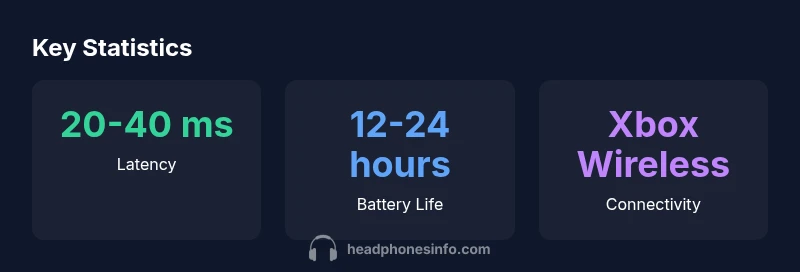
| Xbox-specific wireless | 20-40 ms | 12-24 hours |
| Bluetooth gaming headset | 40-80 ms | 10-20 hours |
| USB dongle with Xbox compatibility | 25-50 ms | 15-25 hours |
People Also Ask
What latency should I expect from wireless Xbox headsets?
Most reputable wireless Xbox headsets target sub-50 ms latency when using the official dongle or Xbox Wireless. Real-world numbers vary with distance and interference, but a well-optimized headset should keep audio in sync with on-screen action for fast-paced gaming.
Look for sub-50 millisecond latency in real-world tests and in-game performance.
Are Bluetooth gaming headsets suitable for Xbox gaming?
Bluetooth headsets can work for casual play, but latency may be higher and game audio may not sync perfectly during fast-paced titles. For competitive gaming, prioritize Xbox Wireless or a USB dongle headset.
Bluetooth can be okay for casual games, but latency matters in competitive play.
Can I use a Xbox Wireless headset with Xbox One and Series X|S?
Many Xbox Wireless headsets support both Xbox One and Series X|S, but always check the specific model's notes. Some require a USB dongle or a firmware update to ensure cross-generation compatibility.
Most models cover both generations, but verify before buying.
Do I need a separate mic if I already own a gaming headset?
Most wireless headsets include a built-in mic with noise suppression. If your current headset lacks a compatible USB adapter or dongle, you may need a headset with a dedicated mic or use an external microphone.
Check compatibility; some headsets include a good mic by default.
What budget ranges are realistic for Xbox-focused wireless headsets?
Quality wireless headsets for Xbox typically range from about $60-$120 for entry models to $180-$300 for premium options. Focus on latency, mic quality, and comfort rather than just features.
Expect mid-range options to offer the best balance of value and performance.
Is it better to buy a headset with USB dongle or Xbox Wireless built-in?
USB dongles usually provide stable performance across devices, while built-in Xbox Wireless offers the lowest possible latency for Xbox consoles. If you game on multiple platforms, prioritize dongle compatibility or multi-platform support.
Dongle tends to be versatile; built-in Xbox Wireless minimizes latency on Xbox.
“For Xbox gaming, the overall win goes to headsets that minimize latency without sacrificing mic clarity or comfort.”
What to Remember
- Prioritize Xbox-compatible wireless headsets for lowest latency.
- Balance mic quality, comfort, and battery life for long sessions.
- Avoid Bluetooth as your primary gaming connection for competitive play.
- Check firmware updates and console compatibility before buying.