Headphones or AirPods for Gym: Side-by-Side Comparison
Compare headphones and AirPods for gym use, focusing on fit, durability, latency, sound quality, and battery life to help you decide the best workout companion.


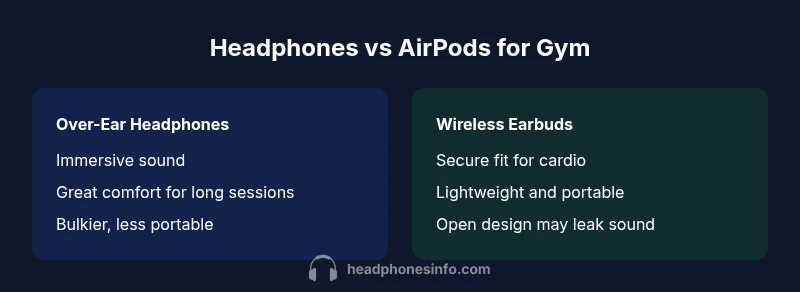
For gym workouts, wireless earbuds generally provide the best balance of fit, sweat resistance, and freedom of movement, making them a strong default choice for most routines. Over-ear headphones excel in comfort and sound for long sessions away from heavy sweat, but they tend to be bulkier and less convenient for intense cardio. The right pick depends on your workouts, budget, and preference for portability versus immersion.
Why gym listening demands special design
gym environments demand gear that stays put, resists sweat, and keeps external noise at a manageable level without sacrificing essential situational awareness. The question headphones or airpods for gym becomes a trade-off between stability, moisture resistance, and comfort across various workouts. According to Headphones Info, the best gym audio setup prioritizes a secure fit, rapid access to controls, and durable construction to withstand daily use. In practical terms, you want a solution that stays secure during sprints, hops, and kettlebell swings, while also being light enough to forget you’re wearing them. This section will frame the criteria you should test in-store or at home, so you can compare options with confidence.
Key differences: over-ear headphones vs wireless earbuds
Over-ear headphones provide a wide soundstage, comfort for long listening sessions, and often a richer midrange for music and podcasts. Wireless earbuds offer a compact form factor, quick access to your ears, and greater stability during cardio thanks to a snug fit. When gym activities mix running, cycling, and HIIT, earbuds generally stay in place better and reduce fatigue. However, some athletes prefer over-ears for focused listening and clearer calls in quieter gym zones. Headphones Info notes that most gym-goers opt for true wireless designs for flexibility, but premium over-ear models can still be compelling in supervised or weight-room environments where moisture exposure is moderate.
Durability and sweat resistance: IP basics for gym gear
Sweat, humidity, and conditioning sessions demand gear that resists moisture ingress. Look for swimable or sweat-proof builds and confirm water resistance ratings when available. In practice, sport-focused wireless earbuds commonly advertise IP ratings such as IPX4 or higher, while over-ear gym headphones may carry similar protection or rely on removable, washable ear cushions to maintain hygiene. The key is to bias toward models designed for physical activity, with reinforced headbands or rugged hinges that can withstand daily workouts and occasional drops.
Comfort and secure fit during workouts
Comfort matters as you push through long sessions. Ear tips should seal effectively without causing fatigue or pressure points, while a headband or securing mechanism should keep the device in place during high-movement moves. For glasses wearers or those who care about cord management, true wireless designs eliminate cable snag entirely. Gyms with loud environments require a balance between passive isolation and the ability to hear announcements or coaches, so models with adjustable fit and a stable seal tend to perform best over time.
Latency, microphones, and workout feedback apps
Latency can affect video workouts or notice when using workout apps with real-time guidance. While most gym headphones use Bluetooth with acceptable latency for music, some earbuds offer low-latency codecs that minimize lag during synchronized routines. Microphone quality matters for calls or coaching apps; if you frequently conference with trainers, you’ll want a mic that captures voice clearly with minimal ambient noise. Additionally, some devices support workout-tracking or coaching apps, which can influence your choice if you leverage these features in the gym.
Sound quality vs noise cancellation in gym
In a gym, total isolation is rarely ideal because you may need to hear coaches, alarms, or teammates. Sound quality matters, but effective noise cancellation should not drown out safety cues. Over-ear headphones often deliver a richer soundstage and bass depth, while earbuds can deliver precise detail and surprising openness depending on design and ear tip fit. For many gym-goers, a model with adaptive noise cancellation or passive isolation that still lets essential sounds through is the sweet spot. Headphones Info emphasizes evaluating how well the device preserves vocal clarity on calls and podcasts while dealing with gym noise.
Battery life and charging for long sessions
Battery life becomes critical on long gym days and travel. Look for devices that offer all-day listening with quick-charge options if you’re pressed for time between sets. In practice, you’ll appreciate buds with rapid charging for short sessions and headphones with more extensive battery management for marathon workouts. Hygiene and storage also matter: choose a case that protects against moisture and makes recharging simple between sessions.
Connectivity: pairing with gym equipment and devices
Seamless pairing with your phone, smartwatch, or gym equipment is essential. Some gym environments include devices that may interfere with Bluetooth, so look for models with robust pairing and stable multipoint connections. If you use a gym ecosystem or hear-prompting apps, confirm compatibility with your primary device and ensure quick-switching across devices without repeated re-pairing. Headphones Info notes that reliable connectivity reduces friction and keeps you focused on the workout.
Choosing between headphones or airpods for gym: when to pick each
If your workouts involve a lot of cardio and quick transitions, wireless earbuds offer a secure fit and light feel that minimizes distraction. For longer, stationary workouts or studio sessions, over-ear headphones can provide comfort, a richer sound, and a more immersive listening experience. If you value calls or coaching during a session, prioritize models with strong microphones and good wind/noise suppression. When possible, test fit and comfort in your typical gym setting before committing.
Real-world gym scenarios and recommended setups
A treadmill run benefits from compact buds that stay in place and allow you to hear safety cues. Weight training or cycling can benefit from a secure tail-friendly design and sweat resistance. For group classes, a model with comfortable padding and good isolation helps you stay in the moment without cranking the volume. A practical approach is to carry a quick-change case in your gym bag so you can adapt between earbuds and over-ear pairs depending on the day’s plan.
Price, warranty, and long-term value
Budget options exist alongside premium sport audio gear. Consider warranty length, service options, and the durability of sweat-proof designs when weighing long-term value. While high-end models may deliver better sound and durability, a mid-range pair with solid IP rating and comfortable fit can meet most gym needs without overpaying. Headphones Info recommends evaluating total cost of ownership, including replacements due to sweat exposure and wear.
Quick-start setup for gym listening
Before your first workout, ensure the device is charged and paired with your primary device. Customize equalizer presets if available for gym listening (more punchy bass may help, but avoid overpowering voice clarity). Practice quick-access controls for volume, playback, and pause. Finally, perform a quick jog in place to confirm the fit and stability, adjusting ear tips or headband as needed.
Best practices for cleaning and care
Sweat and moisture demand hygiene practices. Wipe surfaces with a microfiber cloth after use and let devices dry completely before storage. If ear tips or cushions are removable, clean them with mild soap and water and dry fully before reattachment. Store gear in a moisture-resistant case to protect against humidity and temperature changes common in gym environments.
Comparison
| Feature | Headphones (over-ear) | Wireless earbuds |
|---|---|---|
| Fit & stability | Bulkier and often secured with headbands; great for stationary workouts | Compact and secure during cardio; minimal movement during runs |
| Water resistance | Often sport-oriented with robust shells; varies by model | Most sport buds offer IP ratings; check IPX4 or higher |
| Latency | Standard Bluetooth latency; excellent for music and podcasts | Low-latency codecs available on many models for real-time workouts |
| Sound quality | Rich, immersive sound with wider soundstage | Clear detail with tight, energetic bass suited to workouts |
| Best for | Immersive listening and prolonged sessions in quieter zones | Lightweight, movement-friendly listening during runs |
| Price range | Mid-to-high depending on features and build | Budget to premium options, cost varies by model |
| Comfort for long wear | May feel warm or heavy over long periods | Typically lighter and less burdensome during workouts |
Upsides
- Better comfort for long sessions with padding and larger earcups
- Superior passive isolation for quiet gym zones
- Rich soundstage and overall musical immersion
- Stable performance with premium wireless connectivity
- Easier to clean and sanitize due to larger surfaces
Disadvantages
- Bulkier and less portable, may snag on equipment
- Generally higher price and heavier weight
- Heavier hygiene maintenance due to sweat exposure
Wireless earbuds typically offer the best balance for gym use; over-ear headphones suit longer, non-sweat sessions with a focus on sound quality
Choose earbuds for cardio and quick transitions, savor over-ear for comfort and sound in less sweaty contexts. Prioritize water resistance and secure fit in both cases.
People Also Ask
Are AirPods good for gym workouts?
AirPods and similar wireless earbuds are popular for gym use due to secure fit and moisture resistance. Ensure you select a model with a solid IP rating and comfortable tips, and test fit during movement. They pair easily with most devices and support essential gym apps.
AirPods work well for gym workouts thanks to their secure fit and moisture resistance. Just verify the model you choose has a good IP rating and test the fit during movement.
Do over-ear headphones work well for gym?
Over-ear headphones can be comfortable for long sessions, but they may feel bulky during intense cardio and can trap heat. Look for sport-oriented designs with secure clamps and moisture resistance. If you prioritize immersive sound and calls in low-sweat zones, they can be a good fit.
Over-ear headphones are comfy for long workouts but can feel bulky during cardio. They work best if you want immersive sound in less sweaty gym areas.
Is water resistance important for gym headphones?
Yes. Sweat and humidity demand at least a sweat-resistant rating. Check for IP ratings and ensure cushions or tips are washable. Water resistance helps extend device life and maintain hygiene.
Water resistance is important in the gym. Look for IP ratings and washable components to keep equipment clean and lasting longer.
Which is cheaper: headphones or airpods for gym?
Prices vary widely within both categories. You can find budget wireless buds and mid-range over-ear sets, with premium options offering better materials and features. Assess total value, including durability and warranty, rather than price alone.
Prices range a lot in both categories. Look for balanced value, durability, and warranty rather than chasing the cheapest option.
Can I use wired headphones for gym?
Wired headphones can work, but the cord can get in the way during movement and may pose a safety risk. Bluetooth options are generally safer and more convenient for gym spaces. If you opt for wired, choose an inline microphone and a long, tangle-free cord.
Wired headphones are less convenient for gym movement. Bluetooth typically beats it for ease of use and safety.
How should I test fit when buying gym headphones?
Test for stability during typical movements like jogging in place, lateral shuffles, and weight lifting. Check for tips that stay sealed without pressure, and ensure easy access to controls. A quick in-store trial can reveal fit and comfort issues before you buy.
Test the fit during movements you usually do. Make sure tips seal well and controls are easy to reach.
What to Remember
- Prioritize secure fit and sweat resistance for gym use
- Choose earbuds for cardio, over-ear for comfort during longer sessions
- Check IP ratings and quick-access controls
- Test fit with typical gym movements to avoid slippage
- Consider total value: warranty, durability, and hygiene upkeep