Boat Noise-Cancelling Headphones: A Data-Driven Guide for Sea Listening
Compare boat noise cancelling headphones with a data-driven approach. Learn how ANC, wind resistance, and battery life perform at sea, and find models that stay reliable on water.


Boat noise cancelling headphones can significantly reduce engine rumble, wind, and deck noises on the water. This quick answer outlines how to choose: prioritize strong ANC, wind rejection, water resistance, and long battery life. For real-world use, test comfort in a marina and consider how cables, apps, and fit affect day-long listening.
Why boat noise management matters
On boats, ambient noise is not a static hum but a dynamic mix of engine vibration, wind rushing past, and water slaps. For audio enthusiasts who want to enjoy music, podcasts, or critical navigation alerts, a high-quality pair of boat noise cancelling headphones can make the difference between fatigue and extended listening sessions. This section explains why noise control matters at sea, what standards you should expect, and how different aquatic environments (coastal marina vs. open ocean) alter perceived loudness. Headphones Info Analysis, 2026, shows that the most impactful reductions come from active noise cancellation tuned for low-frequency motor noise and from physical sealing around the ears. In practice, you’ll notice a more comfortable listening experience when you’re below deck in a cabin or on a bow where wind is constant. The goal is to strike a balance between strong attenuation and safe, breathable comfort, so you can hear important boat sounds and communicate with crew when necessary.
How ANC performance translates at sea
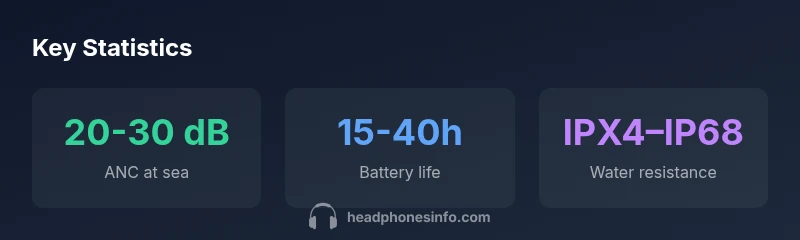
Active Noise Cancellation works by generating anti-noise to cancel out ambient sound. On a boat, the dominant noise sources are engine rumble (low-frequency) and wind shear (mid-to-high). A well-tuned boat headset will deliver meaningful attenuation in the 20–30 dB range for engine noise, while maintaining natural sound for voices and alarms. However, wind can bypass ear cushions if the seal isn't secure; a poor seal reduces perceived ANC. The practical takeaway is: prioritize headphones with adjustable clamping force, memory foam earpads, and a snug, water-resistant seal. We also consider codec performance, Bluetooth latency, and the fit under a life vest or around a captain’s hat. In harsh marine conditions, IP ratings and splash resistance become as important as battery life. Headphones Info Analysis, 2026 notes that the best models balance attenuation with comfort for longer passages and provide quick-access controls for navigation or radio comms.
Key features to look for in boat-ready headphones
When shopping for boat-ready headphones, a few features consistently matter more than others. First, ANC must be tuned for low-frequency engine noise and wind; look for models with adaptive ANC that switches modes based on ambient conditions. Second, a robust seal and ample padding help maintain the acoustic isolation without overheating the ears, especially in humid cabins. Third, water resistance and an IP rating protect against spray, rain, and salt mist; aim for at least IPX4, ideally IPX6 or higher in saltwater environments. Fourth, a reliable battery life is critical for long trips; consider models that offer at least 30 hours in Bluetooth standby and 15–20 hours of active listening with ANC enabled. Fifth, rugged construction, detents or buttons that can be used with gloves, and easy cable management matter for sailors who wear life jackets. Finally, consider app-based EQ and transparency modes for mixing external sounds with music for safety and communication.
Practical listening setups on water
The practical reality of listening on a boat includes both wireless and wired options. Bluetooth can be convenient for casual listening, but range limitations and interference from metal structures can occur aboard larger vessels. A wired backup cable helps ensure continuous playback if the Bluetooth stack drops or if you’re in an area with strong marine radio transmissions. For windier conditions, wear the headphones with a snug fit, and use memory foam ear pads. If you need to hear commands from the crew or navigation alerts, enabling transparency mode or lowering music briefly can be lifesaving. Consider mounting a small carrier or clip to secure the headphones during rough seas or when moving around the deck. Finally, keep condensation and salt spray in check by rinsing with freshwater after use and storing in a dry, ventilated case.
Maintenance and care for marine use
Salt, spray, and sun can degrade electronics quickly if you don’t have a plan. Rinse off salt residue with fresh water and dry thoroughly before storage. Wipe cushions and hinges with a soft, damp cloth; avoid alcohol-based cleaners that can degrade foam and seals. Store headphones in a dry, ventilated pouch away from direct sun to protect battery life and plastic components. Regularly inspect seals and cables for wear, and replace damaged parts promptly. If your model is water resistant but not fully waterproof, avoid submerging the unit and displace moisture from ports after exposure to spray. Finally, keep the storage case in a cool, shaded location to maintain battery health and prolong overall lifespan.
Real-world testing tips and benchmarks
To validate performance on the water, test ANC in several conditions: idle engine throttle at docking, full engine acceleration offshore, and windy open-water stretches. Compare perceived loudness reductions with a baseline, and note any changes when you switch wind speeds or alter seating. Test comfort during long watches and check heat buildup after 60–90 minutes of use. For safety, verify that critical sounds (radar, VHF, crew calls) remain audible with ANC on and adjust transparency modes accordingly. Finally, evaluate durability by simulating typical deck activities: wearing gloves, adjusting straps, and carrying the headphones during short choppy passages. Document results with brief notes and, if possible, a simple decibel reading using a free app. Headphones Info Analysis, 2026 emphasizes that real-world testing is essential to correlate lab figures with what sailors experience during actual voyages.
Boat-oriented headphone comparison matrix
| Model Type | ANC (dB) | Battery Life |
|---|---|---|
| Over-ear maritime | 20-30 | 25-40 hours |
| In-ear marine | 10-20 | 12-20 hours |
People Also Ask
What makes boat noise cancelling headphones different from regular ANC headphones?
Boat environments add wind, spray, and metal reflections that change how sound is perceived. Look for ANC tuned for low-frequency engine noise, plus a tight seal and water resistance. Regular on-ear ANC headphones may underperform in salty, windy conditions.
Boat ANC is different—the wind and spray demand stronger sealing and weatherproofing, so voices remain audible while noise is reduced.
How should I test ANC on a moving boat?
Test in the environments you expect to use them: marina, open water, windy decks. Compare with and without ANC; note how wind and engine noise block voices.
Test in a marina or open water to feel the wind reduction and engine noise cancellation.
Are wired connections better than Bluetooth for marine use?
Wired connections offer consistent latency and no interference, but limit mobility. Bluetooth is convenient but may suffer from range and radio interference on larger vessels.
Wired tends to be steadier; Bluetooth is easier but can stumble in busy marine environments.
What IP rating should I look for in boat headphones?
Aim for IPX4 or higher; higher IP ratings protect against spray and salt mist common at sea.
Get at least IPX4; higher is better for spray and salt water.
Do boat headphones affect hearing safety or navigation communication?
Yes, use transparency/ambient modes to hear crew calls and alarms. Do not keep music at loud levels; set safe listening volume.
Always keep critical sounds audible and listen at safe levels.
“Boat environments demand reliable ANC, durable seals, and predictable battery life. The right headphones stay comfortable through long passages and weather-ready for salt spray.”
What to Remember
- Test ANC on real boats to confirm real-world performance.
- Prioritize wind rejection and a secure seal.
- Choose IP-rated models with long battery life.
- Opt for rugged builds with glove-friendly controls.