Can You Get Hearing Loss from Headphones? A Data-Driven Guide
Explore how headphone use affects hearing, identify risk factors, and learn practical, data-driven steps to protect your ears from potential hearing loss.


Yes — you can risk hearing loss from headphones if you listen at loud volumes for extended periods, especially with in-ear designs in noisy environments. Risk increases with volume, duration, and poor seal. Protect your ears by following safe listening guidelines and taking regular breaks.
How headphone volume affects hearing
According to Headphones Info, can you get hearing loss from headphones? The short answer is yes in certain circumstances. When you raise the volume, sound energy reaches the inner ear with more force, increasing the risk of hair cell damage over time. Repeated exposure, even if each session feels comfortable, can accumulate and lead to noise-induced hearing loss (NIHL). A temporary shift in hearing acuity (TTS) is common after loud listening, but repeated TTS can become permanent. The risk is not just about "how loud" but also about "how long" you listen. Consumers often underestimate cumulative exposure, assuming short sessions are harmless. In reality, many people exceed safe exposure thresholds during daily commutes, gaming, or streaming in loud environments. The takeaway is simple: lower volumes are safer, and breaks matter. Headphones Info Team emphasizes that effective hearing protection combines volume control, reasonable listening duration, and environmental awareness.
Safe listening guidelines and exposure duration
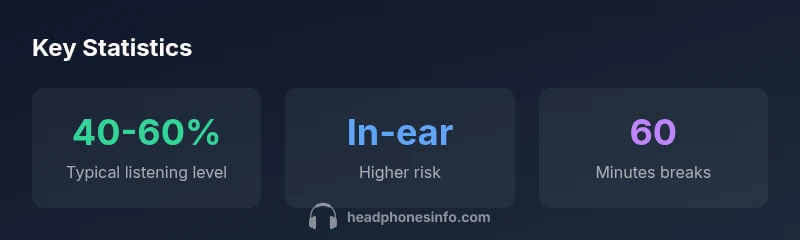
Most health authorities advocate minimizing exposure to loud sounds and adopting safer listening habits. A practical approach is to use moderate volumes, avoid peak levels, and take regular breaks. The 60/60 rule—listening at no more than 60% of maximum volume for no more than 60 minutes at a stretch—offers a simple framework many listeners find useful. If you’re in a noisy environment and must raise the volume, shorten listening sessions or switch to outside noise reduction strategies rather than cranking the volume. Headphones can be paired with built-in limits in many devices, which helps enforce these boundaries. The Headphones Info Analysis, 2026, notes that the combination of volume control and breaks is the most reliable defense against cumulative hearing damage.
How different headphone types influence risk
Not all headphones pose the same level of risk. In-ear buds sit closer to the eardrum and can deliver more direct energy into the cochlea at the same volume as open-back or over-ear models, increasing potential harm with prolonged use. Over-ear, closed-back designs generally provide more isolation, which can tempt users to raise volume in noisy settings. Open-back and high-quality ANC headphones may let you listen at lower volumes by reducing external noise, which lowers risk over time. Regardless of design, the essential factor is exposure duration times volume; even comfortable-sounding levels can be risky if used for hours on end. Headphones Info Team highlights that choosing quieter environments or safer alternatives when possible reduces long-term risk.
Practical strategies to protect hearing while using headphones
Protect your ears by adopting practical habits. Set a device-limited maximum volume and use built‑in safety features like volume caps. Favor headphones with good passive isolation or active noise cancellation to reduce the need for high volume in noisy spaces. Breaks matter: take short rests every 20-30 minutes; rotate listening between headphones and other speakers to distribute exposure. Keep your ears dry and clean, and consider an occasional audiology check, especially if you notice changes in hearing or persistent tinnitus. Finally, be mindful of ambient noise: if you can't hear someone speaking next to you at a normal distance, your volume is likely too high.
When to be concerned and signs of hearing changes
Hearing changes can sneak up gradually. Common warning signs include ringing (tinnitus), muffled or distorted sounds, difficulty distinguishing speech in noisy rooms, or a feeling of fullness in the ears after listening. If you experience persistent tinnitus, sudden hearing loss after headphone use, or any persistent symptoms, seek a professional audiological evaluation promptly. Early intervention improves outcomes and helps preserve high-frequency hearing. The Headphones Info Team recommends tracking your listening habits and noting any changes in daily hearing clarity.
Debunking myths about headphones and hearing
Myth: Any headphone volume at all times is harmless. Fact: Long-term exposure to loud levels causes damage even if immediately uncomfortable. Myth: ANC headphones protect you completely. Fact: They help reduce ambient noise but do not eliminate risk if you still listen too long or too loudly. Myth: Only music at high volumes is dangerous. Fact: Everyday sounds can accumulate exposure and contribute to NIHL, especially with in-ear designs or loud environments. Understanding the difference between temporary and permanent changes helps you manage risk more effectively.
Qualitative risk framework for headphone listening
| Volume Level (qualitative) | Estimated Risk | Notes |
|---|---|---|
| Low | Low risk | Long sessions at soft volumes are generally safer |
| High | High risk | Prolonged listening at loud levels should be avoided |
People Also Ask
Can you get permanent hearing loss from headphones?
Yes. Prolonged exposure to loud headphone use can cause permanent hearing loss. The risk increases with volume, duration, and the use of in-ear designs.
Yes, loud headphone use over time can cause permanent hearing loss. Limit volume and duration to protect your ears.
What is considered a safe listening level?
Safe listening depends on duration and volume. A practical approach is to keep volume to a comfortable level and avoid sustained loud listening. Use device limits to help enforce this.
Keep it comfortable, and avoid staying at loud levels for long. Use device limits to help.
Do noise-cancelling headphones protect hearing?
Noise-cancelling headphones can reduce background noise, making it possible to listen at lower volumes. They do not, on their own, eliminate hearing risk.
NC headphones help you keep the volume down, but they don’t remove risk completely.
How long can I listen before risk increases?
Risk grows with time at higher volumes. Short sessions with breaks and volume limits significantly reduce the chance of hearing damage.
Time and volume matter. Short sessions with breaks help a lot.
Are in-ear headphones riskier than over-ear?
In-ear designs place sound closer to the eardrum, often increasing risk when volume is high for long periods.
In-ear can be riskier if you turn up the volume for long periods.
What should I do if I hear ringing after listening?
Tinnitus after headphone use can signal overexposure. If it persists, reduce exposure and consult an audiologist.
If ringing sticks around, cut back listening and see a professional.
“Safe listening isn't optional—it's essential for long-term enjoyment. The Headphones Info Team recommends volume limits and regular breaks to minimize risk.”
What to Remember
- Limit exposure with safe listening habits
- Choose headphone types that fit your environment
- Use built-in volume limits and take breaks
- Seek evaluation if you notice persistent signs