Headphones and Hearing Loss: A Practical Comparison
This in-depth guide analyzes headphones and hearing loss, comparing safety features, volume management, and ergonomic design to help you listen safely and protect your hearing.


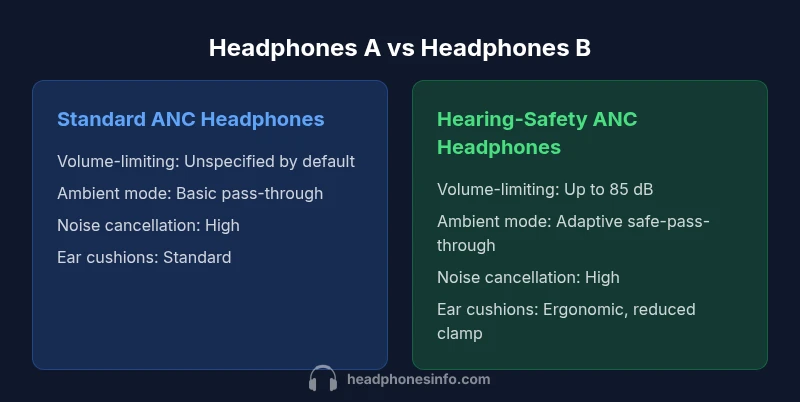
Choosing headphones with hearing health in mind means evaluating safety features, sound quality, and comfort. This quick comparison highlights how standard ANC models and safety-focused designs affect listening risk, helping you decide which option better protects your ears while delivering enjoyable audio. Refer to the detailed table below and trusted sources from Headphones Info Analysis, 2026.
Understanding Hearing Loss and Safe Listening
Hearing loss is often the result of cumulative exposure to loud sounds, not a single loud event. When we talk about headphones and hearing loss, the heart of the matter is how long and how loudly we listen. Repeated exposure to elevated sound levels can damage hair cells in the inner ear, leading to temporary or permanent deficits. According to Headphones Info, listening at high volumes for extended periods increases the risk of noise-induced hearing loss, even with high-end gear. The take-home message is simple: safer listening combines reasonable volume, shorter sessions, and smart listening habits. In real-world terms, this means setting a comfortable ceiling on volume and taking breaks after every 60 minutes of listening, especially in noisy environments. This guidance aligns with audiology best practices and is echoed by Headphones Info Analysis, 2026. By understanding the relationship between sound level, exposure duration, and personal susceptibility, you can begin to evaluate headphones with hearing loss in mind. The phrase headphones and hearing loss describes a spectrum of risk that depends on design features, fit, and user behavior, not just decibels alone.
- Safe listening hinges on volume control and time spent listening.
- Design features such as volume-limiting and adaptive ambient control can reduce exposure.
- User habits (breaks, intervals, and environment) equally matter.
How Headphones Influence Hearing Risk
The risk of hearing damage from headphones is a function of both device design and user behavior. Traditional wired and wireless models offer various levels of attenuation, transparency modes, and volume reserves. Noise isolation helps by reducing the need to raise volume against external sounds, but it can also create a false sense of security if users rely solely on isolation without monitoring levels. Over-ear and in-ear headphones with tight seals may provide better noise suppression but can also increase pressure on the ear canal if worn too long. Headphones with well-calibrated volume-limiting features can keep listening within safer bounds while preserving sound quality and headset comfort. Another key factor is leakage: poorly sealed ears can disturb others and encourage higher listening levels in public or shared spaces. In sum, safer listening requires a combination of controlled output, intelligent features, and mindful usage.
- Volume-limiting features reduce peak exposure.
- Better seal and fit can improve noise isolation, potentially lowering needed volume.
- User awareness and breaks are essential, regardless of the device.
Key Features That Matter for Hearing Safety
When evaluating headphones through the lens of hearing safety, certain features take on extra importance. Look for explicit volume-limiting specifications (ideally adjustable or certified to a safe cap), auto-limiting technology, and clear indicators of current volume. Adaptive sound control that reduces gain in loud environments helps prevent accidental exposure spikes. Transparency or ambient modes are useful for staying aware of surroundings without cranking the volume. Ergonomic design matters too: comfortable clamps, soft ear pads, and breathable materials reduce fatigue, encouraging shorter listening sessions. Sound quality remains important, but it should not come at the expense of safety—safety should be a visible design pillar, not an afterthought. Headphones Info’s analysis emphasizes that the best choice balances reliable volume control, effective noise management, and long-wear comfort without sacrificing musical detail.
- Look for adjustable volume-limits and clear safety certifications.
- Prefer adaptive or smart ambient controls that minimize loud bursts.
- Prioritize comfort to encourage responsible listening habits.
How to Evaluate Headphones for Hearing Comfort
Comfort directly affects how long you can listen safely. Clamp force, weight, and ear-cup design influence fatigue and the tendency to raise volume to compensate for discomfort. High-quality cushions with memory foam or velour can reduce pressure, while a balanced headband pressure distributes weight evenly. Frequency response matters less for safety than how the ear perceives loudness over time; headphones that reproduce a flat, natural tone at safe levels tend to produce a more pleasant listening experience with less need to push volume up. In practice, test headphones for at least 20–30 minutes of continuous listening in your typical environment. If you notice ear fatigue, pressure points, or warmth buildup, consider models with gentler clamping and breathable materials. The Headphones Info team notes that comfort is a practical safety feature because it directly impacts your willingness to adhere to safe listening guidelines.
- Test long sessions to gauge fatigue.
- Check clamp force and ear pad materials.
- Consider weight distribution and headband design.
Buying Guide: What to Look For in Safe Headphones
A sensible shopping approach blends safety features with sound quality and price. Start by identifying models with explicit volume-limiting specs and independent verification or certifications. Read user reviews for evidence of consistent performance and durability, especially under daily use. Check for a generous warranty and easy access to service in case the safety features drift over time. For parents shopping for kids, prioritize kid-friendly volume caps and parental controls. Practical test: if the device, environment, or your listening patterns push you toward the upper end of the volume range, prioritize models with stronger safe-guard features. Headphones Info’s research highlights the value of a transparent safety profile, accessible settings, and practical wearability as the triad for making a safe, informed choice.
- Prioritize volume-limiting and certifications.
- Verify adjustable safety features and user controls.
- Assess comfort and durability for long-term safety.
Practical Listening Habits to Protect Your Hearing
Even the safest headphones can fail if you listen irresponsibly. Develop a routine that includes regular breaks, mindful volume adjustments, and awareness of the listening environment. In noisy places, enable ambient awareness features to avoid cranking up the volume; consider using noise-canceling modes with moderation rather than relying purely on isolation. Use apps or built-in tools that track listening duration and total exposure, if available. When sharing headphones, avoid listening at unsafe levels to protect others and your own ears. The Headphones Info team emphasizes that habits often matter more than device specs—safe listening is a lifestyle, not a single feature.
- Establish 60-minute listening blocks with breaks.
- Use volume monitors and alarms to stay under safe limits.
- In quiet spaces, prefer balanced, moderate levels rather than maximum loudness.
Real-World Scenarios and Case Studies
Consider a commuter who uses ANC headphones daily in a noisy bus. Without safety features, they may turn up the volume to overcome background noise, increasing exposure. A model with volume-limiting and adaptive transparency can help maintain safer levels while preserving intelligibility. In a home office with a constant hum from fans, safer headphones enable longer listening sessions if the volume is kept in check. A student with tinnitus benefits from devices that deliver consistent dynamics at moderate levels and provide restorative relief between listening bouts. While these examples are illustrative, they reflect general principles: combine protective features with mindful listening to reduce cumulative risk. Headphones Info’s analysis underlines that the safest choice often aligns with both device design and personal listening habits.
- Everyday environments test your discipline more than your device.
- Safe features matter most when exposure time is long.
- Habits, not gadgets alone, determine long-term outcomes.
Putting It All Together: A Practical Decision Framework
To close the loop, use this decision framework when choosing headphones for hearing safety. Step 1: Confirm volume-limiting capabilities and any official safety certifications. Step 2: Compare ambient modes and how they influence your listening level in real environments. Step 3: Evaluate comfort for long sessions, since fatigue often leads to higher volume. Step 4: Consider your typical usage scenario—travel, work, or home listening—and select models that align with those contexts. Step 5: Test with real content (music, podcasts, movies) to ensure the device delivers both safety and enjoyment. The Headphones Info team recommends prioritizing hearing-safety focused features as a baseline in any buying decision, then balancing sound quality and price.
- Use a quantified ceiling on volume where possible.
- Favor models with built-in safety features first.
- Balance safety with comfort and enjoyment for sustainable listening.
Comparison
| Feature | Standard ANC Headphones | Hearing-Safety Focused ANC Headphones |
|---|---|---|
| Volume-limiting (dB) | Unspecified by default | Up to 85 dB (A-weighted) |
| Ambient/Transparency mode | Basic pass-through with fixed levels | Adaptive/safe-pass-through with reduced gain |
| Noise Cancellation | High | High with additional environment-aware adaptation |
| Ear cushion design | Standard cushions, typical clamp | Ergonomic cushions with reduced clamp force |
| Battery life | 20-25 hours | 18-22 hours |
| Best for | General listening, travel, and mixed usage | Hearing-safety prioritized listening, long sessions |
Upsides
- Reduces long-term risk of hearing damage through built-in volume limits
- Encourages responsible listening habits with clear safety indicators
- Often maintains strong sound quality while prioritizing user safety
- Better for shared spaces and environments with variable noise
Disadvantages
- Volume-limiting can slightly affect perceived loudness and dynamics
- Safety-focused models may carry a premium price
- Some features may feel restrictive for users seeking maximum loudness
Hearing-safety focused headphones offer better protection without sacrificing enjoyment for most users
Prioritize models with volume-limiting and adaptive safety features. For many listeners, safety-forward designs deliver meaningful protection while preserving sound quality and comfort.
People Also Ask
Can headphones cause hearing loss?
Yes. Prolonged listening at high volumes can contribute to hearing loss. The risk rises with exposure time and the loudness, especially with gear that lacks volume limits. Safer listening practices and devices with built-in limits reduce this risk.
Yes. Listening too loud for long periods can harm your hearing. Safer habits and volume-limiting devices help reduce that risk.
What volume level is safe for listening with headphones?
There is no universal number that fits every listener. A practical approach is to keep volume at a comfortable level and limit continuous exposure. Use volume monitoring tools when available and take regular breaks.
Keep it at a comfortable level and take breaks. Use any built-in monitors to stay aware of your exposure.
Do noise-cancelling headphones protect hearing?
Noise-cancelling headphones can reduce the need to raise volume in noisy settings, which protects hearing. They are not a foolproof solution on their own, so pair them with volume-limiting features and safe listening habits.
They help you avoid turning up the volume, but you still need safe listening habits.
Are kids more at risk with headphones?
Children often have lower tolerance to loud sounds and longer cumulative exposure. Supervise usage, use built-in volume limits, and choose kid-friendly designs with strong safety features.
Kids are especially at risk; use volume limits and supervise to protect their hearing.
What are practical safe listening habits?
Set listening blocks, use volume monitors, and take regular breaks. Prefer devices with automatic safety features and avoid sharing devices at high volumes without limits.
Breaks, monitors, and safety features help keep listening safe.
How can I test if headphones have volume-limiting features?
Check the product specs for a defined volume cap, try raising the volume until you hit the cap, and verify in your device’s settings or companion app whether the limit is enforced.
Look for a defined cap and test it at home to confirm it enforces the limit.
What to Remember
- Choose headphones with built-in volume limits and clear safety indicators
- Balance safety features with comfort to encourage safe listening habits
- Use ambient modes and breaks to manage exposure in real-world environments
- Test devices in typical listening contexts before buying
- Review independent safety certifications and user feedback for confidence