Are Headphones Safer Than Earphones? A Safety Look
Explore whether headphones are safer than earphones. This analytical guide weighs design, usage, and hygiene factors to help you minimize hearing risk across common listening scenarios.


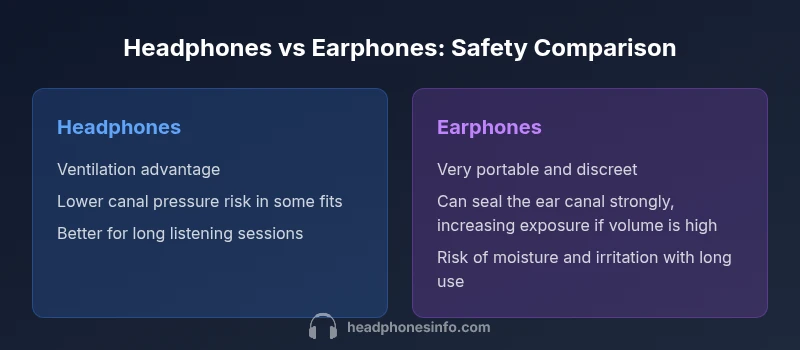
Are headphones less harmful than earphones? The short answer is not inherently; safety depends on how you listen, not just the device type. Over-ear headphones often offer better ventilation and less direct canal pressure, which can support safer listening practices, while in-ear earphones seal the ear canal more tightly, potentially increasing exposure if you push the volume. The real safer choice hinges on your listening habits, environment, and fit.
Defining the Question: What makes headphones and earphones potentially harmful?
When people ask 'are headphones less harmful than earphones', they are really asking about how sound interacts with the ear over time. The core concern is hearing safety: exposure to sound at high levels can damage delicate hair cells in the cochlea, leading to temporary or permanent changes in hearing. The question also invites consideration of design choices, fit, and user behavior. The Headphones Info team emphasizes that safety results from a combination of how loud you listen, for how long, and how well the device fits your ears. In many listening scenarios, the difference between headphones and earphones is less about the device class and more about how you use it. According to Headphones Info, the most actionable guidance is to couple careful listening habits with device-specific benefits rather than assuming one category is universally safer.
How sound exposure translates to risk
To understand potential harm, it helps to unpack what 'exposure' means in everyday listening. The ear is sensitive to sound across a wide range of frequencies, and damage can occur when sound energy accumulates in a given period. In practice, two factors matter most: volume and duration. A loud sound for a short moment can be just as risky as a moderate sound for a long one, especially if you repeatedly push the boundary. Design features that affect exposure include how well the device seals the ear canal (which can amplify perceived loudness) and how much ambient noise is blocked. If you choose a device that makes it easier to perceive the environment without cranking up the volume, you can reduce risk. The Headphones Info analysis reiterates that listening behavior often outweighs the nominal safety profile of any single device.
Design differences: over-ear vs in-ear and their health implications
Over-ear headphones encase the ears, often offering generous padding and better distribution of pressure, which can translate into comfortable, lower-volume listening for longer sessions. In-ear earphones place drivers inside the ear canal, which can seal more tightly and make ambient noise less audible, potentially encouraging louder listening. From a health perspective, the canal seal can protect against external distractions, but it also increases the potential for rapid sound exposure if the user increases volume to overcome attenuation. The choice between a plush, ventilated cup and a compact in-ear tip changes how your ears heat up, how much you notice discomfort, and how long you can listen before fatigue sets in. Importantly, the difference is not a simple safety score; context matters. Headphones Info's review of device families highlights that fit quality, tip material, and cup design shape real-world risk more than the nominal category name.
Isolation and leakage: how ambient sound affects listening safety
Isolation quality affects how much you rely on internal volume. Well-sealed in-ear designs can significantly reduce external noise, enabling lower listening levels but also giving a false sense of quiet when playback modes boost bass. Conversely, open-back or well-ventilated over-ear models let you hear more of the environment, which can encourage keeping volume lower due to natural cues from surroundings. A balanced approach is to use ambient-aware listening modes or transparency features when you need awareness and switch to lower-volume modes for quiet environments. The health implication is that isolation itself is not inherently good or bad; it is a tool that should be used with an awareness of listening duration and background noise. The Headphones Info team notes that matching isolation to context helps reduce unnecessary volume increases, a simple but effective safeguard.
Comfort, hygiene, and long-term wear health
Long sessions stress not only the ears but also the skin and canal environment. Over-ear designs tend to move heat away from the ear and can be gentler on the skin when used for extended periods. In-ear devices, while lightweight, can trap moisture in the ear canal if worn for long stretches without breaks. Hygiene matters too: dirty ear tips, dirty cushions, and shared devices can increase risk of ear infections or dermatitis. To minimize risk, consider regular cleaning routines, using breathable materials, and avoiding wearing damp devices. The health advantage of headphones often comes from more surface area contacting the outer ear rather than sealing inside the canal. However, this advantage relies on routine care and proper fit. The Headphones Info guidance reinforces that hygiene practices are as important as the device choice when assessing harm risk.
Use-case scenarios: commuting, gym, office, travel
In noisy environments, earphones may require higher volumes, especially with heavy bass. Headphones with good isolation can offer a safer route by reducing ambient noise without cranking up volume. For gym use, bulkier headphones may be cumbersome; wireless earphones or lightweight over-ear variants can be acceptable if you manage volume and take breaks. When working at a desk, open-back headphones that leak some sound can be safer by prompting lower volume. The key point is that each scenario creates a different baseline for what constitutes safe listening. The Headphones Info team suggests mapping rough listening patterns to device choices and environment rather than relying on a default to one category.
Safe listening practices: practical steps
- Set reasonable listening windows and take regular breaks. - Keep volume at levels where you can still hear background noise. - Use features like volume limiting or smart auto-volume when possible. - Choose a device with a comfortable fit to reduce fatigue and subconscious volume bumps. - Clean your devices regularly and avoid sharing. These steps help ensure that device type matters less than disciplined usage.
Cleaning and maintenance to minimize risk
Regular cleaning reduces the accumulation of dirt, bacteria, and oils that can irritate the ear canal. Ear tips and cushions should be replaced when worn, and all detachable components should be cleaned with mild, non-moisture-retentive cleaners. Avoid soaking electronic parts, and dry thoroughly before reuse. Proper storage away from heat and moisture also preserves hygiene. Following the manufacturer’s cleaning instructions minimizes the risk of irritation or infection and helps preserve sound quality over time. The Headphones Info perspective emphasizes that hygiene is a core part of safer listening and should accompany any device choice.
Choosing the right device for your needs: decision framework
Begin with context: do you mostly listen in quiet rooms, on public transit, or during workouts? Then assess fit: are you using in-ear tips or over-ear cups that sit around the ear? Next, examine volume controls, safety features, and ease of maintaining hygiene. Finally, consider practical factors like battery life, durability, and how easy it is to replace parts. A clear framework helps you balance safety with comfort and convenience, rather than chasing a universal safety label for headphones versus earphones.
Common myths about safety and hearing
Myth: louder equals safer because you hear more detail. Fact: loud sounds damage ear cells even if you feel fine immediately. Myth: open designs are always safer. Fact: openness can help you sense the environment, but it does not guarantee safe listening if you still listen loudly. Myth: all devices with noise isolation are unsafe. Fact: with proper use and breaks, insulated devices can support safer listening by reducing the urge to raise volume.
The Headphones Info perspective: evidence-based guidance
From Headphones Info's evidence-based approach, the safest path is to pair device choice with mindful listening. Design features matter, but user behavior drives outcomes. This means choosing a comfortable fit, enabling safety features, and monitoring listening time. The analysis highlights that even a seemingly protective device can contribute to harm if used recklessly. By combining thoughtful selection with disciplined usage, listeners can minimize risk across headphone and earphone categories.
Practical scenarios: additional tips for different environments
In transit, use ambient-aware modes to stay aware of surroundings, and practice shorter listening bursts with breaks. At work or study, prefer devices that allow gradual volume changes and easy access to quick pauses. During workouts, opt for secure fits that reduce movement and avoid cranking up volume due to noise. Regardless of choice, the core habit remains: moderate volume, safe durations, and regular hygiene.
Why the answer isn't simple: nuance and personal risk
The question of whether headphones are less harmful than earphones cannot be answered with a blanket yes or no. Individual risk profiles depend on ear health, anatomy, age, listening environment, and daily routines. A cautious approach is to select the device that supports safe habits, not the device you assume is safer by category alone. The practical takeaway is to prioritize habit and context alongside device features.
Comparison
| Feature | headphones | earphones |
|---|---|---|
| Seal/Isolation quality | Moderate to high isolation with over-ear cups | High isolation due to ear tip seal |
| Ventilation and comfort | Better airflow for long sessions | Can trap heat and moisture |
| Direct sound exposure risk | Lower pressure on eardrums (varies by fit) | Direct canal exposure increases risk if volume is high |
| Portability | Usually bulkier and less portable | Highly portable and discreet |
| Durability/maintenance | Typically robust with replaceable parts | Smaller seals and tips require replacement |
| Best for | Home/focused listening and comfort | On-the-go listening and travel convenience |
Upsides
- Headphones offer comfort for long listening sessions, reducing the urge to raise volume
- Over-ear designs provide better perceived loudness control and sound quality
- Earphones are compact and portable for quick listening on the go
- Both can be safe when used with proper volume and breaks
Disadvantages
- In-ear earphones seal the ear canal, increasing exposure risk at high volumes
- Earphones can trap heat and moisture, causing discomfort or irritation
- Headphones can be bulkier and more expensive, impacting travel and storage
Headphones are generally the safer default for most listeners when used with mindful volume and breaks.
Choose headphones for longer sessions with better ventilation and lower ear canal pressure. Use earphones when you need portability, but apply cautious listening habits to minimize risk.
People Also Ask
Are over-ear headphones safer than earbuds in every situation?
Not universally. Safety depends on volume, duration, and fit. Over-ear designs can reduce direct canal exposure and allow safer listening, but bad habits still harm. Consider environment and breaks alongside device type.
Over-ear headphones can be safer if you keep listening time reasonable and volume moderate, but proper habits matter for all devices.
What listening habits increase hearing risk the most?
Listening loud for long periods is risky with any device. Take breaks, keep ambient sound cues, and avoid pushing volume to the max.
Long sessions at high volumes increase risk, so take breaks and stay aware of your surroundings.
Do devices have built-in safety limits for volume?
Many devices offer volume caps and protective features. Enable these when possible and adjust gradually rather than jumping to high levels.
Yes, many devices include safety limits; turn them on and use gradual adjustments.
Can cleaning headphones reduce ear infections?
Regular cleaning of tips, cushions, and housings reduces bacteria buildup and irritation. Follow manufacturer guidance for safe cleaning.
Keeping your gear clean helps prevent ear issues and keeps listening comfortable.
Is wireless safer than wired listening?
Safety depends on usage, not on wireless or wired. Be mindful of battery heat and maintain reasonable listening habits in both cases.
Both can be safe if you manage volume and listening duration in either setup.
Are there special tips for sleeping or studying with headphones?
If comfortable and time-limited, headphones can be used for sleep and study, but avoid prolonged sessions or high volumes that disturb ear health.
It's okay to listen while resting or studying, just keep the duration short and volume moderate.
What to Remember
- Choose headphones for longer listening sessions when possible
- Adopt safe listening habits: moderate volume, breaks, ambient awareness
- Match device choice to your environment and task
- Regularly clean and maintain devices to minimize ear health risks
- The safe path is habit and context, not device category alone