Why Do Over-The-Ear Headphones Hurt? Troubleshooting Guide
Urgent, data-driven troubleshooting to stop ear pain from over-the-ear headphones. Learn causes, tests, fixes, and prevention tips for lasting comfort.


Pain from over-the-ear headphones is usually caused by clamp pressure, poor fit, or stiff ear pads—not volume. To relieve it quickly, loosen the headband, center the cups, and swap to breathable memory-foam ear pads. If the model feels heavy, take short listening breaks and consider a lighter pair. This quick guide shows safe, practical steps to reduce discomfort fast.
Why do over-the-ear headphones hurt? The short answer is that comfort depends on fit, padding, and clamp pressure. According to Headphones Info, poor fit or tight clamps can press on the outer ear and behind-the-ear areas, turning long listening sessions into painful experiences. In this section we unpack the factors that drive discomfort and how small changes can make a big difference. The keyword why do over the ear headphones hurt appears here to anchor the topic for readers seeking practical remedies. Headphones Info Analysis, 2026, notes that padding and weight distribution greatly influence comfort, so we’ll cover both biomechanics and actionable fixes you can apply today. The aim is to help you listen longer without pain while preserving sound quality and isolation.
How fit, clamp, and padding contribute to pain. The most immediate culprit is clamp force. If the headband applies pressure directly on your temples or the frame presses against the outer ear, you’ll feel pressure and potential sore spots after 15–30 minutes. Ear pads play a major role in heat, moisture, and comfort. Leatherette or dense foam can trap heat, causing sweating and irritant pressure on the concha. Padding that compresses too much or too little changes how sound seals and where pressure concentrates. The Headphones Info Team emphasizes that comfort is a balance of clamp, padding, and weight distribution, not just sound.
Common fault patterns: clamp force, heavy cups, and ear pad materials. Many users report pain from gear that clamps too tightly or uses rigid ear cups. Heavy cups increase leverage on the head, especially if the band is not evenly balanced. Ear pads made from stiff materials can create hotspots where the pad meets the ear and can trap heat. If you notice redness or numbness after short sessions, you’re likely dealing with one of these patterns. Consider swapping to memory foam pads with breathable covers and, if possible, choosing models with adjustable clamps and lighter cups.
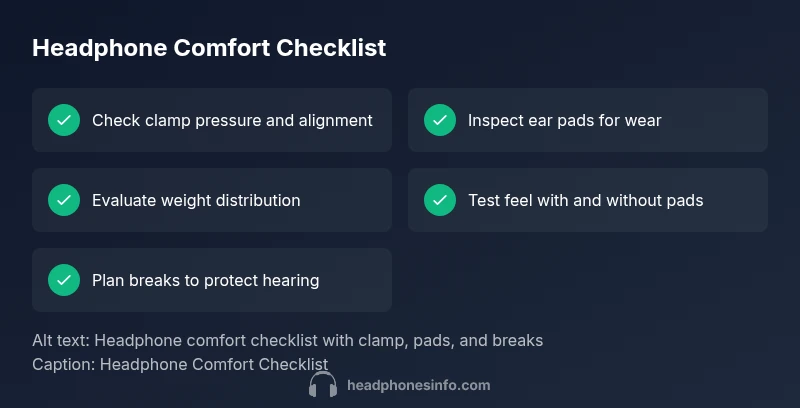
Stepwise testing: what to check first. Start with simple checks: is the headband visibly tight? Are the ear pads clean and intact? Do the cups align with your ears, not pressing on the cartilage behind the lobe? Check the weight balance by adjusting the headband so no portion bears more load than the other. Move on to padding: are the pads worn, cracked, or peeling? If yes, replace with breathable materials. Finally, test without isolation features enabled to confirm pain isn’t caused by pressure hotspots from the internal drivers.
Immediate fixes you can try today. Begin by loosening the headband slightly and re-centering the cups. Switch to breathable memory foam pads or add a soft fabric liner between the ear and pad. If you have a heavier model, consider using a lighter pair or a headband spacer designed for comfort. Take short listening breaks every 15–20 minutes and avoid wearing headphones while lying down, which can create new pressure points.
Long-term strategies and prevention. If you frequently wear headphones, invest in models with lightweight cups, adjustable clamps, and breathable ear pads. Look for memory foam or hybrid padding with moisture-wicking fabric. Regularly clean and condition pads to maintain softness. When selecting new headphones, try them on and test comfort for at least 30 minutes in-store if possible. Consistency over time reduces the risk of pain and helps ear health, a conclusion supported by the Headphones Info Team.
When to seek professional help. If pain persists after multiple adjustments or you notice skin irritation, numbness, or headaches that last beyond a short break, stop using the headphones and consult a clinician or audiologist. Chronic discomfort could indicate an underlying issue such as a jaw trigger point or misaligned head posture, which a professional can assess.
Steps
Estimated time: 30-45 minutes
- 1
Inspect headband tension and alignment
Check whether the headband clamps evenly and sits centered on your head. If alignment is off, relocate the cups so they sit over your ears without pressing on the outer edge. Loosen or tighten gradually and retest for comfort.
Tip: Use a mirror to verify symmetry. - 2
Assess ear pad condition
Look for wear, cracks, or hardening. Worn pads can create hotspots and degrade airflow. If pads are stiff or cracking, replace with breathable memory foam pads.
Tip: Choose pads with fabric covering for airflow. - 3
Evaluate weight distribution
Feel for any tilt or forward pull that concentrates load on one ear. Redistribute by readjusting the crown of the headband and ensuring equal pressure on both cups.
Tip: Ask a friend to help balance the fit. - 4
Test clamp vs. comfort without isolation
Disable active isolation features momentarily and test comfort. If pain persists with lower pressure, you may need different cups or lighter hardware.
Tip: Don’t force it; light adjustments only. - 5
Try breathable padding options
Swap to breathable memory foam or gel-infused pads. Ensure compatibility with your model and align the pads to avoid touching the inner ear canal.
Tip: Check compatibility before buying. - 6
Take short breaks and monitor symptoms
Limit listening sessions to 15–20 minutes with a 5–10 minute break, especially during long tasks. Monitor for redness, numbness, or headaches and adjust accordingly.
Tip: Set a timer to enforce breaks. - 7
Consider model weight reduction
If discomfort remains, evaluate lighter headphone options or aftermarket parts designed to reduce weight without compromising safety.
Tip: Vet parts for safety and warranty implications. - 8
Reassess after a week of adjustments
Keep notes on what works and what doesn’t. Routine reassessment helps you identify the best combination of fit, padding, and weight.
Tip: Document changes and outcomes.
Diagnosis: Ear discomfort or pain after wearing over-ear headphones for 20–40 minutes.
Possible Causes
- highExcessive clamp force/poor headband adjustment
- mediumRigid or heat-retaining ear pads causing sweating and pressure hotspots
- lowWeight of cups and uneven distribution
- lowPoor seal causing hotspots on cartilage
Fixes
- easyAdjust the headband to reduce clamp and center cups over ears
- easySwitch to breathable ear pads or moisture-wicking foam
- mediumReplace with lighter cups or a lighter model
- easyReposition headphones or add a balance spacer to distribute weight
People Also Ask
Why do over-the-ear headphones hurt even at moderate volumes?
Discomfort is often caused by fit and padding rather than volume. Clamp force or padding materials create pressure hotspots.
Discomfort usually comes from how the headphones fit and the padding, not just the volume.
Can replacement ear pads help?
Yes, breathable memory foam pads can improve airflow and comfort, but ensure they fit your model.
Yes, pads can help with comfort if they fit.
Should I stop using headphones if pain persists?
Take a break and reduce usage. If pain lasts beyond a short break or causes numbness, consult a clinician.
If pain lasts, take a break and seek help.
Are noise-cancelling models more comfortable?
Not necessarily. NC affects weight and clamp differently; test lighter models with breathable padding.
NC can add weight; try different padding to improve comfort.
What about volume safety and ear health?
Keep listening at safer, moderate levels and take breaks to protect hearing health.
Keep volume moderate and take breaks.
Do all ear pads fit every model?
No. Check model-specific compatibility before buying replacements to avoid fit and seal issues.
Not all pads fit every model; verify compatibility first.
Watch Video
What to Remember
- Evaluate fit before swapping parts
- Breathable ear pads reduce heat buildup
- Lightweight cups improve comfort
- Take regular breaks during listening
- Persistent pain warrants professional advice