Headphones or Earbuds for Running: A Thorough Side-by-Side Comparison
Compare headphones vs earbuds for running. Learn fit, durability, battery life, wind noise, and sound quality to pick the right audio gear for your runs with data-driven guidance.


According to Headphones Info, earbuds generally stay secure and light, making them a popular choice for runners. Compact wireless headphones can deliver fuller sound and longer battery life for longer workouts. The best choice depends on fit, wind noise, and how much ambient awareness you want. Headphones Info analysis shows that stability and sweat resistance often trump minor differences in sound quality for most runners.
Why headphones or earbuds for running matter
Choosing the right audio setup for running is about more than sound alone. The phrase headphones or earbuds for running encapsulates a key trade-off between weight, fit, and durability. In practice, the best solution should stay put during bouncy strides, resist sweat, and minimize wind noise without trapping heat or causing discomfort. For most runners, the balance between stability and comfort will guide whether you reach for compact wireless earbuds or a lightweight wireless on- or over-ear option. Headphones Info emphasizes that the “fit first, noise and water resistance second, then sound quality” framework helps runners avoid gear that slips or overheats over time. This approach aligns with real-world testing across urban, trail, and treadmill environments and highlights how even small differences in shape and seal can affect proprioception and overall enjoyment during runs.
What to look for in a running setup
- Secure fit: An object that stays in place during dynamic movement minimizes distraction.
- Sweat and water resistance: IP ratings or sweat-proof seals reduce risk of corrosion or failure.
- Comfort over time: Longer runs demand a design that doesn’t irritate the ears or head.
- Ambient awareness: The ability to hear ambient sounds can improve safety, especially outdoors.
- Battery life: Wireless models should offer endurance for the length of your typical runs without frequent recharges.
How the form factor changes the running experience
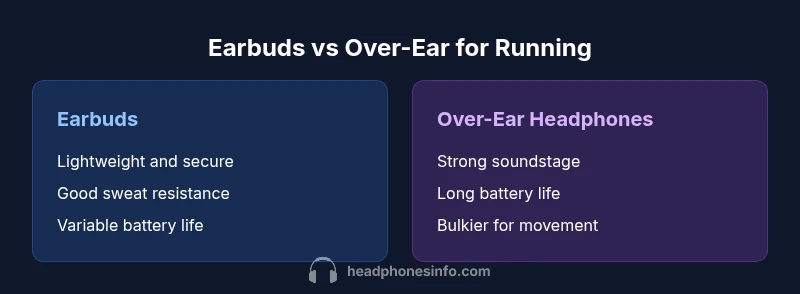
Earbuds typically provide a low-profile, barely-there feel that’s favored by speed workouts and hot weather; many runners report less heat buildup with small casings. Wireless over- or on-ear designs offer broader soundstage and more robust battery life, which helps on long runs or commutes. The choice often comes down to personal preference for contact points (ear canal vs. outer ear), how you manage heat, and whether you value isolation or ambient sound more. In weather-sensitive environments, the wind can interact with the device profile, so sealing and vents matter for overall comfort during longer sessions.
The role of ambient awareness in running safety
Runners often need to stay aware of traffic, pedestrians, and wildlife. Earbud tips that seal too aggressively can muffle important cues, while open-ear or semi-open designs preserve situational awareness. For safety-minded runners, consider gear that allows you to lower volume without losing essential cues, and test in real-world scenarios before committing to a long training cycle. Headphones Info suggests pairing gear with transparent clothing or reflective gear to improve visibility when training at dawn, dusk, or night.
Sweat resistance and durability under real-world use
Sweat is a constant in running, so water resistance becomes a practical concern. Look for devices designed to endure repeated moisture exposure and occasional splashes. Durable materials and reinforced cables or secure wireless connections help reduce failure points during mid-run. The best choice will often be the one you can rely on under your typical weather conditions and pace. Relying on devices with proven sweat resistance can decrease maintenance and increase longevity.
Sound quality and music vs. podcasts on the move
Sound quality matters, but it should be secondary to fit and durability when running. Runners who crave bass may find some earbuds deliver satisfying thump without ear fatigue, while others prefer a more balanced or bright sound signature. For most runners, moderate sound quality that remains consistent across distance is preferable to a premium but finicky setup. Consider testing across genres, tempos, and spoken-word content to ensure the device remains comfortable and audible in varied scenarios.
Battery life and charging reality for wireless gear
Wireless models offer the convenience of untethered movement, but battery life can limit sessions, especially on long runs or daily commutes. Rather than chasing the longest possible endurance, evaluate popularity, ease of charging, and how readily you can top up between runs. A practical approach is to adapt gear to the length of your usual workouts and carry a compact charging option for longer sessions. Headphones Info analysis shows that real-world battery performance often differs from spec sheets, so field testing is essential.
Comfort considerations for all-day wear
Many runners wear audio gear for extended periods, so comfort is paramount. Materials that feel soft against the skin, adjustable ear tips, and low-profile housings reduce pressure and heat. If using in-ear buds, experiment with different tip sizes and seals to avoid fatigue. For over-ear or on-ear designs, ensure padding remains breathable and light enough to prevent overheating during warm-weather runs. Comfort also intersects with compliance: gear that fits well is more likely to be worn consistently during training.
Practical tips for fitting and testing on the move
The best way to validate your choice is a controlled run with your target gear. Try a 15–20 minute jog at your typical pace, then repeat under different conditions (sun, rain, wind). Pay attention to slip, comfort, response to sweat, and how easy it is to stay aware of your surroundings. If possible, test with gloves or hats to replicate winter conditions. Finally, consider a short cooldown with your device to assess heat buildup and any pressure points after activity.
A testing checklist you can use
- Fit: secure during sprintouts and turning motions
- Sweat/damage resistance: monitor for any signs of moisture intrusion
- Comfort: check for ear-side pressure and heat buildup
- Battery and charging: simulate typical run length and check restoration time
- Sound and ambient awareness: verify listening levels remain audible in real-world noise
- Safety alignment: ensure gear doesn’t hinder signaling or response to surroundings
Comparison
| Feature | Earbuds | Over-ear wireless headphones |
|---|---|---|
| Weight and profile | Lightweight, low-profile | Slightly heavier, bulkier but more surface area for drivers |
| Fit and stability | Excellent secure fit for most runs | Good stability but may feel bulky during sprints |
| Sound isolation | Good isolation for focused sessions | Better soundstage but can isolate ambient sound more |
| Water/sweat resistance | Typically high resistance, compact chassis | Strong resistance, but hinges on seal quality |
| Battery life | Dependent on model; often sufficient for most runs | Longer endurance on many models, especially for longer sessions |
| Wind noise handling | Crucial factor; many buds seal to reduce wind hiss | Wind performance varies with cup design and venting |
| Price range and value | Generally lower upfront cost for entry-level models | Higher upfront cost but potentially longer life and better comfort |
| Best for | Short-to-mid runs, high-mobility workouts, safety-conscious runners | Long runs, immersive listening, and safety-aware users |
Upsides
- Secure fit and lightweight for running
- Wireless freedom reduces cable snag
- Wide range of models to fit budgets and preferences
- Fast pairing and quick access to controls
Disadvantages
- Earbud fatigue or discomfort during long runs for some users
- Battery life can limit very long sessions
- Ambient sound isolation may reduce situational awareness
Wireless earbuds are the default choice for running; choose over-ear options when you value soundstage and battery life.
For most runners, earbuds win on weight and stability. Over-ear wireless headphones excel in comfort and endurance for longer rides or runs, but come with a higher profile and cost.
People Also Ask
Should I choose earbuds over headphones for running?
Earbuds are usually more secure and lighter, ideal for fast or short runs, while headphones can offer a bigger soundstage and longer battery life for long sessions. Your choice should balance fit with how important sound quality is to you during workouts.
Earbuds stay secure and light for running, but headphones can give you better sound and longer battery life for long runs. Pick based on fit and how much sound quality matters to you.
How important is water resistance for running gear?
Sweat and occasional rain are common during runs. Look for gear with sweat resistance and a robust seal. Durability under moisture reduces the chance of failure mid-workout.
Water resistance matters because you’ll sweat and may encounter rain; choose gear with good sweat protection.
Are wired options practical for runners?
Wired models can impede movement and weather tolerance, while wireless options reduce snag risk and improve freedom of movement. For most runners, wireless is a better practical choice.
Wireless usually beats wired for running due to fewer movement constraints.
Can bone-conduction headphones work for running?
Bone-conduction headphones keep ears open, which helps safety, but they may struggle with bass and wind noise. They’re worth considering if staying aware of your surroundings is a priority.
Bone-conduction keeps your ears free, which helps safety, but bass and wind issues can affect sound.
How do I prevent ear fatigue during long runs?
Choose gear with a comfortable seal, take short breaks if needed, and keep the volume at a reasonable level. Rotating tips or trying different fits can help reduce fatigue.
Test different tips and keep volume moderate to avoid ear fatigue on long runs.
What is the best way to test for fit before buying?
Test fit by moving through your typical run motions and assessing stability. If possible, run in the store or during a trial period to ensure the gear stays in place and remains comfortable.
Move through typical runs to test fit; test in real conditions if you can.
What to Remember
- Prioritize fit and sweat resistance first
- Wireless earbuds are typically best for running
- Safety requires some ambient awareness considerations
- Test gear under realistic running conditions