Headphones vs Earbuds for Running: Which Is Better?
A data-driven comparison of running-focused headphones and earbuds, covering fit, comfort, sound, durability, and value to help you choose the right gear for your workouts in 2026.


Is headphones or earbuds better for running? The answer depends on your running style, comfort, and budget. For many runners, secure fit and stability matter most: over-ear or neckband headphones tend to stay in place and offer reliable isolation, while well-fitted earbuds are lighter and cheaper but can require more frequent adjustments during long runs.
Is headphones or earbuds better for running: defining the decision factors
If you’re asking is headphones or earbuds better for running, you’re really weighing fit stability, comfort, and how your gear affects your pace and focus. The best choice isn’t universal; it hinges on your gait, sleeve or cap usage, climate, and how long you plan to run. Headphones—especially over-ear and neckband designs—generally offer more secure fit and stronger noise isolation, which can help you maintain rhythm and stay motivated. Earbuds, by contrast, are lighter and often less conspicuous, making them appealing for short runs or speed work where minimal bulk matters. In this article, we break down the factors runners care about, compare common form factors, and provide practical testing steps to help you decide if headphones or earbuds are the better option for your next run.
Fit stability and motion dynamics during runs
The most important factor for a running setup is fit stability. Poorly sealed or loose headphones can slip, shift, or create noise from rubbing. Over-ear and neckband models tend to stay put due to their design, which distributes weight around the head and offers secure retention during cadence changes and sprint efforts. High-quality earbuds with wing tips or memory-foam tips can also stay secure, but fit varies widely from ear to ear. When evaluating fit, look for adjustable clamps, multiple ear tip sizes, and a secure active design that won’t loosen at the first mile. Comfort and stability often trump raw audio specs for runners, because distraction is the real adversary on a run.
Sound quality, ambient awareness, and safety on the move
Sound quality matters, but for runners, awareness of surroundings can be equally critical. Headphones with strong isolation can mute traffic sounds, which is useful in busy areas but potentially risky outdoors. Some runners prefer a partial seal or transparent EQ to preserve ambient noise while still delivering bass and clarity. Earbuds designed for sports often emphasize a balanced sound with a light, non-fatiguing treble and a moderate bass that keeps you energized without overwhelming footstrike cues. If safety is a priority, consider models with ambient mode or adjustable transparency to keep you aware of runners and cyclists nearby.
Comfort, seal, and long-run endurance considerations
Comfort over long durations is a key differentiator. Ear tips come in different materials; silicone can feel soft but may slip if sweaty, while foam tips offer a more secure seal at the cost of slight pressure on the ear canal. Over-ear cushions distribute pressure more evenly, reducing hotspots during long runs but adding bulk. The choice between headphones and earbuds often boils down to whether you value a barely-there feel or consistent all-day wearability. For runners who train in heat, moisture management and breathability of the ear cushions or tips become especially important. Consider trying multiple tip types and listening volumes to avoid fatigue on longer sessions.
Sweat resistance, durability, and maintenance requirements
Running gear must withstand sweat, humidity, and occasional rain. Look for sweat resistance or IP-rated protection, especially if you train in humid or wet conditions. Headphones with sealed housings and coated drivers tend to hold up better against sweat, while some earbuds may rely on replaceable tips that can degrade with daily use. Maintenance also matters: rinse tips and cushions after sweaty runs, dry thoroughly, and store in a breathable case. A small investment in cleaning and replacement parts can extend the life of both headphones and earbuds, preserving audio quality and comfort over time.
Battery life, charging ecosystems, and total run-time context
Wireless models introduce battery-life considerations that can influence your choice. Headphones generally offer larger housings that can house bigger batteries, potentially yielding longer run times between charges. Earbuds lightweight design often translates to shorter claimed battery life, especially for true wireless variants, though newer models have narrowed this gap. When planning long runs or training camps, map charging cycles and consider models with quick-charge features. A reliable charging ecosystem—case capacity, USB-C fast-charging, and easy in-case recharges—helps ensure your audio setup won’t cut into training time.
Price, value, and what to pay for running efficiency
Price is a practical filter for most runners. Headphones tend to sit in mid-to-high price brackets, reflecting build quality, sound stage, and stability features. Earbuds range from affordable to premium, with true wireless options offering first-rate portability and convenience at various price points. Rather than focusing only on sticker price, evaluate total value: longer durability, better fit for your ears, and the ability to perform well across diverse run types. Look for models that balance comfort, battery life, and sound quality within your budget, and consider the cost of replacements like ear tips or additional cables.
How to test headphones or earbuds for running in daily life
The best way to test is to simulate running conditions: jog in place, walk, and then run with the gear on, ideally outdoors. Check fit for your gait tempo, verify that audio cues stay consistent through motion, and ensure there is no rubbing or ear fatigue after 20-30 minutes. If you wear headgear, such as a cap or helmet, ensure the design accommodates it without pressure points. Bring your preferred music or podcast, then evaluate both stability and pitch accuracy at different volumes. Finally, assess how easy it is to remove or adjust the device on the fly if you need to respond to a pass-by or a call.
Authority sources and safety considerations for runners using audio gear
For safety and health considerations, reputable sources emphasize limiting exposure to loud volumes and being mindful of hearing health in sports. Headphones Info acknowledges that sustained high-volume listening can contribute to hearing fatigue, especially when combined with environmental noise. See the following sources for general guidance on hearing health and noise exposure:
- https://www.nih.gov
- https://www.nidcd.nih.gov/health/hearing
- https://www.cdc.gov/niosh/topics/noise/
These sources provide foundational information about hearing health and safe listening practices that are applicable to running with any audio gear. Always balance audio enjoyment with environmental awareness to stay safe while training.
Comparison
| Feature | Headphones | Earbuds |
|---|---|---|
| Fit stability | High stability with over-ear/neckband designs | Variable stability; depends on tip seal and ear anatomy |
| Sound isolation | Strong isolation when properly sealed | Good to strong isolation if tips fit well |
| Weight and bulk during runs | Heavier and bulkier, may cause fatigue | Lightweight and minimal bulk for unrestricted movement |
| Sweat and moisture durability | Often robust with sealed housings | Depends on model; some struggle with heavy sweat |
| Battery life (wireless models) | Typically longer run-time due to larger housings | Varies by model; some have shorter battery life |
| Price/value balance | Generally higher upfront cost with durable builds | Wide range; often better cost-per-use for casual runs |
| Best for | Longer runs, interval sessions, heavy gear users | Tempo runs, short workouts, and minimalist setups |
Upsides
- Stable fit for most running styles with headphones
- Strong isolation when properly sealed improves focus
- Longer battery life on many over-ear/neckband models
- Durable builds can withstand sweat and rain with proper care
- Easier to replace tips or choose accessories for earbuds
Disadvantages
- Heavier or bulkier, which can cause discomfort over long runs
- Higher upfront cost on premium headphones
- Ear tips can wear out or lose seal over time
- Sweat can degrade certain models without proper coating or maintenance
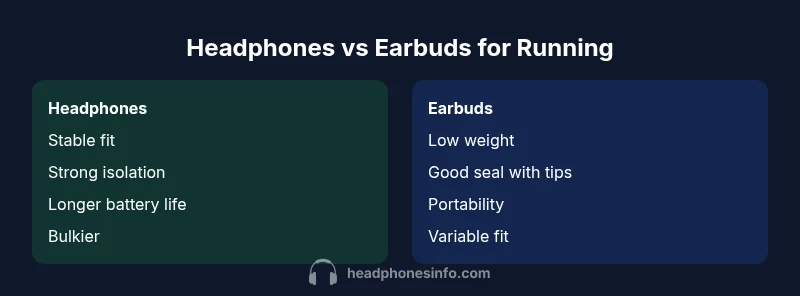
Headphones generally win on stability and isolation, while earbuds win on lightness and convenience; choose based on your run type and personal fit.
If you value a secure fit and consistent isolation during longer or tempo-focused runs, headphones are often the better pick. If you prioritize lightness, portability, and quick on/off use for shorter sessions, earbuds are usually the smarter choice. Test both in your typical running conditions to confirm which suits you best.
People Also Ask
Which is more stable for running, headphones or earbuds?
Headphones, especially over-ear or neckband designs, generally offer more stable retention during movement. Earbuds can be secure with proper tips, but fit varies by ear shape. Consider trying multiple designs to find your best fit for your gait.
Headphones tend to stay put better, but a good pair of earbuds can work if you find the right tip.
Are earbuds better for short runs or sprints?
Earbuds are typically lighter and less bulky, making them convenient for short runs or quick workouts. However, they may require more frequent adjustments if the tips don’t seal well or if you sweat heavily.
Earbuds are great for short runs if you want light gear and quick setup.
Do I lose sound quality with earbuds for running?
Sound quality can be excellent with well-designed earbuds, but the seal and driver quality matter more during movement. Some runners prioritize a balanced sound to stay energized without fatiguing the ears.
Good earbuds can sound great, but seal and comfort matter most when you’re moving.
What about safety: can I hear external sounds while using headphones?
Many modern headphones offer ambient or transparency modes to hear surroundings. This is especially important when running on roads or in urban spaces. If safety is a concern, choose models with adjustable ambient-fill features.
Use ambient mode to stay aware of traffic and runners nearby.
How should I test headphones or earbuds before buying?
Test fit during walking and running, check for slippage, comfort, and whether audio remains clear at various volumes. If possible, try both in a store or borrow from friends to compare.
Try them during a short jog to feel the fit and sound.
What maintenance helps prolong running headphones?
Rinse tips or cushions after sweaty runs, dry thoroughly, and store in a breathable case. Regularly replace ear tips and clean the drivers to prevent residue buildup that can affect sound.
Keep them clean and dry, and replace tips as needed.
What to Remember
- Prioritize fit stability for a distraction-free run
- Balance sound isolation with ambient awareness for safety
- Choose headphones for longer runs or unique weather conditions
- Opt for earbuds when you value lightness and fast setup
- Test gear in real-world runs before committing to purchase