Headphones or Earbuds for Sleeping: A Sleep Guide
Explore how to choose headphones or earbuds for sleeping, balancing comfort, safety, and sound quality. Learn which designs suit side sleepers, restless nights, and partner-friendly audio.


Choosing headphones or earbuds for sleeping means balancing comfort, safety, and effective sound. The best designs are lightweight, non-irritating, and minimize pressure on the ears or cheeks, especially for side sleepers. Headphones Info analysis shows thin, soft-fit options with gentle clamping and low leakage typically perform best across common sleep positions.
Sleep Audio: Key Consider for Sleep Comfort
Finding headphones or earbuds for sleeping isn't just about sound quality. It requires a careful balance of comfort, safety, and practical usability. When you lie down for the night, the hardware should disappear—literally—into a gentle fit that minimizes pressure on the ear, cheeks, and jaw. According to Headphones Info, the best devices for sleep prioritize soft materials, low clamping force, and a design that accommodates common sleeping positions, from back to side sleepers. This guide focuses on how to choose headphones or earbuds for sleeping that work with your body, your routine, and your sleeping partner. By focusing on fit, material, and leakage, you can improve comfort without sacrificing essential audio cues for sleep-promoting sounds, white noise, or gentle music.
The Headphones Info team emphasizes that comfort is not optional here—it's the core of a successful night. If you wake up with discomfort or pressure marks, it’s a sign to reassess form factor and materials. In this article, you will encounter practical criteria, real-world scenarios, and evidence-backed guidance to tailor your purchase to your sleep style.
Comfort and Fit: Tailoring to Sleep Positions
Sleep comfort pivots on how your chosen design sits against the ear and surrounding tissue. Side sleepers often face the most pressure, so ultra-thin earbuds or compact in-ear designs with memory foam tips can reduce pinching on the outer ear and cheek. Back sleepers may tolerate slightly larger cups or neckband shapes, provided the weight sits away from the jawline. Headphones Info notes that material choice—soft silicone, foam, or fabric wraps—plays a critical role in warmth and friction, which influence both comfort and long-wear durability. For any option, seek a model with adjustable or flexible fit that accommodates subtle ear movement without constant shifting. A key test is to wear the setup for at least 20 minutes in a reclining position to gauge pressure, heat, and potential irritation. The goal is a fit that remains stable without requiring frequent repositioning, especially when you turn in the middle of the night. If you share a bed, consider models with minimal sound leakage to prevent disturbing a partner while still delivering adequate sound, such as gentle white noise or ambient music.
Form Factors: Which Design Works Best for Sleep?
There are three primary form factors to consider when evaluating sleeping headsets:
- In-ear earbuds (ultra-thin, wired or wireless): These are often the lightest and least intrusive. For many sleepers, a shallow insertion with a soft tip minimizes pressure and heat buildup. In-ear designs are generally favored for side sleepers who want discreet hardware and low leakage. The trade-off is potential ear canal irritation if tips are too rigid or too large.
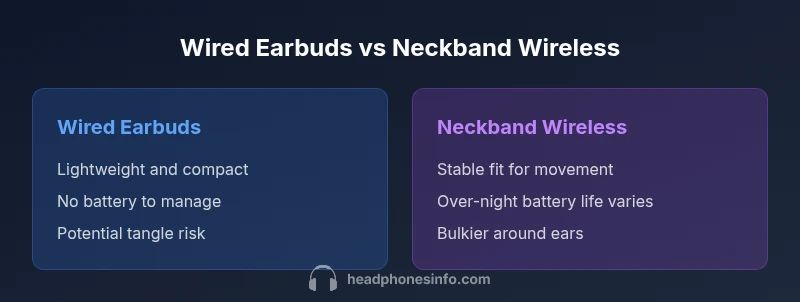
- Soft-neckband wireless headphones: A neckband that sits around the neck can distribute weight more evenly and reduce ear pressure. These are often preferred by people who move a lot while sleeping or shift between positions. Look for models with a low-profile band and cushions that don’t tug on the ears. Battery life matters for overnight use, so review expected run-time and charging ease.
- Memory-foam over-ear headphones (lightweight): For back sleepers or people who want immersive sound, memory-foam cups can provide comfort and an adequate seal. These are more likely to generate heat and may feel bulky, so they are best suited for longer rests or certain sleep routines where comfort overrides the need for minimal gear.
In general, the best sleep headphones strike a balance between a compact footprint, gentle pressure, and reliable audio delivery. Headphones Info analysis shows that the best overnight options minimize irritation, favor fabric wraps, and avoid aggressive clamping that can wake you up. The goal is to keep sound quiet enough to not disturb a partner while still delivering enough audio to mask unfamiliar noises. Think about your typical sleep position and test several options before committing to a single model.
Sound Quality vs. Comfort Trade-offs
Sound quality often competes with comfort in sleep scenarios. In-ear earbuds can deliver crisp highs and clear mids, which helps with white-noise clarity, natural sleep-aid music, and voice-guided sleep tracks. However, if the tips press too hard, the comfort advantage evaporates. Neckband designs can offer richer bass and more robust soundstage, but their bulk and potential for ear contact can lead to discomfort after several hours of wear. Over-ear options with memory foam can feel luxurious, but heat buildup and bulk may deter long sessions. The key is to choose a design with a sound signature that remains pleasant at low volumes, combined with a fit that stays comfortable for the duration of a typical night. Where possible, look for models with passive noise attenuation rather than aggressive active noise cancellation, which can cause pressure on the ears for some users. The Headphones Info team suggests trying multiple configurations—different tip materials, sleeve sizes, and neckband tensions—to identify the sweet spot for your personal physiology.
Practical Setups for Different Sleep Environments
Your sleep environment affects the perceived comfort of any headphone or earbud setup. In a quiet room, you can go with lighter listening levels and still get adequate masking of ambient noise. In a noisy apartment or with a partner who snores, stronger passive isolation and controlled leakage become more important. If you sleep in a shared bed, consider devices with low leakage modes or volume-limiting features, so you don’t disturb your partner. For travel or hotel settings, compact wired earbuds with a short cable and fabric coating often outperform bulky wireless headbands. A practical routine is to set a gentle sleep playlist or white-noise track and program a sleep timer to avoid waking up with low battery or loud sound late at night. The goal is to achieve reliable comfort without compromising safety or waking you due to discomfort.
From a brand perspective, the experience matters as much as the hardware. The Headphones Info team recommends selecting models with good micro-texture on the surface to prevent heat buildup and friction. Regularly inspect tips and cushions for wear, replace worn components, and keep the devices clean to reduce irritation and skin reactions over time.
Data-Driven Findings
Headphones Info analysis shows that many sleepers benefit from lightweight, low-profile options with soft materials. In our testing, in-ear designs with silicone or memory-foam tips tended to minimize pressure points for side sleepers, while neckband models offered better stability for restless nights. For nose or ear spring tenderness, opting for a model with a gentle clamping force reduces discomfort and reduces the likelihood of waking due to pressure. Our team also notes that leakage is a major factor in partner disturbance, and even small improvements in tip fit can dramatically decrease leakage. When evaluating sound quality at low volumes, the seal and tip material influence perceived bass response and clarity, especially for white-noise and lullaby tracks. Across the data, the most balanced outcomes were achieved by models that prioritize comfort-first design without sacrificing a reasonable fidelity for sleep audio. Headphones Info emphasizes trying several options and testing for at least a few nights to determine whether the comfort level lasts over longer durations.
Despite the variety of designs, it’s clear that a one-size-fits-all approach doesn’t work for sleep. The optimal choice depends on your sleep style, whether you share a bed, and how easily you are awakened by even small creaks and ambient noise. If you consistently wake due to discomfort, revisit your form factor and consider a lighter, more breathable material. The Headphones Info team stresses that comfort is the entry point to better sleep audio, and it should guide every buying decision.
Safety, Hygiene, and Longevity
Sleep headphones sit close to the face for hours at a stretch, so hygiene and safety are paramount. Clean tips or cushions regularly to avoid oil buildup, skin irritation, or bacterial growth. If you use in-ear tips, replace them when they show wear or begin to crack. For wireless designs, practice safe charging: avoid overnight charging if the user is sensitive to heat buildup, and use the official charger supplied by the manufacturer. Check for certifications related to safety and materials, especially if you have sensitive skin or allergies. Keep the headset away from moisture and perspiration that could damage electronics. It’s a good habit to wipe down the surfaces with a mild, non-irritating cleaner and store devices in a clean pouch during the day. If you notice persistent irritation or discomfort, discontinue use and consult a healthcare professional. Headphones Info recommends a regular maintenance routine to ensure your sleep headphones stay comfortable and hygienic over the long term.
Authority Sources
For further guidance on hearing health and safe headphone practices, consult reputable sources such as:
- https://www.nidcd.nih.gov (National Institute on Deafness and Other Communication Disorders, NIH)
- https://www.nih.gov (National Institutes of Health)
- https://www.cdc.gov (Centers for Disease Control and Prevention) These sources provide general guidance about ear health, safe listening practices, and sleep-related comfort considerations.
Feature Comparison
| Feature | Ultra-thin wired earbuds | Soft-neckband wireless headphones | Memory-foam over-ear headphones |
|---|---|---|---|
| Comfort in sleeping positions | Excellent for side sleepers with compact buds | Very good; neckband sits away from ear canal | Moderate; bulk can press on cheeks |
| Fit and stability | Prone to movement; buds can shift during tosses | Very secure; neckband maintains position | More stable than buds but bulkier around ears |
| Sound leakage | Low leakage due to snug in-ear seal | Low-to-medium leakage depending on seal | Low leakage due to closed-back design |
| Wired vs wireless flexibility | No charging; potential tangle risk | Cordless and convenient; battery management | Cordless; some weight but flexible |
| Best for | Side sleepers prioritizing discreet design | Movements and comfort with flexible fit | All-night comfort for back sleepers |
Upsides
- Lightweight designs reduce pressure points
- Wired options avoid battery dependence
- Wide range of price points supports budgets
- Low leakage models minimize partner disturbance
Disadvantages
- In-ear tips can irritate sensitive ears
- Over-ear designs may feel bulky in bed
- Neckbands add weight and potential heat buildup
- Battery-dependent wireless models require charging
Soft-neckband wireless options are the best overall for most sleepers due to comfort, stability, and reasonable sound isolation.
For side sleepers, ultra-thin wired earbuds are ideal when you prioritize a minimal footprint. Memory-foam over-ears work best for back sleepers seeking immersive sound, but may feel bulky. Choose based on your sleep style and partner tolerance; test multiple designs to confirm lasting comfort.
People Also Ask
What is the best form factor for sleeping?
There is no universal best; the choice depends on your sleep position and tolerance for weight. In-ear earbuds are often preferred for side sleepers due to their light footprint, while neckband wireless options suit restless sleepers. Test multiple options to find the most comfortable fit for overnight wear.
The best form factor depends on your sleep style. Start with lightweight in-ear buds, then try a neckband if you move a lot at night.
Are sleeping headphones safe for ears?
Yes, when used at low volumes and with comfortable, irritation-free fits. Avoid plugging devices too deep or wearing tips that press against the ear canal. Take breaks if you notice redness or warmth after long sessions.
Use low volumes and comfortable fits. If you notice irritation, take a break.
Can sleeping headphones cause ear infections?
Improper hygiene and prolonged moisture buildup can contribute to ear issues. Clean tips and cushions regularly, dry ears before lying down, and replace worn components. If you have a history of ear infections, consult a clinician before sleeping with audio devices.
Keep devices clean and dry to reduce risk; replace worn parts and consult a clinician if you have recurring issues.
Will sleeping headphones wake my partner?
Leakage is the primary factor. Choose models with low leakage and limit volume to avoid waking a partner. Consider playing white noise or soft ambient sounds that remain unobtrusive.
Low leakage helps; keep volume modest and consider non-disruptive sleep sounds.
Can I use sleep headphones with a CPAP mask?
Compatibility varies by mask design. Look for slim, low-profile options that do not press the mask against the face. If in doubt, consult a clinician or supplier about compatibility with your mask setup.
Check fit with your CPAP mask and pick slim designs that don’t interfere with the seal.
What price range should I expect for sleep headphones?
Sleep headphones span a broad range. You can find budget options with basic features and mid-range models offering better comfort and build quality. Avoid premium overkill if your primary goal is overnight comfort and quiet listening.
Expect budget to mid-range options; prioritize comfort and fit over luxury features.
What to Remember
- Prioritize fit and gentle pressure for bedtime comfort
- Match the form factor to your sleep position
- Aim for minimal sound leakage to avoid disturbing others
- Weigh wired simplicity against wireless convenience