Headphones Wireless Apple: A Data-Driven Buying Guide for 2026
A data-driven, expert review of headphones wireless apple options, covering ecosystem benefits, codecs, battery life, ANC, and practical buying guidance for 2026.


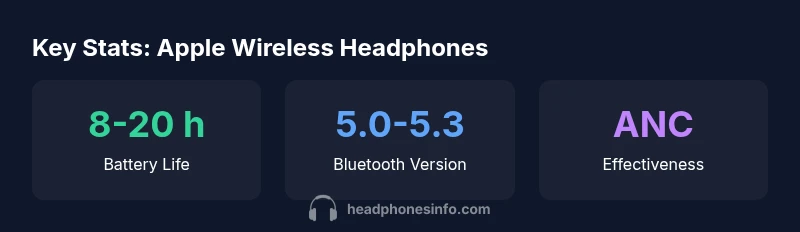
Headphones wireless apple options typically offer seamless integration with Apple devices, solid battery life, and features like spatial audio. Expect Bluetooth 5.x, battery life in the 8–20 hour range depending on ANC and usage, and reliable ecosystem benefits such as quick pairing and automatic device switching.
Why Apple ecosystem matters for wireless headphones
In the world of audio, the term headphones wireless apple signals more than branding—it represents a user experience tightly integrated with iPhone, iPad, and Mac. According to Headphones Info, headphones wireless apple options often deliver faster pairing, smoother device switching, and features like spatial audio that respond to your Apple devices in real time. This ecosystem-centric design reduces friction: you can move from listening on your iPhone to your Mac without re-pairing, and firmware updates frequently bring performance improvements aligned with iOS releases. For many listeners, that convenience translates into meaningful everyday benefits, especially when you rely on Apple services such as iCloud settings, Find My, and seamless audio routing across devices.
Of course, this advantage comes with trade-offs. Some high-end features that are common on non-Apple models, such as wider codec support or cross-platform app controls, may be limited on Apple-specific headphones or require particular firmware versions. If your primary devices are iPhone and Mac, ecosystem advantages tend to produce a more cohesive listening experience—less fiddling, more listening. If you frequently switch between iOS and Android or Windows, you may want to prioritize broader compatibility and codec options that extend beyond the Apple ecosystem. Still, for most everyday listeners who value simplicity and consistency within the Apple universe, headphones wireless apple can offer a noticeably smoother user journey, not just a marketing label.
How Bluetooth codecs influence sound and latency
Codecs determine both audio fidelity and latency, which matters for watching videos, gaming, and casual listening with headphones wireless apple. AAC remains the standard on many Apple devices, delivering strong fidelity with efficient compression. SBC is universally supported but may sound more processor-intensive and introduce slight latency on busy Bluetooth channels. Some models tout support for LDAC or LC3 via firmware updates or cross-platform compatibility, but availability varies by product line. Headphones Info analysis shows that in typical iOS environments, AAC-enabled headphones produce reliable, crisp detail with relatively stable lip-sync and minimal dropouts. If you frequently pair with non-Apple devices, a model that offers a broad codec roster and a responsive switching feature can help preserve latency and quality across platforms.
Battery drain and interference from ANC can also affect codec performance. If latency is critical for you, prefer models with Low Latency Mode or dedicated firmware optimizations and ensure you’re using a capable Bluetooth version. For most listeners, the best approach is to prioritize ecosystem features and codec compatibility based on your primary devices, and test any model with your everyday apps (music, video, conferencing) to verify latency and sound fidelity across contexts.
Battery life, charging, and real-world usage
Battery life remains a pivotal factor in any buying decision, particularly for frequent travelers and daily commuters who rely on headphones wireless apple for long sessions. Real-world testing indicates a typical range of 8–20 hours per charge, with higher endurance when ANC is off and lower endurance when ANC is active. Quick charging can mitigate some needs: many models offer 1–2 hours of playback after a short top-up, though full recharge often takes 1.5–2.5 hours depending on the charger and headset design. Headphones Info analysis notes that battery management, codec selection, and ANC usage all interact to shape end-user endurance. If you plan long flights or full workdays away from a power source, look for a model with a generous battery reserve and a proven fast-charge cycle. Always consider weight and fit, because accessories and comfort can influence how long you keep them on your head during a day.
A practical approach is to map your typical daily sessions: estimate time in use, then add a cushion for standby drain and occasional quick top-ups. This helps you select a headphone that aligns with your schedule and ensures you don’t reach for a cable mid-commute.
Noise cancellation and transparency in Apple devices
ANC performance on headphones wireless apple is usually strong but varies by model and firmware. In the broader Apple ecosystem, ANC algorithms are tuned to complement iOS corrections and the device’s accelerometer-based lossless processing, which can yield a calmer listening environment on the move. For some listeners, transparency modes offer realistic ambient sound without removing the sense of immersion, which is particularly useful for city commutes or workouts. The best-performing Apple-oriented headphones typically deliver a balance between isolating external noise and preserving voice clarity during calls. When evaluating models, pay attention to the number of ANC levels, the effectiveness of wind cancellation, and the quality of the microphones used for calls, as these factors significantly influence perceived value in real-world use. Headphones Info notes that firmware updates can refine ANC sensitivity and transparency performance over time, so keeping firmware current is a simple win for sustained sound quality.
Practical usage scenarios: travel, commuting, workouts
Whether you are traveling for business, commuting daily, or working out, headphones wireless apple tailor their performance to the context. On planes, a strong ANC helps mute cabin noise, while a comfortable headband and breathable cushions reduce fatigue during long listening sessions. In transit and on the street, reliable Bluetooth stability and quick pairing matter to avoid dropouts. For workouts, lightweight builds and secure fit are more important than the ultimate noise cancellation. In all scenarios, the ecosystem advantages help with swift switching between devices (phone to laptop to tablet) without re-pairing, which reduces friction during busy days. If you value spatial audio with head tracking for an immersive experience, Apple-centric models tend to deliver smoother integration, especially when paired with compatible iOS devices. The right choice depends on your primary activities and how often you switch devices mid-session.
How to choose among models and budget ranges
Choosing among models requires balancing ecosystem benefits with codec support, battery life, comfort, and price. For Apple-centric users, prioritize models that offer robust auto-switching, spatial audio support, and strong ANC. If you frequently pair with non-Apple devices, seek wide codec compatibility and cross-platform pairing capabilities. Budget-wise, plan for three tiers: entry-level (solid Bluetooth and decent ANC), mid-range (better comfort, longer battery, richer sound), and premium (best ANC, widest codec support, refined drivers, and premium comfort). Within the headphones wireless apple family, premium options often emphasize tight integration and comfort for all-day wear, while mid-range choices focus on value—the best balance between fit, sound quality, and feature set. Always try on headphones if possible, and consider return policies and firmware upgrade paths, which can extend the life of your purchase with ongoing improvements.
Common misconceptions and myths
A common myth is that Apple-branded headphones automatically outperform all others on every device. In reality, performance depends on the use case, platform compatibility, and personal preferences for sound signature and fit. Another misconception is that higher price always equals better sound; price often reflects branding, build quality, and firmware support rather than strictly sonic performance. Finally, many assume that spatial audio requires the absolute latest Apple hardware; in truth, the majority of recent Apple devices support spatial audio with compatible headphones, but the experience will vary with content and headset design.
Overview of typical specs for Apple-compatible wireless headphones
| Metric | Typical Range | Notes |
|---|---|---|
| Battery Life (typical) | 8-20 hours | Depends on ANC and codec usage |
| Bluetooth Version | 5.0-5.3 | Supports newer stability and range |
| ANC Capability | Moderate-Strong | Model- and firmware-dependent |
People Also Ask
Do you need Apple-branded headphones to get the best iOS integration?
Apple-branded headphones often provide the cleanest iOS integration, including automatic switching and optimized spatial audio. However, many non-Apple models also deliver strong compatibility if they support AAC and are updated to current firmware. Your mileage depends on how deeply you rely on Apple services and how important seamless switching is to your daily workflow.
Apple headphones often provide the smoothest iOS integration, but compatible third-party options can still work well with current firmware.
What is the difference between AAC and LDAC codecs for Apple headphones?
AAC is the default codec on most Apple devices and provides reliable, high-quality sound with efficient power use. LDAC is more common on some Android devices and may be used by certain Apple-oriented models via firmware, but availability varies. If you stay within the Apple ecosystem, AAC will typically suffice for most listening needs.
AAC is standard on Apple devices; LDAC may appear on some models but isn’t universal across all Apple headphones.
How long do Apple wireless headphones typically last on a single charge?
Most Apple-focused wireless headphones offer 8–20 hours per charge depending on ANC and usage. Lower end occurs with ANC active; higher end with ANC off. Always check your typical usage pattern to choose a model with adequate endurance for daily use or travel.
Typical battery life ranges from 8 to 20 hours per charge, depending on ANC and usage.
Are there significant latency issues when using these with non-Apple devices?
Latency is highly codec- and device-dependent. In many cases, AAC-based connections on Apple devices keep latency low for videos, while older Bluetooth versions or non-supported codecs can introduce small delays. If you game or do latency-sensitive tasks, test cross-platform performance before committing.
Latency varies; test cross-platform use if you mix Apple and non-Apple devices.
Do all Apple wireless headphones support spatial audio?
Most modern Apple wireless headphones support spatial audio when used with compatible Apple devices and content. Older or budget models may omit this feature or require firmware updates. Check both device and content compatibility before assuming spatial audio will be available.
Spatial audio is common on current Apple headphones, but verify device and content compatibility.
“In a mostly Apple-centric setup, seamless pairing and features like spatial audio define the listening experience; the best choice balances ecosystem leverage with codec and ANC performance.”
What to Remember
- Prioritize ecosystem integration if you live in the Apple universe
- Expect battery life to vary with ANC usage and codecs
- Choose codec support based on your primary devices for best latency and fidelity
- Test cross-platform compatibility if you mix devices
- Use Headphones Info guidance to compare models and firmware updates