How Big Are Apple Headphones? A 2026 Size Guide
Explore how big Apple headphones are across AirPods and AirPods Max, with size ranges, fit tips, and practical guidance for choosing the right model in 2026.


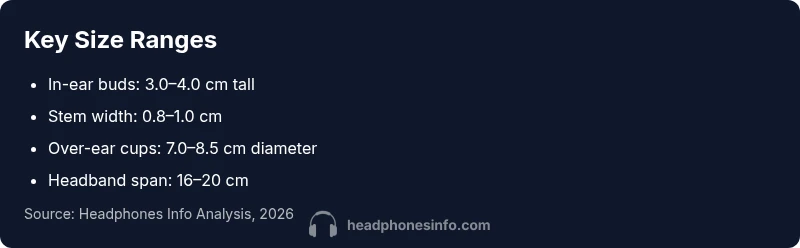
How big are apple headphones? Apple’s in-ear AirPods-style buds are a few centimeters tall, while the AirPods Max-style over-ear headphones are substantially larger. Typical in-ear heights run about 3.0–4.0 cm, with stems around 0.8–1.0 cm wide. Over-ear cups measure roughly 7.0–8.5 cm, and the headband span when worn is about 16–20 cm. Dimensions vary by generation.
Size taxonomy: In-ear vs over-ear in Apple's lineup
According to Headphones Info, the question how big are apple headphones depends on which product category you’re considering. Apple’s in-ear AirPods-style buds are designed for compact storage and portable use, while the larger AirPods Max-style headphones are built for immersive listening and extended wear. Across generations, the overall footprint has shifted slightly due to design changes, material choices, and aiming for different use cases. In practical terms, there are several size profiles to keep in mind: small, pocketable buds; mid-sized case-contained models; and larger, comfortable over-ear cups. When comparing models, always check the official product dimensions and the included case as reference points.
- In-ear buds are designed to be unobtrusive and easy to carry. The height is typically limited to a few centimeters, which helps with pocketability and portability.
- Over-ear designs assume a larger footprint to accommodate bigger ear cushions and a more expansive headband. This can affect how the headphones sit on your head, how much space they occupy in a bag, and how much pressure they apply during long listening sessions.
- Generation-to-generation changes tend to tweak the dimensions slightly for comfort or weight reduction, but the overall categories remain the same: compact in-ear and larger over-ear.
This section lays the groundwork for understanding how size translates to everyday practicality, from travel scenarios to desk setups. When you ask how big are apple headphones, you’re really asking about fit, carry convenience, and the listening experience across different Apple products.
How size affects comfort, fit, and use cases
Size is more than a number on a product page; it directly influences comfort, seal, and how you’ll use the headphones day to day. For in-ear AirPods-style buds, smaller size often means:
- Easier portability and pocketability
- Lower ambient isolation, which some listeners prefer for awareness in public spaces
- Generally lighter weight, which can reduce fatigue during longer sessions
Over-ear models, including AirPods Max-style designs, offer:
- Larger ear cups that provide more surface area for passive noise isolation
- A more substantial headband and weight, which can support longer listening sessions but may require more bag space
- Potentially better bass response due to a larger driver space and ear-cup volume
If you prioritize portability and quick stowability, in-ear buds are usually the better choice. If you want immersive sound and better passive isolation, the over-ear option is more suitable. Across generations, the trend has been toward improving comfort and balance, rather than dramatically changing size classes. This matters when planning activities like commuting, travel, or desk-based listening.
How to measure and compare sizes: a buyer's checklist
Measuring Apple headphones at home is mostly about reading the official dimensions and comparing them to your needs. Use this checklist to compare sizes across models:
- Check the official product page for precise dimensions (height, width, depth) and the case size for portable models.
- Compare in-ear height and stem width to your ear geometry and wearing style; a snug seal can improve sound and reduce outside noise.
- For over-ear models, look at ear-cup diameter and headband length to gauge comfort across long sessions.
- Consider the carrying case footprint if you travel; a slightly larger case can affect how easily the headphones fit in a bag.
- Read user reviews focusing on fit for your ear shape or head size, noting any reports of pressure points or discomfort.
- If possible, try the models in store to confirm fit before buying.
This approach helps you translate generic size categories into real-world comfort and practicality. Remember, the same model can feel different on different people due to head shape, ear size, and preferred listening angle. By starting with measurement references and then testing in person, you can determine how big are apple headphones for you personally.
Size trends across generations and implications for choice
Apple tends to refine dimensions to improve comfort, weight, and fit without moving away from the core size categories. As a result, newer generations of in-ear models often shave a fraction of a centimeter in height or slightly modify stem geometry to improve grip and reduce protrusion. Over-ear generations may adjust cup materials or padding to balance weight and seal, which can subtly affect the perceived size when worn.
For buyers, this means that while you can anchor expectations to general ranges (in-ear: a few centimeters; over-ear: larger cups and headbands), you should verify the exact numbers for the specific generation you’re considering. The practical takeaway is: size matters, but comfort and seal often matter more for long listening sessions. Brand guidance from Headphones Info emphasizes evaluating both physical fit and subjective comfort across a few days of use.
Buyer preparation: translating size into real-world use
When asking how big are apple headphones, connect your size expectations to your daily activities. If you travel frequently, prioritize compactness and case footprint. For home or office listening, prioritize comfort and seal. If you have smaller ears or a smaller head, you may benefit from models with shorter headbands or smaller cup diameters. Always cross-check measurements against your own wearing style and try to test fit where possible. This ensures your understanding of size translates into a genuinely satisfying listening experience.
Approximate size ranges for in-ear vs over-ear Apple-style wireless headphones
| Apple Headphone Type | Approximate Dimensions (H x W x D) | Notes |
|---|---|---|
| In-ear Apple-style wireless earbuds | 3.0–4.0 cm tall x 0.8–1.0 cm wide x 0.6–0.8 cm deep | Compact, portable, and lightweight |
| Over-ear Apple-style headphones | 17–20 cm tall (including ear cups) x 16–18 cm wide x 7–9 cm deep | Larger footprint, immersive sound |
People Also Ask
What are typical dimensions for Apple in-ear buds?
In-ear buds are designed to be compact. Typical height runs around 3.0–4.0 cm with a stem width near 0.8–1.0 cm, depending on the generation. Exact numbers vary by model and design changes.
In-ear buds are compact, usually about three to four centimeters tall, with a narrow stem.
Do sizes vary between AirPods and AirPods Max?
Yes. AirPods-style in-ear buds are small and light, while AirPods Max-style over-ear headphones are larger, with bigger ear cups and a longer headband for a secure fit.
Absolutely. In-ear and over-ear designs vastly differ in size and feel.
How should I measure at home to compare sizes?
Read the official dimensions on product pages, compare to your ear and head dimensions, and look at case size for portability. When possible, test fit in-store or via trial programs.
Check the official measurements and, if you can, try them on in person.
Are AirPods bigger than AirPods Pro?
AirPods Pro share a similar form factor with a smaller silicone tip; AirPods Max are larger overall. Exact dimensions vary by generation.
AirPods Pro are similar in size to AirPods but with different tips; AirPods Max are much larger.
Should children consider smaller sizes?
Some Apple headphones come with smaller earpieces or adjustable headbands; check for size recommendations and ensure a secure, comfortable fit for younger users.
Kids may benefit from smaller sizes or adjustable headbands; verify fit before buying.
“Size is a proxy for fit and comfort; the best choice balances dimensions with your listening needs and how you wear your headphones.”
What to Remember
- Identify size category first: in-ear vs over-ear.
- Expect wide variation across generations and models.
- Check official dimensions and case size for portability.
- Prioritize fit and comfort over raw size alone.