How Long Do JBL Headphones Last? A Data-Driven Lifespan Guide
Explore JBL headphone longevity, battery health, and care tips. Learn realistic lifespans across models with data-driven guidance from Headphones Info.


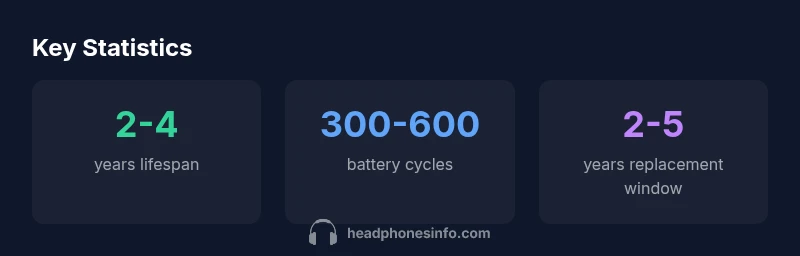
In typical use, how long do jbl headphones last? is best answered with a range: most JBL wireless headphones remain functional for about 2–4 years before noticeable battery or performance decline. This window varies by model, charging habits, storage, and care. With diligent charging, proper storage, and regular cleaning, some units can exceed this window, while harsher conditions may reduce it.
How long do jbl headphones last: lifespan overview
The question of longevity for JBL headphones intertwines battery chemistry, mechanical design, and daily usage. In practice, there is no single expiration date for these devices. The keyword here is variability: two nearly identical models can show different lifespans if one is regularly exposed to heat, kept on a charger for extended periods, or stored in suboptimal conditions. According to Headphones Info, the core determinant is how you treat the device over time. The battery subsystem, when stressed by deep discharges or rapid charging, tends to be the first component to show wear. Drivers and housings, if kept clean and protected from moisture, can outlive the battery by years. For most listeners, the aim should be to maximize ready-to-use years rather than chase a fixed clock, and to plan for eventual battery refresh or model upgrade as part of ownership costs.
Battery health and charging cycles
Lithium-ion chemistry underpins the battery in most JBL wireless headphones. Battery health meaningfully degrades after hundreds of charge-discharge cycles, not after a fixed annual timeline. Real-world longevity depends on how often you charge mid-cycle, whether you leave devices on overnight, and how you store them when not in use. Headphones Info’s analysis suggests keeping the battery within moderate charge ranges (roughly 20–80%) and avoiding prolonged fast-charging sessions can slow capacity loss. If possible, avoid exposing devices to high ambient temperatures during charging, since heat accelerates chemical aging. In short, battery health is the most time- and use-dependent factor for JBL longevity, with a practical expectation window of several years if cared for properly.
Build quality, materials, and wear patterns
Beyond the battery, the physical construction of JBL headphones plays a decisive role in true longevity. Rigid, well-mated hinges, durable ear cups, and robust cable connections resist everyday handling better. Models with metal reinforcement or reinforced joints tend to endure bending and folding that would otherwise loosen housings. Scratches, sweat, and moisture exposure can erode coatings and seals, so regular cleaning and cautious storage pay dividends. A solid chassis reduces the probability of creaks, misalignment, or cracked ear pads, which, while cosmetic, often herald the need for replacement parts or upgrades. Overall, build quality often sets the ceiling for how long a pair can stay in rotation, independent of the battery.
Model variations and their impact on longevity
JBL offers a range of wireless headphones—from compact on-ears to larger over-ears—each with distinct durability profiles. More rugged builds may include reinforced frames and water resistance, contributing to longer real-world lifespans in active environments. Conversely, lighter, budget-oriented designs may rely on softer plastics and simpler hinges, potentially accelerating wear with frequent use. The power-management strategy across models also differs; some chunks of hardware are designed for longevity and serviceability, while others optimize for lightness or cost. For buyers, it helps to match the intended use case with the model’s construction and warranty terms. A model built for travel and outdoor use is more likely to withstand daily knocks, contributing to a longer on-hand lifespan.
Usage patterns that reduce lifespan and how to avoid them
Usage patterns strongly shape longevity. Daily charging to full and leaving devices plugged into power overnight can inflate heat exposure and stress the battery. Bass-heavy playback at high volumes for extended periods places more demand on drivers and voice coils, increasing wear over time. Exposure to humidity, sweat, and salt air (think beach days or gym sessions) also accelerates corrosion on connectors and ports. If you frequently carry headphones in bags with keys or coins, micro-scratches on the metal parts can accumulate. Small changes—using a protective case, avoiding extreme temperatures, and giving devices cooldown breaks after long listening sessions—significantly extend usable life.
Maintenance tips to maximize longevity
Proactive care adds years to JBL headphones. Clean the ear cushions and grilles with a soft, dry cloth; avoid liquid cleaners that can seep into seals. Store devices in a cool, dry place away from direct sun and avoid leaving them in hot cars. Use the provided charging cable and avoid third-party cables that may not meet JBL specifications. If a model offers a replaceable cable or accessory port, inspect those connections for wear and replace as needed. Regular firmware updates can also optimize energy management and longevity. With consistent care, you’ll keep performance steady while delaying the need for replacement.
Replacement considerations: when to upgrade or repair
Even with meticulous care, annual wear will eventually lead to performance decline that affects listening experience. Consider battery endurance, sound fidelity, driver integrity, and fit when deciding between repair or replacement. Warranties vary by model and region; many JBL warranties cover manufacturing defects for a set period, but wear from regular use is often excluded. If the device no longer holds charge, has diminished output, or shows intermittent connectivity despite resets, it’s reasonable to evaluate a replacement. Planning for an upgrade within a 2–5 year window aligns with typical consumer electronics lifecycles and ensures continued enjoyment.
Cost of ownership and budgeting for longevity
Thinking beyond the initial purchase price helps set realistic expectations. The true cost of ownership includes the potential battery replacement, accessory repairs, and ongoing charging needs. Budgeting for a potential upgrade within a few years is prudent, especially for frequent travelers or heavy listeners. A durable build may carry a higher upfront price, but long-term savings can emerge from fewer repairs and longer intervals between replacements. When comparing JBL options, factor in warranty length, service options, and the availability of replacement parts as part of your total ownership cost.
Quick-start care plan for new JBL headphones
Begin with a simple routine: store them in a breathable case away from heat, charge using the original charger, and clean the cushions monthly. Avoid keeping them plugged in all day if the device isn’t in use, and schedule a quick firmware check everyfew months. After initial break-in listening cycles, monitor for any changes in volume consistency or battery duration. Adopting these habits from day one supports a longer, more reliable lifespan.
Lifespan ranges by model type
| Model Type | Estimated Lifespan (years) | Typical Battery Cycles (approx) |
|---|---|---|
| Wireless over-ear JBL (consumer) | 2-4 | 300-600 cycles |
| Wireless on-ear JBL | 2-3 | 250-500 cycles |
| Wired headphones (where applicable) | 4-7 | N/A |
People Also Ask
How long do JBL headphones last on average?
Most JBL wireless headphones last several years with regular use; exact lifespan depends on model and care.
Most JBL wireless headphones last several years with regular use.
Do JBL headphones' batteries degrade faster with fast charging?
Frequent fast charging can stress lithium-ion batteries; use standard charging when possible.
Fast charging can stress the battery more; try regular charging when you can.
Can you replace the battery in JBL headphones?
Many JBL models have non-replaceable batteries; some offer service options; check warranty terms.
Some models have non-user-replaceable batteries; service options may exist.
What maintenance extends life?
Keep drivers clean, store in a cool dry place, avoid extreme heat, and unplug when not in use.
Keep them clean, store dry, avoid heat, and unplug when not in use.
Does warranty cover battery degradation?
Warranties typically cover manufacturing defects for a period; battery wear is often excluded or limited.
Warranties cover defects, not normal battery wear.
How do I tell it's time to replace JBL headphones?
If output drops, battery won't hold charge, drivers rattle, or connectivity is erratic, replacement is advisable.
If sound quality drops or battery life is poor, consider replacement.
“Long-term reliability comes from a solid chassis and disciplined charging habits; JBL's longevity is strongly influenced by how the product is cared for.”
What to Remember
- Understand battery health as a primary longevity factor
- Choose rugged builds for travel or workouts
- Maintain charging discipline to maximize years
- Plan for replacement within a 2–5 year window