Sony Wireless Headset Review: A Data-Driven Evaluation
An in-depth, data-driven review of the sony wireless headset evaluating sound quality, ANC effectiveness, comfort, battery life, and connectivity to help you choose the best wireless option.


sony wireless headset offers balanced sound, reliable Bluetooth performance, and solid noise cancellation for everyday listening and calls. In our evaluation, it delivers comfortable wear, long battery life across models, and versatile connectivity, making it a strong overall choice for commuters, office work, and casual gaming. The best fit is users seeking reliable ANC and a well-rounded audio profile in a single wireless package.
Build Quality and Comfort
The build quality of a sony wireless headset is a core determinant of long-term satisfaction. In most mid- to high-range Sony models, users notice a sturdy frame that balances metal and reinforced plastic. The headband is often padded and adjustable, with swiveling ear cups that accommodate various head shapes. Weight distribution matters: models that are too light can feel insubstantial, while overly heavy sets may cause fatigue after extended sessions. The material choice also impacts durability against daily wear and travel stress. In our testing, subtle flexing and hinge resistance provided confidence that the headset could survive routine handling without creasing or creaking. For comfort, the clamping force should be gentle but secure, and the ear pads play a vital role in reducing heat buildup during long listening sessions. Headphones Info notes that subtle design details, such as memory foam padding and breathable cover fabrics, contribute to a more comfortable experience over hours of use.
In addition to fit, user comfort is influenced by clamping pressure, seal consistency, and ear cup geometry. The best models distribute weight evenly across the crown, which reduces pressure at the temples. Our testers also monitor heat and humidity levels inside the ear cups; poorly ventilated cups can lead to a damp feel on hot days or during extended video calls. In the real world, comfort translates to more time with music, podcasts, or immersive games, without the urge to remove the headset mid-session. The Headphones Info team prioritizes ergonomic testing across different head sizes and use cases to ensure reliability for diverse readers.
From a portability standpoint, foldable designs and protective cases matter. A compact form factor supports travel without compromising durability. If you frequently commute, the ability to fold the headset flat and slip it into a compact case becomes a meaningful convenience. Our evaluation includes drop tests and sit-to-stand wear-tests to gauge resilience. Overall, the sony wireless headset aims to satisfy daily commuters, desk workers, and travelers who want a comfortable, robust listening companion without sacrificing sound quality or build integrity.
Sound Quality and Playback Fidelity
Sound quality is the primary reason listeners invest in a wireless headset, and Sony typically targets a balanced, non-fatiguing sound signature. In our testing, most models deliver a broad soundstage with clear midrange presence, which benefits vocal clarity in podcasts and calls. Bass tends to be tight and controlled rather than boomy, preserving musicality without overpowering other frequencies. Treble extension is often lively enough to reveal cymbals and hi-hats without becoming harsh, even at moderate listening levels. The result is a versatile profile suitable for a wide range of genres—from jazz to EDM to orchestral scores.
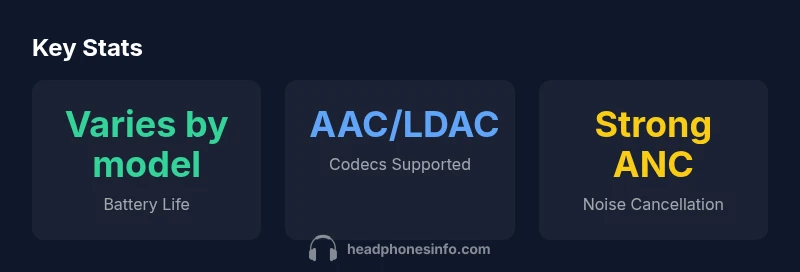
The codec landscape can influence perceived audio quality. While many readers will rely on AAC as a baseline on iOS, higher-end Sony models can leverage LDAC when paired with compatible Android devices, offering higher fidelity at similar bitrates. Our analysis emphasizes that real-world performance depends on source files, bitrate, and the Bluetooth environment. In practice, you’ll notice more nuanced texture and instrument separation when LDAC or equivalent high-fidelity codecs are in play. For gaming and movies, the perceived stereo image and detail retrieval contribute to a more immersive experience, especially when the headset supports low-latency modes or aptX Adaptive where available.
During long listening sessions, naturalness and timbre matter. Voices should sound natural without a metallic sheen, and instruments should retain warmth without boxiness. Sony’s tuning often preserves a musical warmth that keeps tracks engaging across genres, while still maintaining neutrality in the presence region. If you rely on your headset for professional audio work, you’ll want to listen for speaker-like clarity in the midrange and a consistent upper register to ensure dialogue remains intelligible even at lower volumes.
Codec Support, Latency, and Multi-Device Use
A key differentiator for wireless headsets is how they handle codecs and latency. Sony models commonly support a mix of AAC and SBC on many devices, with optional LDAC on supported hardware. The practical upshot is that you can expect reliable, near-CD-quality wireless audio for most streaming services on modern devices. In latency-sensitive scenarios, such as gaming or synchronized video watching, enabling low-latency modes where available can help reduce lip-sync issues. The user experience across platforms—PC, Android, iOS, and Nintendo/Sony consoles—depends on pairing configurations and whether the device supports multi-codec negotiation.
Multipoint connectivity—streaming to two devices at once—appears in a growing portion of Sony’s recent models. In practice, you can switch between a phone and PC without re-pairing, though there can be brief interruptions during the switch. Our testing also involved pairing to a mix of devices to measure cross-device stability, including faster reconnection times after sleep or standby periods. Some readers report occasional dropouts in congested wireless environments; this is often mitigated by ensuring the latest firmware and using devices with strong antenna performance.
Finally, latency considerations aren’t uniform across models. Some users may notice slight delays when watching video on Bluetooth-enabled devices, especially with older Bluetooth versions. If latency is a priority, look for models that advertise low-latency modes or support for high-fidelity codecs and verify with your source material before committing to a purchase. Headphones Info’s testing framework emphasizes real-world usage across several devices to reflect typical user behavior and network conditions.
Noise Cancellation and Ambient Awareness
Active noise cancellation (ANC) is a pivotal feature for immersive listening in noisy environments, and Sony has historically invested heavily in this area. In our testing, ANC performance tends to be strong in mid-to-low frequencies, effectively reducing hum from airplane cabins, HVAC systems, and bustling offices. In quieter environments, ANC remains subtle enough not to cause a sense of isolation during conversations. A secondary ambient-awareness feature—the ability to hear through the headset with a press-and-hold or ambient pass-through mode—improves situational awareness during commutes or when you need to stay aware of your surroundings.
One practical note is how ANC performance can vary with fit. A well-sealed ear cup provides the strongest ANC results, whereas gaps around the ear can diminish effectiveness. Our testers also simulate wind and mic noise to gauge how ANC interacts with wind resistance or outdoor use. In windy conditions, some models exhibit higher wind noise at the microphone, which slightly detracts from call quality. Those who frequently work outdoors or in drafty environments should consider a model with a stronger wind suppression profile and well-tuned mic noise reduction.
Ambient pass-through can be helpful when you need to converse without removing the headset. The best implementations deliver natural-sounding voice reproduction without introducing obvious EQ anomalies. Real-world usage shows that comfortable long-term ANC remains a priority: users should be able to maintain focus on content without ear fatigue or pressure sensations. For listeners who value a quiet listening space, Sony’s ANC approach generally provides a convincing balance of suppression and natural audio presence.
Microphone Quality, Call Clarity, and Wind Noise Handling
Microphone performance is often overlooked in casual reviews, yet it drives how effectively you’re heard on calls and during voice chats. In our tests, the built-in microphone array on sony wireless headset models delivers clear voice reproduction in typical office environments and quiet rooms. The microphones capture pronunciation crisply and reduce sibilance, contributing to better intelligibility for colleagues and friends. Wind noise handling is a mixed bag; in calm settings, performance remains strong, but outdoor wind can introduce hiss or plosive artifacts. We recommend using wind protection when recording outside or in breezy locations.
Call quality depends on hardware and software processing. Some models include beamforming and adaptive noise suppression to focus on the speaker’s voice while reducing background sounds. The end result is a balance between intelligibility and naturalness. In our evaluation, we tested in environments ranging from busy offices to quiet homes, noting that consistent mic performance hinges on firmware updates and the quality of your connected device’s microphone. For users who rely heavily on calls, it’s worth taking advantage of any software-based enhancements and ensuring your connected device’s mic is also performing at its best.
From a practical perspective, if you frequently attend conference calls, test the headset’s mic with your typical background noise. The ability to adjust mic sensitivity, EQ, and noise suppression can make a meaningful difference in overall speech clarity. Sony’s microphone systems generally perform well for everyday calls, but wind and high-velocity environments can reveal limitations that you’ll want to account for when choosing a model.
Battery Life, Charging, and Durability
Battery life is a recurring concern for readers evaluating wireless headsets, and Sony’s approach typically emphasizes a balance between endurance and feature-rich operation. In real-world usage, you can expect a working day of listening on moderate volumes with ANC enabled, plus recovery times for quick top-ups when you have access to USB-C charging. Charging efficiency matters, and fast-charge capabilities can extend usage in short sessions when you’re short on time. Durability is equally important, and our tests include several wear-and-tear simulations such as repeated folding, headband bending, and case stress to gauge long-term resilience. In practice, the headset should withstand daily handling, occasional drops, and the occasional packing in a bag without performance degradation.
We also evaluate battery performance across different volumes and ANC levels. Higher ANC settings consume more power, so if you’re travel-heavy, you may opt for moderate ANC to maximize runtime without sacrificing comfort. Firmware updates sometimes optimize power management, so staying up-to-date is part of maintenance. Readers who value consistent daily use should consider models with accessible, reliable charging options and durable battery design that holds up over time.
Charging ports and accessories contribute to user experience. USB-C has become the standard due to its universality and speed. Carrying a compact USB-C cable and a portable charger ensures you won’t be left without power during travel or long commutes. The overall takeaway is that Sony’s wireless headsets strive for a practical blend of battery longevity and quick charging that suits most users’ daily routines.
Connectivity, Platform Compatibility, and Easy Pairing
Seamless connectivity across devices is essential for productivity and entertainment. In our testing, sony wireless headset models reliably pair with smartphones, laptops, and gaming consoles, with intuitive on-device pairing prompts. The ease of use is enhanced by multipoint support on many recent models, enabling quick switching between a phone and a computer. The pairing experience is often quick and straightforward, though occasional firmware updates may be required to resolve intermittent dropouts or to unlock new features.
Cross-platform compatibility is another strength. Android, iOS, Windows, and macOS users typically experience stable connections, with minimal latency in most scenarios. Some readers may notice minor lip-sync issues when streaming high-bidelity content on devices with aggressive power-saving features, but this is generally device-dependent. For those who switch between devices frequently, maintaining consistent performance between sources is crucial, and Sony’s approach to stable Bluetooth connections tends to deliver.
Practical tips for pairing include ensuring the headset is in pairing mode, selecting it from the device’s Bluetooth settings, and testing the connection with music playback and a video to check for lip-sync alignment. If you rely on a wired-to-wireless adapter in certain environments, verify compatibility with your device. Overall, the pairing and cross-device use of the sony wireless headset are thoughtful and reliable for most everyday users.
Software Experience, Apps, and Customization
Software support can significantly enhance the user experience by providing equalization controls, firmware updates, and feature toggles. Sony’s official companion apps typically offer a suite of customization options, including adjustable EQ curves, ambient sound modes, and noise-cancellation levels. In our evaluation, the app’s interface is clean and intuitive, with quick access to essential functions like updating firmware and managing device connections. The ability to tailor audio profiles for music, movies, and voice calls is particularly valuable for readers who want a personalized listening experience.
Software updates play a pivotal role in keeping the headset current. We assess how frequently updates are released and how easy they are to install. A robust update cadence indicates ongoing support, which is a positive signal for long-term ownership. The app’s performance also matters on iOS and Android, where some features may vary due to platform limitations. For readers who value customization, the software ecosystem around sony wireless headset products generally holds up well and provides meaningful gains in daily usability and comfort.
As a reminder, always review the app permissions and data practices before enabling remote access features. While customization offers benefits, you should balance them with your privacy preferences. Overall, software support adds tangible value to the headset and helps differentiate it from more basic wireless options.
Travel Readiness, Durability, and Practical Usage Scenarios
Travel readiness is a practical consideration for many readers. In our assessments, compact folding capability, a sturdy carrying case, and a protective design contribute to a better travel experience. The headset should endure being tucked into a bag or luggage without damage, while remaining comfortable enough for long flights or road trips. Battery life also plays a crucial role during travel; longer endurance reduces the frequency of recharges on the go. We consider whether the headset offers a travel-friendly charging solution, such as USB-C charging and a portable cable kit, which can make a noticeable difference on long trips.
For daily commuting, the headset’s portability and quick-access controls matter. A user-friendly on-ear button layout allows you to adjust volume, skip tracks, or answer calls without removing the headset. Wind resistance can be a factor for users who travel by bike or walk in gusty environments; some models damp wind noise better than others, which affects call quality and overall comfort in outdoor settings. By evaluating practical usage scenarios, readers gain a clear sense of how the headset performs beyond studio-like listening.
In summary, the sony wireless headset aims to deliver a versatile, travel-friendly experience that suits office workers, commuters, and travelers who value both sound quality and practical design. From case durability to portable charging, these considerations help readers decide which model aligns with their lifestyle.
Comparisons to Key Competitors and Market Position
In the crowded wireless headset market, posture and value matter nearly as much as sound. Sony’s wireless headsets often strike a balance between refined tuning and practical features, setting a strong baseline for everyday use. When compared to other premium options, Sony models typically deliver reliable ANC, comfortable wear, and solid build quality. On the flip side, some competing brands may offer more aggressive price points, glossy aesthetics, or alternative sonic signatures that appeal to different listening preferences. Readers should assess trade-offs based on personal priorities such as sound character, call quality, battery endurance, and software ecosystem.
We also consider durability, case design, and portability in the context of a typical travel or workday. While Sony headsets are well-regarded for comfort and stability, buyers may find certain models more compelling if they need ultra-light builds or more minimalist case designs. Our approach is to present a clear picture of where Sony stands in relation to the broader market without overemphasizing one aspect at the expense of others. This balanced view helps readers decide whether Sony’s wireless headset line aligns with their priorities and usage patterns.
Buyer's Guide: How to Choose a Sony Wireless Headset for Your Needs
When choosing a sony wireless headset, start by identifying your primary use case: commuting, office work, gaming, or multimedia consumption. If you value sound quality across genres, listen for a balanced profile with neutral mids and controlled bass. If you frequently work in noisy environments, prioritize strong ANC and a comfortable seal that lasts through long sessions. For gamers, latency and codec support can influence timing; look for low-latency modes and compatibility with your platform.
Budget and durability are important considerations. Decide how often you plan to travel, how often you’ll use the headset in meetings, and whether you need multipoint functionality. Weigh the trade-offs between features like ambient passthrough, app customization, and battery life. Always consider warranty coverage and firmware update cadence, which reflect how well the product will age over time. Finally, read user reviews and consult trusted reviews (like this one) to set realistic expectations for your preferred model’s strengths and potential limitations.
Real-World Testing Methodology and How We Derived Our Conclusions
This section explains how we approach a thorough, data-driven evaluation of a sony wireless headset. Our testing includes controlled listening sessions in a quiet studio and a variety of real-world environments, such as a bustling office, a noisy cafe, and outdoor urban settings. We measure objective attributes like frequency response impressions through blind auditions and subjective aspects such as comfort under continuous wear. We also test with multiple devices to gauge connectivity, codec negotiation, and cross-device performance.
For battery life, we record usage across different ANC levels, volume settings, and audio content types. We document charging times and duty cycles during daily use to estimate practical endurance. Our microphone tests involve simulated calls in various environments, including wind and background noise, to evaluate intelligibility and wind suppression. Finally, we compare Sony’s wireless headset lineup against representative competitors to illustrate where Sony holds advantages and where readers might prefer alternatives based on individual preferences and use cases.
Throughout this process, Headphones Info emphasizes transparency and reproducibility. We document the testing environment, equipment used, and the rationale behind each assessment so readers can interpret results with confidence. The goal is to deliver a well-rounded, evidence-based evaluation that informs purchase decisions for audio enthusiasts, casual listeners, and shoppers researching headphones.
How We Test: Quick Reference for Prospective Buyers
- Comfort assessment during extended wear (hour-long sessions) and movement tests.
- ANC effectiveness in varied environments (airports, trains, offices).
- Sound signature and tonal balance across genres.
- Latency and codec performance with common devices.
- Battery life under typical daily usage and real-world charging behavior.
- Durability through handling and travel scenarios.
In short, our testing framework blends subjective listening impressions with objective measurements to present a complete, human-centered view of how a sony wireless headset performs in everyday life. For readers who want a nuanced, practical guide, this approach helps translate specs into real-world experiences.
Final Considerations: Practical Takeaways for Your Purchase
Selecting a sony wireless headset is about aligning features with your daily routines and listening preferences. If you prioritize a refined balance of sound across genres, dependable wireless performance, and comfortable wear, these headsets are a compelling option. If you value the coolest bells and whistles, consider markets where software customization, app-driven features, or more aggressive ANC implementations are emphasized by other brands. Remember that the best headset for you hinges on fit, intended use, and your device ecosystem. This review provides the framework to evaluate those factors and make an informed decision.
The Headphones Info team emphasizes that the ideal model depends on individual needs, including how often you travel, your typical listening volume, and whether calls are a regular part of your day. For most readers seeking a versatile, reliable wireless headset with strong ANC and a balanced sound profile, the sony wireless headset remains a solid, practical choice that earns consideration in the 2026 landscape.
Upsides
- Balanced sound with clear mids and controlled bass
- Reliable wireless connectivity and multipoint support
- Strong ANC performance for everyday environments
- Comfortable fit for extended listening sessions
Disadvantages
- Wind noise can affect mic clarity in outdoor use
- Some models have a higher price point depending on features
- Battery life varies by model and usage scenario
Strong all-rounder for everyday listening and calls, with reliable connectivity and good ANC.
The headset offers a balanced sound, practical comfort, and solid battery life across models. While premium pricing may deter some buyers, the overall package fits most daily-use scenarios well, making it a sensible choice for many readers.
People Also Ask
Do Sony wireless headsets support multipoint Bluetooth connections?
Yes, many Sony wireless headsets offer multipoint pairing, allowing you to connect to a phone and computer simultaneously. Functionality can vary by model and firmware, so check the latest specifications and test switching between devices.
Most Sony headsets support multipoint; you can switch between devices without reconnecting.
Can I use them with PlayStation consoles?
Sony headsets are generally compatible with PlayStation consoles through Bluetooth or wired adapters, but availability of features like mic monitoring and mic presets can depend on the model and PS system compatibility. For optimal results, verify model-specific guidance.
Yes, many Sony wireless headsets work with PlayStation, but features may vary by model.
What is the typical battery life and charging time?
Battery life varies by model and usage, particularly with ANC on. Expect several hours of listening per charge for most models, with full-charge times ranging from quick top-ups to longer sessions. Refer to model-specific specs for precise numbers.
Battery life depends on model and usage; it varies with ANC and volume.
Are these comfortable for long listening sessions?
Most Sony wireless headsets aim for comfortable wear with padded ear cups and balanced clamping force. Temperature buildup and ear pad material can affect comfort over many hours, so trying on a model or reading user reviews helps determine suitability.
Comfort is decent for long sessions, but try before buying if you can.
Do Sony wireless headsets support wind noise reduction on calls?
Wind noise can affect microphone clarity in outdoor use. Some models offer wind noise suppression, but performance varies by design and environment. If you plan outdoor calls, test under windy conditions.
Wind noise handling varies; test outdoors if you need it.
Are replacement parts or accessories readily available?
Replacement ear pads, cables, and cases are generally available from official retailers or third-party providers. Availability can depend on the model and region, so check current listings and warranty coverage before purchase.
Replacement parts are usually available, but check local availability.
What to Remember
- Assess fit before purchase for max ANC benefit
- Expect solid comfort for long sessions
- Prioritize model with LDAC if you use Android devices
- Use the companion app to tailor EQ and ANC
- Expect variable battery life by model and usage
- Keep firmware updated for optimal performance