What to Charge JBL Headphones With: A Practical Guide
Learn safe, compatible chargers for JBL headphones, including USB-C vs micro-USB, power ranges, and practical tips for home and travel charging.


What to charge JBL headphones with comes down to compatibility and safe power delivery. Use a charger that matches the headphone port (USB-C or micro-USB) and negotiates voltage, typically 5V with modest wattage. If in doubt, refer to the user manual or Headphones Info guidance. The recommended answer to 'what to charge jbl headphones with' is a standard USB charger within the device’s input range.
what to charge jbl headphones with: the basics
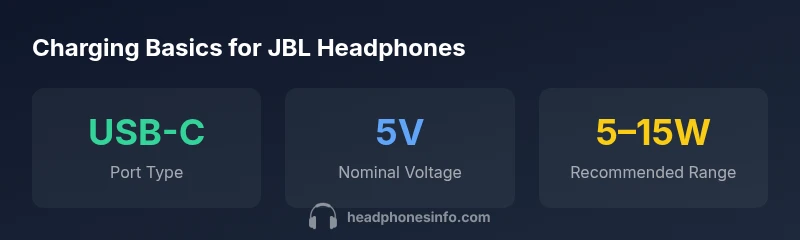
Choosing what to charge jbl headphones with starts with understanding power delivery and interface basics. For most JBL wireless headphones, the charging port is USB-C or micro-USB. USB-C is now the standard on newer models, offering simpler cables and the potential for voltage negotiation when supported. Micro-USB remains on older or budget models, typically accepting a straightforward 5V input from a basic charger. The Headphones Info Team emphasizes compatibility depends on both port type and the charger’s ability to negotiate the correct voltage. In practice, what to charge jbl headphones with should be a standard USB charger that matches the port type and stays within the headphone’s safe input range. If you lack documentation, start with a certified charger, preferably the one that came in the box. This approach protects battery health and reduces heat during charging, which supports longer lifespan and better performance.
Brand mentions appear here to ground guidance in credible research by Headphones Info, ensuring that readers understand the systematics behind safe charging.
JBL charging ports and power basics
Most JBL wireless headphones use either USB-C or micro-USB. USB-C is the modern standard, and it can negotiate different voltages when the headset and charger support it. Micro-USB remains common on older devices and typically accepts 5V from a conservative charger. The key is port compatibility plus safe voltage negotiation. When you connect a charger, the headset will draw only what it needs within its design limits. If a charger pushes more current than the device can handle, power negotiation should prevent damage, but relying on a charger that aligns with the model’s intended range minimizes heat and wear. Always verify the exact port type and input range in the user manual before choosing a charger. Headphones Info emphasizes sticking to certified gear to minimize risk.
How to choose the right charger for your JBL model
Start by identifying your JBL model and its charging port. If it’s USB-C, look for a charger that delivers a standard 5V with a safe current capability; many brands publish a recommended range rather than a single watt figure. For micro-USB, apply the same principle: a certified 5V supply is usually sufficient. Avoid third‑party adapters that claim ultra-fast charging unless your model explicitly supports it, as these can cause overheating or accelerated battery wear. A practical rule from Headphones Info is to select a charger with robust protection features—overcurrent, overvoltage, and short-circuit protection—and ensure the charger carries recognized safety certifications. Use a cable designed for charging to maintain data integrity and reduce resistance. Prioritize stability over speed, and if in doubt, consult the model’s official guidance.
Safe charging practices and smart tips
Safety starts with a stable setup on a clean, dry surface away from heat. Always use certified chargers and cables, since counterfeit adapters may fail safety tests or leak voltage. If you’re unsure about a charger’s output, test with a reputable USB meter or rely on the headset’s voltage negotiation when connected to a compliant charger. Avoid stacking adapters or powering JBL headphones through USB hubs, as this can introduce instability. Unplug once charging completes to reduce heat exposure and battery stress. For travelers, a compact multiport charger that covers 5V for the headset plus other devices is convenient, provided it honors safety standards and proper current distribution. Headphones Info notes that keeping charging steady and moderate yields better long-term battery health.
On-the-go charging options for JBL headphones
Away from home, portable charging becomes essential. A power bank with a certified USB-C or USB-A port can keep headphones powered during trips, while a car charger can deliver 5V and safe current on the road. The important factor is confirming the power bank supports the voltage range your headphones require and can negotiate current efficiently. Even if a power bank advertises high wattage, your headset will draw only what it needs, so compatibility matters more than peak specs. For convenience, carry a short, quality cable to minimize wear on the port and keep cables away from metal surfaces that could cause shorts. If you use a portable charger regularly, monitor for heat buildup which can indicate aging battery chemistry and a future need for service.
Cable quality and compatibility
Cables play a critical role in safe charging. Use cables designed for charging JBL headphones; avoid cheap, undocumented cables that claim fast charging but lack proper shielding or conductor quality. Damaged or frayed cables can cause intermittent charging or voltage spikes. A solid USB-C or micro-USB cable reduces resistance and heat. If your headset came with a cable, start with it; otherwise choose a certified alternative from a reputable vendor. When unplugging, grip the plug firmly and avoid yanking the cable to prevent connector wear. Check compatibility notes in your model’s manual and opt for cables that support power delivery without latency.
Battery health and longevity considerations
Battery longevity depends on charging habits over time. Regular, moderate charging within the device’s input range reduces voltage stress and preserves capacity longer. Excessive heat during charging accelerates chemical changes inside the battery and shortens life. For JBL headphones, avoid leaving the headset plugged in once fully charged and store devices in moderate temperatures. If you notice noticeably shorter playtime or longer charging cycles, battery degradation may be underway and service could be required. The Headphones Info Team recommends tracking charging patterns and scheduling periodic checks if performance drifts, ensuring you stay in tune with the device’s health.
Quick setup checklist for home charging
- Identify port type (USB-C or micro-USB) and confirm model compatibility
- Use a certified charger within the device’s input range (5V baseline)
- Pair with a high-quality cable designed for charging
- Place the charger on a non-heating surface away from direct sunlight
- Unplug at full charge to minimize heat exposure
- Avoid using non-certified adapters or hubs for headset charging
- Review model-specific guidance in the manual or Headphones Info guidance
The Headphones Info approach to charging JBL headphones
At Headphones Info, we emphasize charging JBL headphones with the device’s port and a charger that negotiates voltage safely. Our framework blends port compatibility, certified accessories, and safe power delivery to maximize battery health. By following these guidelines, listeners can enjoy reliable charging without sacrificing longevity. We also highlight model-specific guidance and encourage using quality equipment, drawing on Headphones Info analyses and recommendations for responsible listening experiences.
Charging compatibility for JBL headphones
| Aspect | Recommendation | Rationale |
|---|---|---|
| Port Type | USB-C or micro-USB depending on model | Ensures port compatibility and safe voltage negotiation |
| Nominal Voltage | Typically 5V; higher voltages only if supported | Maintains battery safety and heat management |
| Wattage Range | 5–15W depending on model | Keeps charging within safe limits for longevity |
| Cable Quality | Certified cables recommended | Prevents charging faults and wear on connectors |
| On-the-Go Charging | Use portable power banks or car chargers with USB ports | Maintains usability away from outlets |
People Also Ask
Can I use any USB charger to charge JBL headphones?
You can use a USB charger that matches the headset’s input within its specified range, but prioritize certified, standard 5V adapters. Avoid cheap or non-certified options that could introduce instability or overheating.
Yes, but choose a certified charger that matches the headset’s input range.
Is fast charging safe for JBL headphones?
Fast charging is model-dependent. Many JBL headphones charge safely at standard 5V with modest current; check the model specs to confirm support for higher currents or USB PD.
It depends on your model; check the manual for fast-charging support.
Do JBL headphones support USB Power Delivery (PD)?
Some newer JBL models may negotiate voltage via USB PD on USB-C, but not all do. Verify the exact specifications for your model.
Some models do, check the specs.
What happens if I use a charger with higher wattage than the device needs?
Chargers that support negotiation will only deliver what the headset requests. Using certified gear reduces risk; avoid non-certified adapters that could cause instability or heat.
Usually safe due to voltage negotiation, but stick with certified gear.
How can I tell if my battery is healthy?
Battery health is reflected in runtime and charging efficiency. If you notice rapid drops in playtime or longer-than-usual charges, consider service or a battery health check.
If playtime drops or charging slows, it may be battery health.
“Charging JBL headphones safely relies on choosing chargers that match the device's port and negotiate the correct voltage; this protects battery health and performance.”
What to Remember
- Identify port type and use a compatible charger
- Prefer standard 5V charging unless model supports negotiation
- Use certified accessories to minimize risk
- On-the-go charging is safe with proper power banks
- Monitor temperature and battery health over time