Wireless Headphones Bluetooth Guide 2026: A Buyer’s Analysis
A data-driven guide to wireless headphones headset bluetooth, covering Bluetooth codecs, latency, battery life, comfort, and how to choose the best model in 2026.


Wireless headphones headset bluetooth describe headphones that connect to devices via Bluetooth, delivering audio without a wired link. They range from true wireless buds to over-ear models, support multiple codecs, and vary in latency and battery life. This guide helps you evaluate performance, comfort, and value so you can choose confidently in 2026.
Why Bluetooth Connectivity Matters\n\nBluetooth is the core enabler of modern wireless listening experiences. For most listeners, the simplicity of pairing and the absence of cables define convenience; for gamers and audio professionals, stable Bluetooth connections reduce dropouts and latency. In evaluating wireless audio, the term wireless headphones headset bluetooth captures a family of products from compact true wireless buds to over-ear designs that leverage BT for audio and control. Understanding how connectivity works—profiles, codecs, range, and interference—helps you pick models that stay solid in daily life and travel.\n\nFrom a data perspective, the choice of Bluetooth version and codec determines how faithfully sound is transmitted and how energy is consumed. A device with BT 5.x generally offers greater range, improved efficiency, and better multi-point pairing than older versions. The Headphones Info team notes that the user experience often hinges on codec compatibility, device support, and the environment (office, subway, or open air).
Bluetooth Codecs and Latency Explained\n\nCodecs are the digital languages that carry audio from a device to your headphones. SBC is universal but often lossy; AAC and aptX family codecs improve fidelity and latency depending on hardware and software support. LDAC can push higher bitrates on compatible devices. Latency matters for gaming and video — lower lag keeps audio in sync with on-screen action. In practice, you may not notice small delays in casual listening, but gaming, watching sports, or using voice assistants benefits from lower latency. The Headphones Info team emphasizes verifying codec support on both the source device and the headset to ensure real-world performance aligns with specs.
Battery Life, Comfort, and Use Scenarios\n\nBattery life depends on driver size, ambient energy use, and codec efficiency. Over‑ear Bluetooth models typically offer longer playback per charge than compact buds, but the trade-off is weight and bulk. Comfort matters more over long sessions, so look for padding, clamping force, and clamp weight. In daily commuting, office work, or workouts, consider the headset’s weight, ear cushion material, and headband adjustability. Always check standby drain: some models sip power even when idle, reducing real-world endurance.
Sound Quality, ANC, and Feature Trade-offs\n\nSound quality on wireless headphones is a mix of driver quality, tuning, and codec implementation. ANC (active noise cancellation) adds depth by reducing ambient sound but can affect battery life and sometimes bass response. Some models emphasize punchy bass while others prefer neutral or even analytical sound. Features like multipoint pairing, on-ear controls, voice assistant support, and app-based EQ customization influence usability as much as sonic performance. The balance among these traits determines overall value.
How to Compare Models: Step-by-Step Guide\n\n1) Define your use case (travel, commuting, gaming, studio work). 2) Check codec support on your primary devices. 3) Compare latency in real-world tests or reviews. 4) Assess battery life and quick-charge capability. 5) Evaluate comfort, fit, and durability. 6) Compare prices and total cost of ownership, including replacements and warranty. 7) Read independent test results to validate claims. This method helps you separate marketing hype from actual performance.
Common Pitfalls When Buying Wireless Headphones\n\nAvoid models with aggressive marketing but mediocre battery life or comfort. Don’t assume “multi‑point” equals seamless switching across every device. Be wary of oversized ANC claims that cause listener fatigue or excessive channel bleed. Finally, don’t overlook compatibility with your devices, especially if you own a mix of Android and iOS products. Test fit and comfort in real-world scenarios before buying.
Use Cases: Travel, Commuting, Home Office\n\nTravelers benefit from solid range and reliable multipoint pairing; commuters value compact form factors and comfortable cushions; home office users prioritize microphone quality and stable voice pickup in calls. In each case, balance codec support, latency, and battery life to achieve the best experience in the intended environment.
Maintenance and Longevity Tips\n\nKeep firmware updated to improve stability and add features. Clean ear pads and headband regularly to prevent sweat buildup. Store in a protective case to avoid cosmetic damage. When not in use, avoid extreme temperatures that can degrade battery health over time. Regularly calibrate and test your devices with fresh media to catch performance shifts early.
Testing and Validation at Home\n\nCreate a simple evaluation routine: run a 5–10 minute music test, a latency check with a video, a comfort pass after an hour, and a call quality assessment with a colleague. Document results and compare across models. This hands-on approach gives you practical insights beyond manufacturer specifications.
Key specs for wireless headphones Bluetooth
| Feature | Typical Range | Notes |
|---|---|---|
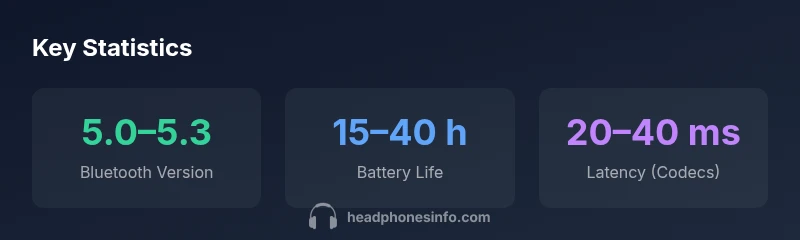
| Battery life (headset) | 15–40 hours | Varies by codec and usage |
| Bluetooth version | 5.0–5.3 | Newer versions improve range and efficiency |
| Latency (codecs) | 20–40 ms | Depends on device and codec |
| Weight (headphones) | 180–350 g | Model dependent |
People Also Ask
What is the difference between Bluetooth headphones and a headset?
Bluetooth headphones generally refer to wireless earcups or buds focused on listening, while a headset combines listening with an integrated microphone for calls or streaming. Both connect via Bluetooth, but headsets emphasize microphone quality and call clarity. Check for mic pickup patterns and noise reduction in a model you’re considering.
BT headphones are for listening; a headset adds a mic for calls. Look at mic quality and wind noise suppression when evaluating.
Do wireless headphones experience noticeable latency?
Latency is more noticeable in latency‑sensitive tasks like gaming or watching video with low frame rates. Many models mitigate this with low-latency codecs (e.g., aptX Low Latency). For casual listening, latency is rarely a concern.
Latency can be noticeable in games or videos—use low-latency codecs to reduce delay.
Which Bluetooth codecs should I care about for wireless headphones?
Key codecs include SBC, AAC, aptX, aptX LL, and LDAC. Higher‑quality codecs improve fidelity and reduce latency, but only if both source and headphones support them. Check your device’s compatibility before buying.
Look for codecs that match your devices; ensure both sides support them for best results.
How can I test wireless headphones before buying?
Test in-store or with a generous return window. Focus on comfort, fit, microphone quality, pairing stability, latency with videos, and battery life under your typical usage. Bring your devices to check real-world compatibility.
Test fit, comfort, mic quality, pairing stability, and battery life with your own devices.
Are there safety concerns with prolonged Bluetooth use?
Bluetooth is generally safe when used normally. If you have sensitive hearing or medical devices, review wireless standards and consult with a healthcare professional if needed. Manage listening volume to protect hearing health.
Bluetooth is generally safe; keep volume reasonable and monitor for any device-specific issues.
“Data-driven evaluation helps shoppers separate marketing hype from real-world performance. Use codec support, latency, and battery life as your primary decision points.”
What to Remember
- Define your use case before shopping
- Prioritize codecs and latency for gaming or cinema
- Balance battery life with comfort
- Check Bluetooth version for range and stability
- Compare total cost of ownership with accessories