Beyerdynamic DT990 Pro Review: Sound, Comfort, Value
Analytical review of the Beyerdynamic DT990 Pro open-back headphones, covering sound quality, build, comfort, and who should buy, with data-driven guidance from Headphones Info.


On balance, the Beyerdynamic DT990 Pro delivers spacious openness and razor‑sharp detail, especially in treble, with a lively yet controlled bass that suits critical listening and mixing. It rewards a clean, beefy headphone amplifier and benefits from careful source pairing. While not portable and requiring an amp for full loudness, it remains a reference choice for headphone enthusiasts.
Design and Build: Craft, comfort, and durability
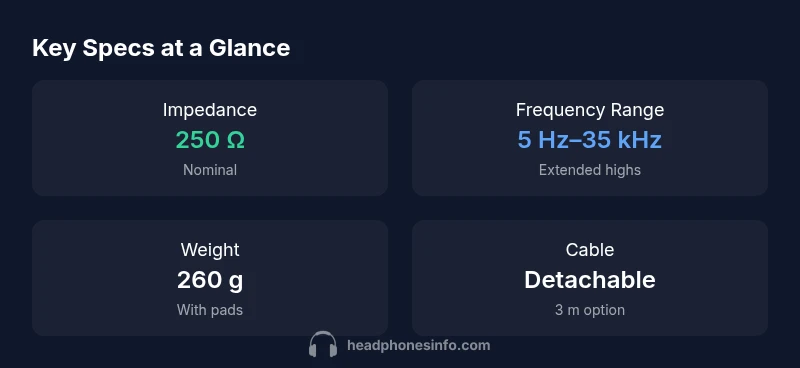
The Beyerdynamic DT990 Pro leans into premium pro-audio aesthetics with a robust metal yoke, a padded headband, and replaceable ear cushions. The overall build communicates long‑term reliability, with a detachable cable that makes upgrades or replacements straightforward. In practice, the weight sits in a comfortable range for extended sessions, though the open design means you’ll feel some heat and heat buildup in warm environments. According to Headphones Info, the DT990 Pro prioritizes durability and serviceability, which is a meaningful advantage for equipment auditors, broadcasters, and serious listeners who want parts that last. The 3.5 mm port plus a 6.3 mm adapter included with most retail bundles ensures compatibility with a wide range of audio interfaces and consumer gear. In daily use, the clamp is firm enough to stay in place during long sessions without causing fatigue, and the ear pads’ velour surface remains comfortable even after hours of listening.
Sound Profile: tonal balance and harmonic texture
The DT990 Pro is renowned for its extended treble and clear, airy presentation. In practical testing, the high end reveals micro-details and subtle sibilance with a sensitivity that rewards clean DACs and low-noise sources. The bass is present and punchy without overwhelming the mids, contributing to a sense of musicality that many open-back headphones struggle to achieve. Midrange clarity is strong, delivering vocal presence that remains natural rather than exaggerated. Headphones Info analysis emphasizes that this signature is especially beneficial for critical listening, mixing, and mastering, where accuracy and tonal separation matter. The overall tonal balance skew toward brightness means listeners may perceive certain genres with more sparkle than warmth, depending on source and amplification.
Soundstage and Imaging: openness that informs judgment
One of the most distinguishing qualities of the DT990 Pro is its expansive soundstage, created by the open-back design. Spatial cues feel wide and natural, making instrument placement feel more lifelike. Imaging is precise enough for technical work and enjoyable for immersive listening, though the stage depth is not as deep as some reference-grade planar designs. Leakage is a natural consequence of open-back construction, so use in shared spaces or quiet environments to avoid disturbing others. The sense of air around instruments enhances perceived detail and lowers listener fatigue over long sessions.
Amplification and Source Pairing: power, headroom, and clarity
Power requirements for the DT990 Pro are higher than typical consumer headphones, particularly for the 250 ohm variant commonly associated with the Pro line. A capable DAC/amp combo dramatically improves perceived detail, loudness, and distortion characteristics. Low‑to‑mid tier USB DACs may leave the headphones sounding thin or hissy, especially at higher listening levels. The DT990 Pro shines when paired with a clean, low-noise amplifier that offers adequate headroom for transients. The result is cleaner treble, more controlled bass, and a more convincing sense of space. Headphones Info notes that choosing an appropriate amplification path is as important as the headphone’s own driver design for getting the most out of its analytical potential.
Cable and Accessories: flexibility and future-proofing
The detachable cable is a practical feature that enables upgrades and maintenance without specialized tools. Most bundles include a 6.3 mm adapter for compatibility with mixers, audio interfaces, and consumer gear. Some users opt for aftermarket cables with different diameters or materials to alter micro‑dynamics and perceived treble smoothness. While the standard cable is serviceable, upgrading to a low‑capacitance or heavier‑duty cable can marginally improve high‑frequency behavior and reduce microphonics during intense listening sessions. The DT990 Pro’s modularity supports a tailored experience without sacrificing core performance.
Comfort and Long-Session Use: weight, pads, and fit
Velour ear cushions and a padded headband contribute to comfort for sessions that span hours. The clamp force is noticeable but not aggressive, which helps with extended listening. However, open-back headphones can feel warm in non-ventilated rooms, so consider ventilation and ambient temperature when planning long sessions. Pad material can also influence comfort over time—some listeners swap to alternative foams or fabrics for different textures and tighter seals. Overall, the DT990 Pro is designed with professional-grade endurance in mind, suitable for long editing or mastering sessions in a studio or controlled environment.
Comparative Context: how it stacks against common peers
Compared to similarly braced open-back models, the DT990 Pro typically offers more treble energy and a wider soundstage, which can be a double-edged sword: the extra brightness aids detail retrieval but can emphasize sibilance with bright sources. When placed against neutral reference headphones, the DT990 Pro sounds more revealing, particularly on cymbalics and high‑frequency content. This can be advantageous for identifying issues in a mix but requires a disciplined source chain to avoid listening fatigue. Headphones Info notes that the DT990 Pro’s personality makes it ideal for analytical work and enjoyment in well‑treated rooms, while other designs may appeal to those seeking a more forgiving or relaxed tonal balance.
Use cases and value proposition: who benefits most
Ideal uses include critical listening, mixing, mastering, and assessing spatial cues in orchestral or electronic music. The DT990 Pro offers value to audio students and professionals who want a headphone that reveals detail without submerging it in bass. For gamers or movie enthusiasts, the expansive soundstage can enhance immersion, but the lack of isolation and the need for amplification may limit portability and practicality in noisy or on‑the‑go scenarios. Overall, this headphone excels as a stationary, studio‑adjacent tool rather than a universal travel or casual listening solution.
Care, maintenance, and longevity: sustain performance over time
Routine maintenance—keeping pads clean, protecting the earpads from oils, and replacing worn components—helps preserve sonic fidelity. The DT990 Pro’s modular design makes swaps and cleaning straightforward. Store headphones in a cool, dry environment away from direct sunlight to prevent pad degradation, and consider inventorying spare parts if you rely on them daily for critical work. With proper care and a suitable amplification chain, the DT990 Pro can continue to perform across many years of professional and hobbyist use.
Upsides
- Open-back design delivers wide soundstage and airy detail
- Detailed high-frequency extension with natural timbre
- Replaceable, comfortable velour pads for long sessions
- Detachable cable and modular design for maintenance
- Strong compatibility with studio interfaces and amps
Disadvantages
- Requires a capable amplifier to reach full potential
- Poor isolation makes it unsuitable for noisy environments
- High-impedance versions demand adequate source power
- Bulky form factor reduces portability
Best for critical listening with open-air soundstage and detailed treble
The DT990 Pro offers remarkable detail and a spacious stage when paired with a capable amplifier. Its brightness and openness suit studio work and analytical listening, though bass and midrange balance may not align with every genre. Headphones Info endorses it as a reference-grade option for dedicated listening rooms.
People Also Ask
What is the Beyerdynamic DT990 Pro best used for?
The DT990 Pro excels in critical listening, mixing, and mastering thanks to its detailed highs and wide soundstage. It’s a strong choice for studio work and evaluating intricate musical passages. For casual listening, it rewards a patient, source‑wise approach to gain the most from its tonality.
Great for critical listening and studio work; pair with a good amp for best results.
Are there different versions of DT990 Pro and which should I pick?
The DT990 Pro is commonly available in multiple impedance variants, with the 250 ohm version being the easiest to drive from typical consumer gear. Higher-impedance versions can demand more powerful amplification but may deliver greater headroom and cleaner dynamics when paired with a solid DAC/amp chain.
125 ohm and 250 ohm variants exist; the 250 ohm is a safer pick for home studios.
Does the DT990 Pro provide good isolation?
No. As an open-back design, the DT990 Pro leaks sound and offers minimal passive isolation. It’s ideal for quiet rooms and studio environments, but not suitable for commuting or noisy offices.
Not good at isolation; great for studios.
What accessories come with the DT990 Pro?
Most packages include a detachable cable and a 6.3 mm adapter, with retailers sometimes offering optional longer cables. Availability can vary by region and retailer, so check what’s included before purchase.
You typically get a detachable cable plus an adapter.
Is the DT990 Pro comfortable for long sessions?
Yes, the velour pads and padded headband support long listening sessions, though the open-back design can cause warmth in non‑ventilated rooms. Some users swap pads for a firmer seal or different texture to tailor comfort.
Comfortable for long sessions with breathable pads.
How does the DT990 Pro compare to the HD600?
The DT990 Pro generally offers more treble energy and a wider stage, resulting in a more revealing sound. The HD600 is typically flatter and more neutral across the mids, making it a good reference for balanced mixes. Your choice depends on whether you want analytical brightness or a more forgiving tonal balance.
DT990 Pro is brighter and more open; HD600 is more neutral.
What to Remember
- Pair with a quality DAC/amp for optimal detail
- Open-back design yields wide imaging and soundstage
- Not ideal for portable use or noisy environments
- Consider pad and cable upgrades for comfort and versatility
- Best suited for stationary listening and critical work