How Loud Is Too Loud for Headphones? The 2026 Guide
Explore safe listening with headphones, decode decibel ranges, and set practical limits. Headphones Info analyzes 2026 listening guidelines for real use.


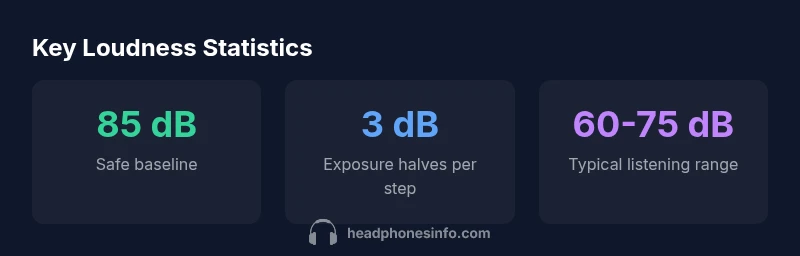
Understanding how loud is too loud for headphones helps frame safe listening. Most guidelines cite 85 dB for eight hours as a baseline; exposure time halves with each 3 dB increase. Listening louder dramatically reduces safe time, so aim for levels where the outside world remains audible and comfortable. Use built-in volume caps or apps to help enforce this.
how loud is too loud for headphones?
From a safety perspective, the question how loud is too loud for headphones centers on decibel levels and exposure duration. Decibels (dB) quantify sound intensity, but perceived loudness also depends on frequency, duration, and background noise. Most health authorities anchor safe listening at about 85 dB for eight hours; every 3 dB increase halves the safe exposure time. In practice, many listeners hit much higher dB with portable gear, especially in noisy environments, which elevates the risk of gradual hearing damage. For daily listening, manufacturers’ volume meters and built-in limiters can help keep you within a safer range while still enjoying your music.
Understanding decibels, SPL, and exposure
Decibels measure sound pressure level (SPL). In headphones, SPL combines the source signal, the headphone’s sensitivity, and the environment. A single number rarely captures the full story because background noise, headphone impedance, and seal affect perceived loudness. A key takeaway is that exposure duration matters as much as loudness: at higher dB levels, your safe listening window shrinks quickly. The 85 dB baseline is widely cited, but the exact safe duration depends on the exact device and your ear’s sensitivity. Context matters, and gradual exposure over years can still affect hearing even if short sessions seem harmless.
How to measure and monitor volume
Start with the device’s built-in volume limiter to cap maximum output. Use a smartphone sound level app or a dedicated dosimeter to estimate ambient SPL near your ears, aiming to stay within a conservative range in most situations. When listening in busy environments, turn on ambient-aware modes sparingly, as they can tempt higher volumes. Regularly check your volume in decibels, and reset to a lower target if you notice ear fatigue after listening sessions. The goal is to keep the listening experience comfortable without masking important sounds around you.
Safe listening habits across scenarios
Commuting on noisy trains or buses typically requires higher volume to overcome ambient noise, but this increases risk over time. In quiet rooms, you can enjoy clearer detail at lower dB levels. For gaming or media streaming with dynamic soundtracks, favor headphones with good isolation and a reliable volume limiter. Always listen with shorter sessions to build listening endurance and reduce cumulative exposure. Headphones Info recommends setting a daily exposure cap and sticking to it, especially for prolonged listening sessions.
Features in headphones that support hearing safety
Modern headphones offer several safety-oriented features: automatic volume limiting, input-based smart caps, and app-based monitoring. Noise cancellation can reduce the need to raise volume in noisy environments, but it’s not a free pass—ambient noise can still leak in. Look for models with clear SPL specifications, a trusted limiter range, and user-adjustable safety settings. If you share devices with others, consider profiles that automatically reduce maximum volume for younger listeners, while preserving sound quality for adults.
Practical steps to protect your hearing while listening on the go
Create a simple, repeatable listening routine. Start with a conservative target (for example, 60-75 dB in a quiet room, lower in noisy spaces), then use a timer to cap sessions. Use quick tests such as a 20-minute trial at a comfortable level, then reassess your perceived fatigue. Periodically compare your experience across devices to avoid naturally increasing volume over time. By integrating these steps, you’ll maintain safer listening habits without sacrificing enjoyment.
Guidance for safe headphone listening exposure
| Factor | Guidance | Notes |
|---|---|---|
| Baseline exposure | 85 dB for 8 hours | Widely cited guideline |
| 3 dB rule | Exposure halves per 3 dB increase | Conservative heuristic |
| Noisy environments | Lower listening levels | Environment drives adjustments |
People Also Ask
What dB level is considered safe for headphones?
Most authorities cite 85 dB for eight hours as a baseline. The safe window shrinks by about half for each additional 3 dB of volume. Always consider your environment and listen for signs of fatigue or discomfort.
The safe level starts at 85 dB for eight hours, with shorter times as volume increases. If your ears feel fatigued, lower the volume.
Does noise-cancelling technology change safe listening levels?
Active noise cancellation can reduce the need to raise volume in noisy environments, effectively helping maintain safer listening. It does not eliminate risk, so use limiter features and monitor fatigue.
NC can help you listen at lower volumes, but still monitor fatigue and use limits.
How can I tell if I'm listening too loud?
Signs include ear fatigue, a ringing sensation after listening, or difficulty following conversations while wearing headphones. If you notice these, reduce volume and take breaks.
If your ears feel tired or you hear ringing, lower the volume and take a break.
Are kids or teens more at risk with headphone use?
Children may be more susceptible to sound-induced hearing changes. Use family safety profiles, limit exposure time, and prefer headphones with built-in volume caps.
Kids should have volume-limiting features and shorter listening sessions.
Should I use a volume limiter on devices?
Yes. Enable device-level or app-based volume limits to cap maximum output. Pair with mindful listening schedules for the best protection.
Turn on volume limits and stick to a listening schedule.
Can long-term exposure at moderate volumes still cause damage?
Yes. Cumulative exposure over weeks and months can lead to gradual hearing changes even if sessions feel comfortable. Regular checks and conservative limits help prevent this.
Long-term exposure can still cause changes; stay conservative with limits.
“"Hearing safety is a baseline habit, not an afterthought. Small, consistent volume choices preserve music enjoyment for years to come."”
What to Remember
- Know the baseline: 85 dB for 8 hours is a common safe limit
- Manage exposure: every 3 dB up halves safe listening time
- Use volume limiters to enforce safety automatically
- Ambient noise alters perception; adjust volume accordingly
- Choose headphones with clear safety features for ongoing protection