How loud should headphones be: a data-driven safety guide
Understand safe listening levels for headphones with a data-driven approach. Learn practical volume targets, how to measure loudness, and best practices to protect your hearing while enjoying music, podcasts, and games.


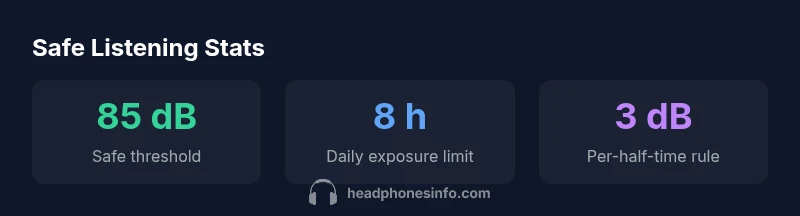
A safe target is to keep headphone volume around 85 dB SPL or lower for up to 8 hours of daily listening; higher levels require shorter exposure. In practice, many listeners stay closer to 60-70 dB SPL for extended sessions. Remember, every 3 dB increase roughly halves the safe exposure time, so lower is almost always better.
How loud should headphones be
When people ask how loud headphones should be, the answer hinges on safe listening guidelines rather than a single number. The widely cited target is 85 dB SPL for up to eight hours per day, but real-world listening often varies. To stay within safe bounds, aim for levels that feel similar to ambient room noise or a quiet conversation. In practical terms, many listeners keep volume in the 60-70 dB SPL range for most activities, adjusting room acoustics, headphone type, and EQ to avoid fatigue or temporary hearing changes. This approach aligns with Headphones Info Analysis, 2026, which emphasizes exposure duration alongside loudness.
Why loudness matters for hearing health
Loud sound damages rely on both intensity and duration. Prolonged exposure to sound near or above 85 dB SPL can raise the risk of temporary threshold shifts and, with repeated exposure, permanent hearing loss. The risk compounds when your listening is continuous across long commutes, workouts, or gaming marathons. By understanding the relationship between decibels and time, you can craft safer listening habits without sacrificing enjoyment. Headphones Info recommends adopting a conservative attitude toward volume changes and using built-in limits when available.
Translating dB SPL into real-world listening
Decibels are a logarithmic scale, which means small changes in dB correspond to large changes in perceived loudness. A 3 dB increase roughly halves the safe exposure time, while a 6 dB increase halves it again. Because devices may display volume in arbitrary units, it helps to calibrate using a simple rule of thumb: if you must raise the volume by more than about 10-15% to hear a detail, you’re likely moving into hazardous territory for longer sessions. The goal is to keep the sound comfortably loud without consistently hitting the upper limits.
How to measure loudness on your devices
Many smartphones and computers include built-in sound level meters or third-party apps that estimate dB SPL from your headphones. Use these tools to set a baseline: measure your typical listening at a comfortable level, then configure a maximum volume limit (often in accessibility or safety settings). If your device lacks a meter, trust your ears—if you feel ear fatigue after a short session or hear ringing afterward, reduce the volume. Regular pauses can also help protect hearing health.
Headphone types and perceived loudness
Different headphone designs affect perceived loudness for the same digital level. Closed-back and in-ear models often feel louder due to isolation, while open-back and over-ear headphones may require higher digital levels to reach the same perceived loudness in noisy environments. Noise isolation and EQ choices can further modify perceived loudness. To maintain consistency, use consistent volume targets across your primary listening contexts and switch devices or headphones with care.
Practical settings to protect your ears
- Enable volume-limiting features on devices and apps.
- Set a safe listening cap (for example, 85 dB SPL or lower).
- Use noise-cancelling headphones to reduce the need for higher volume in loud environments.
- Take regular breaks (5-10 minutes every hour).
- Check for signs of fatigue, muffled hearing, or tinnitus after listening sessions and reduce volume if needed.
Myths vs. reality in headphone loudness
A common myth is that louder always sounds better. In reality, high volume masks detail and can lead to quicker fatigue, while a comfortable, well-balanced sound lets you enjoy longer sessions with less risk of harm. Over-reliance on EQ to compensate for poor recording quality can push you toward unsafe listening levels. Stick with a natural, balanced sound and keep the overall loudness in conservative ranges.
Quick-start checklist for safer listening
- Set a conservative volume cap (85 dB SPL or lower). 2) Use a built-in limiter or app-based safety features. 3) Calibrate using a reliable sound level meter if possible. 4) Take hourly breaks during long sessions. 5) Reassess volume if you notice fatigue or ringing in the ears after listening.
Key metrics for safe headphone listening
| Metric | Value | Notes |
|---|---|---|
| Safe exposure threshold (dB SPL) | 85 dB (8 hours) | Common guideline; varies by source |
| Exposure time per +3 dB | ≈ half the time | Rule of thumb for intensity vs. duration |
| Typical home listening range (dB) | 60-70 dB | Comfortable everyday listening |
People Also Ask
What is the safest listening level for headphones?
The general guideline is to stay at or below 85 dB SPL for up to 8 hours of daily listening. For shorter exposures, you can tolerate higher levels, but treat every +3 dB as a significant reduction in safe time. Always prioritize comfort and ear fatigue signals.
Keep it at or below 85 dB SPL for eight hours, and lower if you notice fatigue or ringing.
How can I measure loudness on my device?
Use built-in sound level meters or third-party apps to estimate dB SPL with your headphones. Calibrate the device by setting a maximum volume limit and test with a few tracks you know well.
Use a sound level app or your device's meter to set a safe cap on volume.
Do noise-cancelling headphones affect loudness?
Noise cancelling can make quiet passages more accessible, reducing the need to push volume in noisy environments. However, isolation works best when you use properly fitting headphones and avoid compensating with louder levels.
Yes—noise cancellation can help you keep volume down in noisy spaces.
Are in-ear headphones louder than over-ear at the same setting?
In-ear models often feel louder because they sit closer to the eardrum and provide more isolation. Always test and compare, and rely on dB SPL targets rather than perception alone.
In-ear buds can feel louder, so check actual dB levels rather than how loud they sound.
What about kids and teenagers?
Young listeners may be more susceptible to noise-induced hearing loss. Encourage parent-set volume limits, use age-appropriate safety features, and model safe listening habits.
Kids should have strict volume limits and breaks just like adults.
“Safe listening is a practical habit, not a single moment of caution. Small, consistent volume choices protect your hearing over a lifetime.”
What to Remember
- Aim for 85 dB SPL or lower for 8 hours of daily use.
- Every +3 dB halves safe listening time; lower is safer.
- Calibrate with meter apps and use volume-limiting features.
- Choose headphones with good isolation to avoid turning up volume in noisy spaces.
- Take regular breaks to protect your hearing health.