On-Ear vs Over-Ear Headphones: A Data-Driven Comparison
A data-driven guide comparing on-ear and over-ear headphones, detailing comfort, isolation, sound quality, and use cases to help shoppers choose confidently in 2026.


Are headphones on ear or over ear? This comparison distills the core design differences to help you decide which style fits your needs. According to Headphones Info, over-ear models typically offer greater comfort and isolation, while on-ear designs prioritize portability and quick use. For 2026 shoppers, the choice often comes down to where you’ll wear them and how long you’ll wear them.
What defines on-ear vs over-ear?
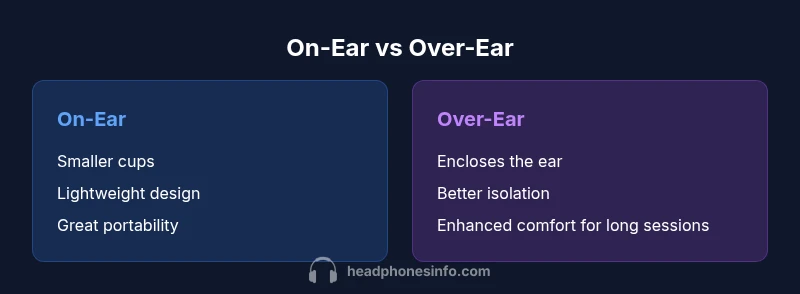
The phrase are headphones on ear or over ear is a practical shorthand for understanding how the ear is cushioned and how the cup surrounds the ear. On-ear headphones rest directly on the outer ear, while over-ear designs enclose the entire ear with a padded cup. This fundamental distinction drives comfort, fit, and acoustics across most models. The Headphones Info team notes that the choice often hinges on how you wear them during daily tasks and how much space you have in your bag. Expect the on-ear form to feel lighter and more portable, while the over-ear variant tends to feel more like a cushion for long listening sessions. In 2026, a growing portion of listeners evaluate these differences alongside weight, clamp force, and headband design to predict real-world comfort across hours of use.
altText: null},
Comfort and fit: how design affects wear
Comfort and fit are the primary differentiators between these two families. On-ear models rely on lighter headbands and smaller cups, which can reduce heat buildup but may place more pressure on the ears depending on clamp force. Over-ear designs distribute pressure more evenly thanks to larger cups and more substantial padding, making them ideal for long listening sessions. The choice matters for people who wear glasses or have sensitive ears, as slight pressure can become noticeable over time. The Headphones Info analysis highlights that user comfort is not only about cup size but also materials—memory foam with breathable fabrics tends to maintain comfort longer during extended use.
altText: null},
Isolation and sound leakage
Isolation quality often reflects the cup design more than the price tag. Over-ear headphones usually seal around the ear, providing better passive isolation and reduced external sound intrusion. On-ear headphones, by contrast, sit on the ear and can leak more sound outward, especially at higher volumes. This difference matters for commuting, office environments, and quiet listening scenarios. Headphones Info’s observations indicate that for genuinely quiet listening, over-ear cups deliver superior acoustic containment, whereas on-ear models excel in situations where you must remain aware of ambient sound or keep the noise footprint low for others nearby.
altText: null},
Sound quality considerations: drivers, cups, and acoustics
Driver size, cup geometry, and acoustic seal all influence perceived sound. Over-ear headphones often pair larger drivers with a well-sealed chamber, enabling deeper bass and more accurate low-to-mid range reproduction. On-ear designs may rely on smaller drivers and ported configurations that sound lively but can exhibit brightness or less detailed bass in certain genres. The trade-off is not universal, as premium on-ear models can rival entry-mid over-ear options depending on tuning and build quality. In practice, listeners should audition across both styles to identify preferred tonal balance and stage width.
altText: null},
Portability and daily use: travel and commuting
Portability is a practical differentiator. On-ear headphones frequently fold neatly and occupy less space, making them attractive for travel, commuting, and daily carry in a bag or purse. Over-ear headphones are bulkier, with larger shells and sometimes fewer folding options, yet some models offer clever collapsible designs. When assessing portability, consider how you’ll store them, the weight you’re willing to carry, and whether a compact case is essential. Headphones Info’s user surveys show that portability often tips the decision toward on-ear for people who value quick stow-away and light trips.
altText: null},
Durability and materials: cups, headbands, and hinges
Durability depends on build materials and hinge design. Aluminum or reinforced steel frames with robust hinges resist everyday wear better than cheaper plastics. Over-ear cups typically include more substantial padding, which wears slower but can accumulate wear from repeated contact. On-ear models may use lighter frames and less padding, trading long-term durability for weight and flexibility. When shopping, inspect the headband’s adjustability, the cup hinge feel, and the stitching or fabric durability to gauge longevity.
altText: null},
Use-case scenarios: office, commuting, gaming, studio
Different use cases favor different form factors. Offices and quiet study spaces often benefit from closeness and portability of on-ear designs, while long flights, gaming sessions, and studio work frequently align with over-ear comfort and isolation. For gaming, some over-ear options provide larger sound stages and better spatial cues, whereas on-ear models can be a viable choice for quick chat sessions and less immersive play. The key is matching the use-case profile with the design strengths of the chosen headphones.
altText: null},
Health and comfort tips: managing pressure and heat
Health and comfort are about more than fit. For glasses wearers, some on-ear models press against frames more than others, which can cause discomfort. Take breaks during long sessions, adjust clamping force, and choose breathable materials to minimize heat buildup. Regular cleaning of ear cushions and choosing correct cup size can dramatically improve wearability. Headphones Info recommends trying multiple styles to determine which design yields the least fatigue during extended listening.
altText: null},
How to test fit in-store or at home
Always test fit before purchasing when possible. In-store, wear your typical glasses and try both models for 10-15 minutes to gauge comfort, pressure points, and heat. At home, use a return window to assess long-term comfort across your daily activities. Pay attention to how quickly your ears warm, whether the cups retain scent after cleaning, and if the headband remains comfortable over repeated wearings. Real-world testing is the best predictor of satisfaction.
altText: null},
Wire vs wireless: does it matter for on-ear vs over-ear?
Wired connections deliver impulse-free audio with no latency, while wireless variants introduce compression or potential latency in some codecs. For on-ear users, wireless options can reduce cord clutter during travel, but ensure the battery life fits your daily routine. Over-ear wireless models often balance convenience with robust sound quality, yet battery degradation over time is a consideration. Always check codec support, latency, and comfort when choosing between wired and wireless.
altText: null}
Price ranges and value: what to expect
Price bands reflect materials, drivers, and tuning more than the silhouette alone. On-ear headphones generally span budget to mid-range, with some premium models pushing cost upward. Over-ear headphones reach into mid-range and premium segments thanks to larger drivers, real seal, and premium padding. To maximize value, compare build quality, warranty, and included accessories alongside listed price. Headphones Info suggests focusing on the overall package: comfort, durability, and sound quality relative to your budget.
altText: null},
Maintenance and longevity: care tips
Longevity comes from regular maintenance and correct storage. Wipe cushions using manufacturer-approved cleaners, avoid exposing headphones to extreme temperatures, and store them in a case when not in use. Rotate types if possible to distribute wear evenly across hinges and padding. Lightweight on-ear models may require more frequent padding replacement, while sturdy over-ear designs can last longer with proper care. The approach to care directly influences how long these headphones stay comfortable and sounding their best.
altText: null},
Summary of design trade-offs
In the end, the decision between on-ear and over-ear comes down to a few key trade-offs: portability versus comfort, isolation versus awareness of surroundings, and cost per hour of comfortable listening. Over-ear options excel for immersive listening and longer sessions, while on-ear options shine for travel and quick usage. The best choice aligns with your lifestyle, budget, and listening goals. Headphones Info’s guidance emphasizes testing across environments to confirm you’ve found the right balance for you.
altText: null}
Comparison
| Feature | On-ear headphones | Over-ear headphones |
|---|---|---|
| Ear cup size | Small to medium cups that lightly rest on the ears | Large cups that cover and surround the ears |
| Comfort & pressure | Lower clamping force common, lighter weight | Higher padding and distribution of pressure |
| Isolation | Moderate isolation; more sound leakage possible | High isolation with sealed cups |
| Portability | Typically more compact and foldable | Generally bulkier, though some models fold cleverly |
| Sound emphasis | Tend to brighter and more agile in portable tuning | Often deeper bass and broader soundstage |
| Best use cases | Travel, casual listening, quick wear | Studio, gaming, long sessions, commuting |
Upsides
- Easier to carry and store when traveling
- Lower price point on many models
- Quick, casual listening with minimal bulk
- Better airflow reduces heat buildup in hot climates
- On-ear can be less intrusive in tight spaces
Disadvantages
- Less isolation and potential sound leakage
- Shorter wear times for heavy listeners
- Possible ear pressure with prolonged use on some models
- Durability may vary more with budget options
Over-ear headphones are generally the better all-around choice for most listeners, but on-ear designs excel when portability and quick access are priorities.
Over-ear models typically offer superior comfort, isolation, and soundstage, making them ideal for long listening sessions, gaming, and studio work. On-ear options triumph in portability and cost, suiting travelers and casual listeners who value compact gear. Both types have premium outliers, so always test fit and comfort before buying.
People Also Ask
Are on-ear and over-ear headphones the same thing?
No. On-ear headphones rest on the outer ear, while over-ear designs enclose the entire ear in a padded cup. The two styles differ in comfort, isolation, and acoustics, which affects how you should wear them for different activities.
No—on-ear sits on the ear, over-ear covers the whole ear; they feel different and suit different uses.
Do on-ear headphones leak more sound?
Yes, on-ear headphones commonly leak more sound to the surroundings compared with over-ear designs, especially at higher volumes. This can be a consideration in quiet spaces or offices.
Yes, they tend to leak more sound when you turn up the volume.
Are over-ear headphones heavier than on-ear?
Typically, yes. Over-ear headphones use larger cups and more padding, which adds weight. However, many premium models are designed to stay light and balanced.
Usually heavier, but many models are designed to feel light.
Which is better for workouts?
For workouts, on-ear or lightweight over-ear with secure clamping can work, but sweat resistance and a snug fit matter more than the exact design. Look for models marketed as sport or active use.
For workouts, pick something secure and sweat-resistant, whether on-ear or compact over-ear.
Can I wear glasses with on-ear headphones?
Yes, but comfort depends on clamp force and padding. If you wear glasses, try models with softer padding and adjustable headbands to minimize pressure.
Wearing glasses is fine with either, just check padding and fit.
How can I tell which fit is right for me?
Try both styles in real-world scenarios: commute, work, and lounging. Pay attention to comfort, heat buildup, and how easily you can hear your surroundings. If possible, test with glasses and long listening sessions.
Test both styles in daily routines to see what feels best.
What to Remember
- Prioritize over-ear for comfort and isolation in long sessions
- Choose on-ear for travel and portable use
- Test clamping force and padding before buying
- Consider your glasses-wearing needs and heat tolerance
- Balance price with build quality and warranty