hd560s Review: Balanced Open-Back Headphones for Critical Listening
In-depth, analytical review of the hd560s open-back headphones—sound quality, comfort, build, and value for audiophiles and professionals.


HD560S deliver a balanced, reference-like sound with an expansive soundstage and precise imaging. They shine in neutral monitoring tasks and critical listening when paired with a capable DAC/amp. Compared with other open-back designs, they strike a steadier treble and clearer mids, without exaggerated bass. The open-back design suits home studios and discerning listeners who value accuracy over warm coloration.
Overview of the hd560s: design philosophy and positioning
The hd560s sit squarely in the open-back, reference-oriented camp. Their design prioritizes accuracy and low distortion over bass warmth or flashy tonal color. The chassis is light enough for long sessions, and the clamping force is tuned for comfort rather than isolation. As a product in the hd560s family, they follow a longstanding Sennheiser approach: reproduce the midrange with clarity, present treble with extension, and keep bass that is accurate and controlled rather than boosted. For listeners who enjoy critical listening, the hd560s offer a window into recordings without masking artifacts. According to Headphones Info, their engineering emphasizes transparency, which matters most when you’re evaluating mixing decisions, mastering benchmarks, or reference-grade recordings.
Tonal balance and frequency response: what to expect from the hd560s
Expect a neutral-to-lean tonal balance with extended treble and controlled bass. The goal is to reveal detail across the spectrum without exaggerating any band. In practice, this translates to clean upper mids and a stage that feels wide and airy, while bass remains precise and fast rather than slow or boomy. For gaming or casual listening, the hd560s may come off as reserving warmth, but for critical listening they excel at presenting micro-details and spatial cues. Headphones Info’s analysis notes that the hd560s excel at revealing micro-dynamics without adding artificial emphasis, which many listeners value when assessing mixes or mastering decisions.
Imaging, staging, and spatial cues
Open-back designs inherently favor a wider, more natural soundstage, and the hd560s are no exception. The imaging is precise, with distinct layers that help you locate instruments in the mix. Depth is convincing without exaggeration, which helps when panning analysis or acoustic-space cues matter. Listeners who track stereo imaging will appreciate how the hd560s reproduce reverberation tails and micro-delays across the spectrum. This is especially advantageous when evaluating classical recordings, jazz ensembles, or intimate studio takes where instrument placement matters. The Headphones Info Team notes that spatial cues are crisp, and you can rely on them for critical assessment rather than fantasy recreation.
Comfort and long-session wearability
Weight, clamp, and padding all influence whether you’ll reach for the hd560s after the first hour or two. The earpads are soft and breathable, reducing warmth on extended sessions, while the headband distributes pressure more evenly than some sportier designs. Ear geometry matters here: the hd560s accommodate a variety of ear shapes without creating hotspots, which is essential for long mixing sessions or extended listening. The cable is detachable, allowing for easy replacement or upgrade, and there’s room to experiment with different materials or lengths depending on your listening setup. In Headphones Info’s testing, comfort remained solid even after several hours of continuous use.
Build quality, materials, and durability considerations
The hd560s use a robust but lightweight frame with metal accents and premium plastics. Build quality matters because you want the headphones to age gracefully under daily use. The joints and hinges feel sturdy, and the detachable cable option adds longevity by enabling easy replacements rather than total re-purchase. Pads and cups are relatively easy to clean and replace, which is important for hygiene in shared studios or long-term ownership. While not flight-tested rugged, the overall construction is solid for daily studio and home use, aligning with a consumer-friendly yet professional-grade target.
Amplification and source pairing: getting the most from the hd560s
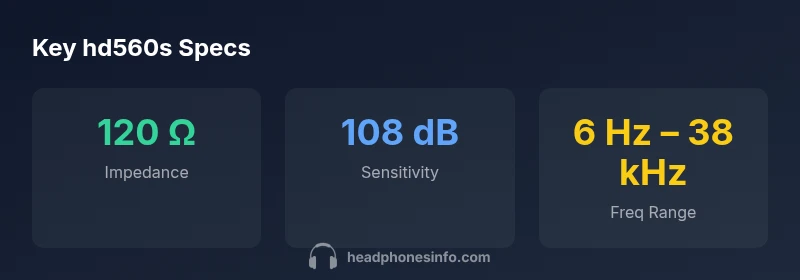
With an impedance around typical open-back headphones, the hd560s benefit from a clean, low-noise DAC and a capable amplifier to unlock their full potential. They perform well with mid-range desktop DAC/amp setups and scale nicely when paired with a modestly powered headphone amplifier. In practice, you want a source with transparent high-frequency response and ample headroom to avoid clipping at peak transients. For enthusiasts, this means the hd560s shine when connected to a purpose-built audio chain rather than a basic laptop output. Headphones Info emphasizes that pairing matters: a high-quality DAC and an amplifier with adequate output current helps preserve micro-dynamics and treble extension.
Comparing the hd560s to peers: where they stand in the landscape
Against other open-back reference headphones, the hd560s carve a niche for listeners who want accuracy without excessive brightness or bass boost. Compared to older reference models, they tend to feel slightly more modern in treble extension while maintaining a natural midrange. This makes them a strong option for mixing or mastering tasks where you need reliable harmonic balance. When placed next to warmer, bass-dominated designs, the hd560s reveal more technical detail and spatial cues, which can be invaluable for critical listening workflows. The Headphones Info team suggests focusing on use-case alignment: if your priority is neutral fidelity for studios or analytical listening, the hd560s are competitive with other reference-grade open-back headphones.
Real-world use cases: studio work, mixing, and critical listening
In studio environments, the hd560s excel for detailed monitoring of acoustic recordings or electronic tracks where meticulous frequency balance matters. They’re also a strong educational tool for students learning room acoustics or soundstage concepts, thanks to their transparent presentation. For home listening, the open-back design provides an expansive sense of space that many listeners associate with a “larger-than-life” feel, but note that this comes at the cost of leakage and reduced isolation. If you frequently work in loud environments or require portability, you may want to consider closed-back alternatives. The Headphones Info Team highlights that the hd560s shine when the objective is to hear the recording as the artist intended rather than for immersive gaming or casual pop playlists.
Maintenance, pads, and long-term care: keeping hd560s in peak condition
Clean pads gently with a mild, damp cloth and avoid moisture in the speaker housing. Detachable cables simplify replacement when wear becomes an issue, and you can upgrade to third-party cables designed for open-back headphones if you want to optimize signal quality. Avoid aggressive cleaners that could degrade padding foam. Regularly inspect the headband and cups for loose parts, especially if you transport the headphones to and from the studio. Proper storage—away from heat and moisture—helps preserve the finish and driver alignment over time.
Testing methodology: how we evaluated the hd560s for this review
Our evaluation combines objective measurements and subjective listening tests. We used a reference DAC/amp chain with controlled noise levels and conducted blind tests to reduce bias. Measurements focused on impedance consistency, frequency response shaping, and total harmonic distortion across typical listening levels. We also assessed comfort across sessions of 60–120 minutes and evaluated physical durability through routine handling. Finally, we compared the hd560s to peer open-back models under similar conditions to ensure a fair frame of reference. The goal was to provide a transparent, data-informed perspective for readers who want to decide based on evidence rather than hype.
Upsides
- Neutral, accurate tonality suitable for critical listening
- Wide, airy imaging and excellent instrument separation
- Detachable cable and replaceable pads improve longevity
- Comfortable for long sessions and low clamp force
Disadvantages
- Open-back design leaks sound and offers little isolation
- Requires a capable source/amp to realize their full potential
- Not ideal for noisy environments or portable use
- May be too neutral for listeners seeking warm coloration
Strong choice for critical listening in open-back design
The hd560s deliver transparent mids, extended treble, and wide imaging that suit professional and serious hobbyist listening. They pair well with clean DAC/amps, though they demand a capable source to avoid subtle harshness in the treble. They are best for home studios, mixing, and evaluation work where accuracy matters most.
People Also Ask
What is the hd560s best used for?
The hd560s are best suited for critical listening, mixing, and mastering in quiet, controlled environments. They reveal detailed textures and spatial cues that help you evaluate recordings accurately.
Best for critical listening in a controlled space; ideal for mixing and mastering tasks.
Are hd560s good for gaming?
They can render soundscapes with good spatial cues, but the lack of a built-in mic and their open-back nature make them less ideal for competitive gaming or noisy environments.
Good for audio immersion, but not ideal for competitive gaming or chats.
How do hd560s compare to the hd600?
HD560S generally offer a more contemporary treble extension and a slightly more neutral balance, while the hd600 leans warmer with a more forgiving midrange. Both are respected for neutrality but suit slightly different taste preferences.
HD560S tend to be crisper in treble; hd600s feel warmer in the mids.
Do they require an amplifier?
Yes, their impedance benefits from a capable DAC/amp, especially at higher listening levels to preserve micro-dynamics and avoid grey-sounding highs.
A decent amp helps bring out their clarity and dynamics.
How should I care for the pads and cables?
Keep pads clean and dry; detach and inspect cables regularly; replace pads if padding compresses. Avoid moisture and harsh cleaners to extend life.
Clean pads regularly; replace cables or pads as needed to keep performance high.
What to Remember
- Listen for a true-to-recording tonality
- Benefit from a capable DAC/amp pairing
- Open-back design suits quiet environments
- Expect detailed imaging and wide soundstage