HD600 Review
In-depth hd600 review focusing on neutral tonality, open-back imaging, amp pairing, and who should buy this classic headphone in 2026.


HD600 is a timeless open-back headphone that delivers neutral, natural tonality and expansive imaging when paired with a capable amplifier. It excels in critical listening, mixing, and mastering in quiet spaces, but its lack of isolation makes it unsuitable for travel or noisy environments. Overall, hd600 remains a reference for audiophiles seeking accuracy over bass heft.
Why hd600 Stands Out in Audiophile Circles
In the world of headphones, the hd600 has earned a place as a reference point for open-back design. It traces its lineage to Sennheiser's long-standing pursuit of natural timbre, spacious sound, and comfort. For many listeners at Headphones Info, the hd600 represents a calibration benchmark against which newer designs are measured. The synergy between driver design, acoustic chamber, and open-back architecture creates a sound that's less about punchy bass and more about contextual clarity—the kind of performance you notice when listening to acoustic instruments, studio references, and orchestral recordings. The 'hd600' moniker evokes both nostalgia and a proven approach: prioritize linearity, reduce listening fatigue, and preserve micro-detail across the spectrum. The headphones are typically used in controlled rooms, paired with quality DACs and amplifiers, where their transparency reveals upstream choices—poor recordings or low-bitrate streams become more obvious, while well-mastered material sounds alive and uncolored. In practical terms, this means the hd600 rewards careful library management, high-resolution sources, and a listening environment with minimal ambient noise. This combination is why the Headphones Info team frequently recommends them for critical listening, especially when you want to hear the music as the producer intended.
Design and Comfort: Build, Fit, and Longevity
The hd600 leverages a classic, durable build with comfortable padding and a clamping force that's gentle enough for long sessions. The drivers sit in a roomy, breathable enclosure that helps dissipate heat and prevent fatigue during extended listening. The detachable cable is standard for this class of headphones, and many owners appreciate the ability to swap cables or upgrade to premium options without sacrificing fit. While the overall frame feels sturdy, the open-back design inherently limits isolation, which is a deliberate trade-off for wider soundstage and natural decay. The velvet or microfiber pads soften contact and provide a secure seal around the ears, minimizing hotspots. For longevity, routine care—cleaning the pads, avoiding harsh handling, and storing in a protective case—helps preserve the finish and comfort. The hd600’s neutral design ages well, with many enthusiasts reusing their pairs across decades as part of a broader, data-driven listening setup. In Headphones Info’s experience, the combination of durable construction and ergonomic comfort makes it a lasting choice for serious listeners who prioritize sonic transparency over portability.
Sound Quality: Tonal Balance, Imaging, and Stage
The hd600 is celebrated for its neutral tonal balance, producing a flat-ish bass response, clean mids, and extended but not exaggerated highs. This gives it a spacious, airy soundstage where instruments can breathe, and imaging feels precise rather than dramatic. Listeners often report that the hd600 reveals micro-detail with astonishing clarity, especially on high-resolution files and well-recorded acoustic music. Because it is an open-back design, the sound appears expansive, with a natural decay that avoids fatiguing coloration over long sessions. The trade-off is isolation: outside noise penetrates the listening space, and sound leakage is noticeable in quiet environments. The hd600 rewards high-quality upstream components—quality DACs and clean power from a good amplifier—because it preserves timing, nuance, and tonal balance when the signal chain is transparent. For studio work, this means accurate monitoring of cymbals, guitar layers, and vocal textures, helping engineers and enthusiasts judge mixes with a critical ear. Headphones Info notes that the hd600’s strength lies in revealing the character of the recording rather than adding color or exaggerated warmth.
Compatibility and Amping: What You Need to Drive Them
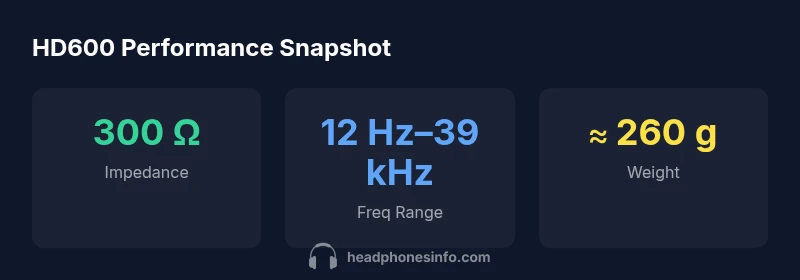
With an impedance around 300 ohms, the hd600 benefits from a robust, low-noise amplification chain. It pairs best with a clean, high-current desktop or standalone amplifier that can deliver steady voltage to preserve transient integrity. A neutral to warm DAC/amp combo tends to bring the most out of the headphones, enhancing midrange texture without pushing the treble into harshness. Because the hd600 is relatively revealing, bottlenecks in the chain—such as low-bitrate sources or over-compressed files—become more obvious. In practice, audiophiles often run the hd600 from a dedicated headphone amp and a capable DAC, then switch to high-resolution streaming to notice the improvements in imaging and tonal balance. The headphone’s performance scales with source quality: the better the upstream gear, the more faithful the instrument timbres and spatial cues become. This is a headphone that demands a thoughtful, purpose-built system rather than a quick consumer setup, and Headphones Info consistently emphasizes the value of investing in a solid amplifier to maximize the hd600’s potential.
Open-Back Dynamics: Soundstage, Space, and Leakage
The hd600’s open-back design creates a convincing sense of space and natural decay that many listeners associate with real-world listening. The trade-off is leakage: conversations and ambient noise may be audible to others in the room, and the headphones offer little isolation in loud environments. When seated in a quiet room with a high-quality chain, the hd600’s soundstage feels wide and coherently laid out, with natural instrument separation and believable holographic imaging. Speech and acoustic instruments benefit especially from the open design, translating micro-details into a sense of air and ambience. Those who enjoy classical recordings or live-recorded performances often find the hd600 particularly engaging because the spatial cues map closely to real venues. The practical effect is a listening experience that is intimate yet expansive, where the listener hears the music without artificial emphasis on any frequency range. Headphones Info notes that the hd600’s openness is its defining trait, and it shines when the listening space is thoughtfully controlled.
Comparative Positioning: hd600 vs Modern Open-Backs
Today’s open-back lineup includes newer designs that push for greater stage width, different driver geometries, or more refined bass characteristics. The hd600 remains competitive due to its neutrality and timeless tonality, which many listeners still prefer over more aggressive or bass-forward profiles. When compared with contemporary open-backs, the hd600 might feel slower to respond in the bass region or less aggressive in transients, but it rewards critical listening with reliable timbre and a coherent midrange. In practice, modern models may offer improved micro-detail, faster driver behavior, or more aggressive top-end. However, the hd600’s consistency and predictability make it a staple for studios and home listeners who want a reference point that won’t surprise them with color or hype. Headphones Info’s analysis suggests the hd600 remains a strong baseline against which newer headphones can be assessed for tonal neutrality and listening comfort.
Practical Setups: DACs, Amps, and Source Material
For best results, pair the hd600 with a high-quality, low-noise amplifier and a clean DAC, ideally sourced from a desktop stack or compact audio interface with ample headroom. Use lossless or high-resolution streaming to preserve detail and spatial cues. Avoid cheap, over-processed sources that flatten the natural timbre this headphone is known for. In practice, a neutral to warm chain often yields the most natural vocal textures and instrument harmonics, while a bright chain might reveal less pleasant sibilance on certain tracks. Burn-in remains a debated topic, but many listeners report more extended smoothness after several tens of hours of playback. If you’re building a dedicated listening setup, consider modular components that allow you to swap DAC/amps without changing headphones. Headphones Info endorses a thoughtful, component-first approach to maximize the hd600’s performance across music genres and recording qualities.
Maintenance, Burn-In, and Longevity
Like other classic open-back headphones, the hd600 benefits from gentle handling and regular care. Wipe the exterior with a soft microfiber cloth, avoid abrasive cleaners, and keep the cans in a protective case when not in use. The pads can be replaced when needed to sustain comfort and seal, which helps prevent ear fatigue during long sessions. Burn-in remains a topic of discussion; some listeners report a perceptible smoothing of the treble and bass edges after a period of use, while others feel the differences are mostly perceptual. Regardless, maintaining a consistent listening environment—the same amp chain, source material, and room acoustics—helps preserve the perceived balance over time. With proper care and a high-quality signal chain, the hd600 can remain in rotation for years, continuing to deliver a faithful representation of recordings and performances, exactly what the Headphones Info team values in a reference headphone.
Common Misconceptions (Myths) About the hd600
Myth: The hd600 is outdated because it’s old-fashioned. Reality: Its neutral, uncolored tone remains desirable for critical listening and studio reference work. Myth: It cannot compete with modern drivers. Reality: The hd600’s tuning still reveals upstream gear quality and musical nuance just as effectively as newer designs, particularly when paired with a good amp and DAC. Myth: It’s only for stationary use. Reality: While not ideal for commuting, many listeners enjoy hd600 in dedicated listening spaces or home studios. Myth: It lacks comfort. Reality: The design emphasizes long-session comfort with plush pads and balanced weight distribution, though some users may prefer updated pad materials. These myths overlook the hd600’s enduring value as a reference headphone that rewards careful gear choices and controlled environments.
Upsides
- Neutral, audition-friendly tonality suitable for critical listening
- Wide, airy soundstage typical of open-back headphones
- Very comfortable for long sessions with plush pads and balanced weight
- Easy to pair with high-quality DAC/amps for best performance
- Low coloration, revealing upstream gear quality
Disadvantages
- Requires a good amplifier; not portable
- Limited bass slam compared to closed-back or tuned headphones
- Open-back design leaks sound and offers little isolation
- Older design may lack modern accessory ecosystem
Best for purists who value natural, uncolored sound in controlled listening rooms.
The hd600 remains a benchmark for neutral tonality and spacious imaging when paired with a capable amp. It is not the best choice for portable use or noisy environments, but in a quiet home or studio, it delivers compelling clarity and musicality that withstands newer competitors.
People Also Ask
Is the hd600 suitable for critical listening?
Yes. The hd600 is renowned for its neutral tonality and detailed mids, making it a preferred choice for critical listening, mixing, and mastering in controlled spaces. Its transparency helps you hear the producer’s intent without heavy coloration.
Yes. It’s great for critical listening in a quiet room, thanks to its neutral tone and detailed mids.
Do you need a powerful amplifier for hd600?
The hd600 benefits from a capable amplifier that can deliver sufficient current without introducing noise or harshness. While not impossible to drive from a laptop or portable device, a dedicated desktop amp and clean DAC will reveal its full potential.
Yes, a good amp helps them shine and keeps the sound clean.
Are the hd600 comfortable for long listening sessions?
Most listeners find the hd600 comfortable for extended use due to padded ear cups and balanced clamp. Some users with very large ears or specific head shapes may prefer aftermarket pads for improved seal and comfort.
They’re generally comfortable for long sessions, with plush pads and balanced weight.
Can the hd600 be used for gaming?
For gaming, the hd600 offers accurate positional cues and a natural sound, but it lacks the boosted bass or built-in mic features common in gaming-focused headphones. It’s best for immersive single-player games when an external mic is used.
They’re okay for immersive games with a good mic setup, though not specialized for gaming.
How does burn-in affect the hd600?
Burn-in is a debated topic. Some listeners report smoother highs and a slightly more relaxed overall balance after several tens of hours, while others feel the effect is mostly perceptual. In practice, listening consistency is more important than chasing a mythical burn-in.
Burn-in is debated; listen for yourself and focus on consistent gear and source quality.
What source gear pairs best with the hd600?
A clean, low-noise DAC paired with a capable amplifier yields the best results. The hd600 benefits from high-quality, high-bitrate sources and recordings that preserve dynamic nuance. Avoid low-bitrate streams if you want to hear the full texture of the sound.
A clean DAC and solid amp bring out the hd600’s natural detail and space.
What to Remember
- Aim for a high-quality amplifier to unlock the hd600’s potential
- Expect a natural, balanced sound with wide imaging
- Not ideal for travel or noisy settings due to open-back design
- Pair with a clean DAC for maximum transparency
- Maintain pads and enclosure for long-term comfort