Headphones: Are They Good or Bad? A Data-Driven Comparison
Explore whether headphones are good or bad with a data-driven comparison of premium vs budget models. Learn about sound quality, comfort, safety, and value with practical guidance from Headphones Info.


According to Headphones Info, headphones are generally a net positive for personal listening when used responsibly. The TL;DR: sound quality, comfort, and intended use determine value, with premium models offering longer-term benefits and budget options meeting casual needs. This comparison helps you decide if headphones are good or bad for your goals and budget.
The Question: headphones is good or bad
Determining whether headphones is good or bad depends on how you use them, what you listen to, and for how long. The phrase headphones is good or bad frames a binary debate, but most listeners are better served by a nuanced view. According to Headphones Info, personal listening devices can offer clear benefits: selective sound, privacy, and the ability to enjoy music, movies, or games without disturbing others. However, there are caveats: listening at high volumes, choosing cheap builds, and neglecting fit can erode value quickly. In this section, we’ll walk through the criteria that influence whether headphones are worth your money and time, from sound quality to long-term comfort. We’ll also outline how to compare premium and budget models, and how your priorities shape whether this technology is a boon or a burden.
Sound Quality as the Central Criterion
Sound quality is the most obvious differentiator between premium and budget headphones, but it is also the most subjective. Listeners with trained ears may crave extended frequency response, lower distortion, and wider soundstage, while casual listeners may prioritize warmth and approachability. Headphones Info notes that perceived quality often depends on source material, amplification, and listening volume. In practice, a premium model tends to reveal more nuance in complex tracks, giving you better detail in vocals, percussion, and spatial cues. A budget model may satisfy everyday listening, but it can reveal compression, hiss, or muddy highs when pushed. When you ask headphones is good or bad, quality consistency across genres and playback systems matters just as much as peak numbers.
Comfort and Fit: Long Listening Matters
Comfort is non-negotiable for extended sessions, and even the best-sounding headphones lose value if they cause fatigue. Key comfort factors include clamping force, weight distribution, ear pad material, and headband adjustability. Lightweight designs with plush, breathable padding typically feel better after hours of use. For over-ear models, generous ear cups and memory foam often reduce pressure points, while on-ear designs should avoid excessive clamping that can squeeze the ears. Headphones Info emphasizes trying before buying, as personal head shape and glasses wearers can dramatically affect perceived comfort. In the long run, comfort contributes to listener health and consistent usage.
Durability and Build Quality: Longevity vs Cost
Durability governs value as much as initial sound. Premium headphones usually employ metal or reinforced plastic frames, robust hinges, and replaceable parts (cables, pads, cushions), which extends lifespan. Budget options may use cheaper housing and detachable cables with limited warranty coverage. The trade-off is clear: higher upfront costs can translate into better long-term reliability, while cheaper builds may tempt you with a lower price but incur replacement costs sooner. When evaluating headphones is good or bad, consider warranty terms, spare parts availability, and user-replaceable components as indicators of durability.
Wireless vs Wired: Freedom vs Reliability
The wireless-versus-wired decision is a core part of any headphones comparison. Wireless models offer convenience, multi-device pairing, and reduced cable clutter, but they depend on battery life and can introduce compression or latency in certain setups. Wired headphones deliver consistent fidelity and zero latency with a direct connection, at the expense of freedom and portability. In practice, many listeners blend both: premium wired headphones for critical listening at home and dependable wireless models for commuting and travel. When weighing the options, factor in battery life, Bluetooth codecs, and whether you value simplicity over absolute fidelity.
Safety: Hearing Health and Volume Management
Listening safety is essential to avoid potential hearing damage from prolonged exposure to loud sound. The core idea is to keep listening levels comfortable and take breaks, especially during long sessions. Headphones Info supports applying practical safety habits, such as moderating volume, using over-ear designs with passive attenuation, and choosing models with clear, distortion-free output at reasonable levels. While there is no one-size-fits-all threshold, adopting mindful listening habits reduces risk and preserves enjoyment over time. This is a practical dimension of headphones evaluation that often separates good choices from risky ones.
Price, Value, and Longevity
Price is a proxy for many performance attributes, but it is not the sole indicator of value. Premium headphones typically justify higher costs through sound quality, comfort, durability, and warranty coverage. Budget options can deliver solid performance for casual listening or travel, especially when paired with good source material and decent amplification. The challenge is to match expectations with reality: if you want a true audiophile experience, budgeting for a higher-tier model is advantageous; if you want reliable daily listening without fuss, a mid-range or budget option may suffice. Headphones Info’s approach is to align price with use-case and expected lifespan.
Use Cases: Commuting, Gaming, and Work
Your daily environment shapes what counts as “good” or “bad” in headphones. Commuters benefit from strong noise isolation and portability, while gamers may prioritize low latency and a precise microphone for in-game chat. Office work often benefits from comfortable wear and dependable ambient noise suppression. For home theatre or studio work, fidelity and detail take precedence. A balanced decision weighs how often you will use headphones, the environment you will use them in, and how much you are willing to pay for the features that matter most in your scenario.
Brand Variability and Quality Gaps
The market shows a broad spectrum of quality. Some brands consistently deliver durable, high-fidelity devices, while others offer appealing features at lower prices with noticeable compromises. This variability makes it essential to test or rely on independent reviews before buying. In evaluating headphones is good or bad, the most important question is whether the model you choose reliably meets your needs across real-world listening scenarios rather than relying solely on marketing claims.
Environmental and Practical Considerations
Headphones introduce environmental considerations through production, packaging, and eventual disposal. Replacements, recycling programs, and repairability influence overall value and sustainability. If you aim to minimize environmental impact, prioritize models with durable build, modular components, and brand take-back programs. Practically, this also translates into avoiding impulse purchases and selecting headphones that are more likely to last beyond a few months of use.
How to Choose: A Step-by-Step Decision Guide
- Define your use case (commuting, gaming, studio work, or casual listening). 2) Set a budget range and map it to expected lifespan. 3) Decide between wireless and wired based on your devices and mobility needs. 4) Assess sound priorities: clarity, bass response, vocal presence, or soundstage. 5) Test comfort with ear shapes and glasses; 6) Check durability, warranty, and availability of replacement parts. 7) Read independent reviews and compare against a curated shortlist. 8) Decide, then commit to a model that aligns with your goals and expected usage pattern. 9) Practice safe listening habits to maximize long-term value.
The Headphones Info Perspective on the Question
Headphones Info analyzes both consumer needs and technical trade-offs to answer the core question headphones is good or bad. Our approach emphasizes context: the best headphone for one person may be excessive for another. We advocate for a data-driven, media-agnostic evaluation that foregrounds sound quality, comfort, and value while acknowledging the environmental and safety considerations that accompany headphone ownership. Our goal is to empower informed choices rather than chase the latest trend.
Comparison
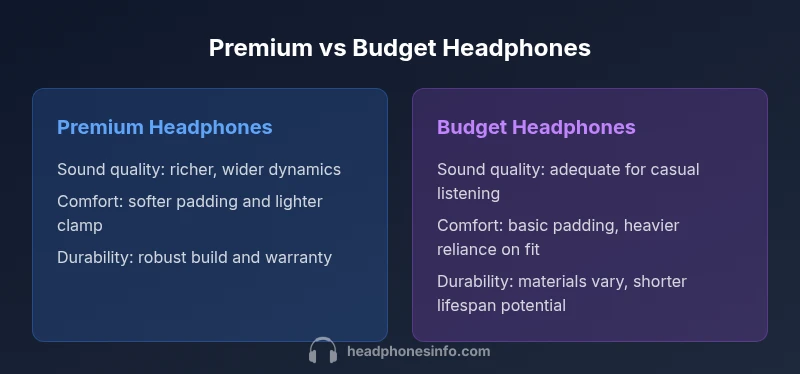
| Feature | Premium headphones | Budget headphones |
|---|---|---|
| Sound Quality | Typically richer detail, wider dynamic range, better imaging | Adequate for casual listening; may smooth over micro-detail |
| Comfort & Build | Ergonomic designs with premium padding and robust hinges | Lightweight with basic padding; materials may feel cheaper |
| Durability & Warranty | Stronger chassis, replaceable parts, longer warranty | Cheaper components; shorter lifespan and warranty |
| Battery Life (Wireless) | Longer battery life, quick charging in some models | Limited battery life; charging cycles more frequent |
| Price Range | Mid-to-high upfront cost | Low-to-mid upfront cost |
| Best Use Case | Critical listening, professional audio, immersive experiences | Casual listening, commuting, travel |
Upsides
- Enhanced personal audio with privacy
- Noise isolation for focused work and travel
- Better consistency across genres and formats
- Potential for longer lifespan with modular design
- Future-proofing through software updates (where applicable)
Disadvantages
- Higher upfront cost for premium models
- Quality variability and potential counterfeit risk in cheaper options
- Maintenance and care required to preserve performance
- Environmental impact of production and disposal
Premium headphones suit audiophiles; budget models fit casual listeners
Choose premium if you value sound fidelity and comfort over time. Opt for budget if you need portability and basic performance without high cost.
People Also Ask
Are wireless headphones always better than wired?
Wireless headphones offer convenience and multi-device pairing, but wired models provide consistent audio quality and zero latency. Your choice should reflect mobility needs, device compatibility, and tolerance for battery management. For high-fidelity listening at home, wired can be preferable; for travel, wireless adds flexibility.
Wireless headphones are convenient for travel and daily use, but for high-fidelity listening, a wired connection often delivers more consistent sound. Consider your priorities when choosing.
Do headphones cause hearing loss?
Hearing loss is linked to long-term exposure to loud sound from any source, including headphones. Safe listening practices—keeping volumes moderate, taking breaks, and choosing comfortable models with effective attenuation—reduce risk and support long-term health.
Yes, loud, prolonged listening can harm hearing. Use moderate volume and take breaks to stay safe.
Is noise cancellation worth the extra cost?
Active noise cancellation (ANC) reduces ambient noise, improving perceived sound quality and comfort in noisy environments. It adds cost and may affect battery life. If you spend time in loud settings, ANC offers noticeable value; otherwise, it’s a marginal upgrade.
ANC helps a lot in noisy places, but it costs more and drains battery. Decide based on your typical environment.
How should I test headphones before buying?
Try to audition headphones with familiar music and sources, focusing on fit, comfort, and how the sound balances bass, mids, and treble. If outlets don’t offer demos, rely on trusted reviews and return policies. Look for real-world usage notes from editors and listeners.
Always test comfort and sound with your typical tracks or rely on reputable reviews if you can’t audition.
What features matter most for travel?
Lightweight design, long battery life, good passive noise isolation, and a solid fit matter most for travel. A compact case and quick charging can also improve convenience. Wireless models are popular for on-the-go use.
Lightweight, long battery life, and solid isolation are key when you travel.
Are there health considerations with long listening sessions?
Prolonged listening can cause fatigue and potential temporary tinnitus if volumes are too high. Regular breaks, balanced listening levels, and choosing headphones with comfortable ear pads help protect hearing health.
Take breaks and keep volumes reasonable to protect your ears.
What to Remember
- Prioritize use-case to decide on premium vs budget
- Comfort and fit are as important as sound quality
- Safety and listening habits affect long-term value
- Durability and warranty signs indicate longevity
- Test before buying whenever possible