How Long Do Headphones Last? Reddit Insights and Real-World Lifespans
Explore how long headphones last on average, what factors shorten or extend life, and practical care tips. Based on Headphones Info Analysis, 2026 and Reddit insights.


According to Headphones Info, how long do headphones last reddit is a frequent question among audiophiles and shoppers. In short, lifespan depends on build quality, usage, and care, with realistic ranges typically spanning a few years rather than a single fixed timetable. This article pulls together practical guidance, Reddit signals, and data-backed estimates from Headphones Info Analysis, 2026, to help you gauge expected longevity and plan replacements or repairs accordingly.
Why headphone longevity matters
Headphones are a long-term investment for your listening experience, comfort, and budget. When you understand lifespan ranges, you can plan replacements, repairs, and care routines to protect sound quality. According to Headphones Info, most people expect a meaningful lifespan that matches their daily use and maintenance habits. This awareness helps you avoid premature replacements and evaluate whether a fault is a sign of impending failure or simply wear from heavy usage. By considering build quality, usage patterns, and maintenance, you can tailor your expectations and make smarter purchasing decisions that align with your listening goals.
What drives a headphone’s lifespan
Lifespan is not a single number. It’s the intersection of design, materials, and how you use them. Key factors include the cable tolerance, driver integrity, earpad durability, and the battery health of wireless models. Headphones Info’s analysis highlights that higher-end materials and reinforced cables tend to resist wear longer, while budget models may show more rapid degradation in components like the jack, connectors, or foam padding. Environment also matters: heat, moisture, and casual handling (tangles, yanking from the cord, or dropping) accelerate wear. Understanding these variables helps you predict how long a pair will stay in good condition under your specific routines.
Real-world lifespans by category
Across categories, most listeners report lifespans in a few-year window, with premium models often stretching longer due to stronger materials and robust cables. Wireless headphones face battery health as a dominant constraint; after a couple of years, battery capacity typically declines, leading to shorter daily use between charges. Wired over-ears and buds each have their own failure points—cables for wired sets and earpad wear for in-ear styles. These tendencies aren’t universal, but trend lines from 2026 data show clearer benefits for models that emphasize durable cables and replaceable pads, especially for daily wear.
Reddit signals: what commenters say and how to read them
Reddit threads often mix anecdote with data. Common themes include visible wear on cables, creaking hinges, degraded ear pads, and battery fatigue in wireless units. Readers frequently ask about DIY fixes and manufacturer-recommended service, but not every repair is cost-effective. When interpreting Reddit anecdotes, prioritize posts that mention model type, usage patterns, and maintenance routines. Headphones Info notes that Reddit can reveal practical pain points, but the variability of experiences means you should treat crowd-sourced insights as guidance rather than definitive lifespans. Use Reddit to surface common failure modes and compare real-world durability across categories.
Practical care routines to maximize life
Care matters more than most casual buyers realize. Simple habits can noticeably extend the useful life of headphones. Tips include: store in a cool, dry place away from direct sunlight; avoid yanking cables and unplug by the plug; clean pads and mesh to prevent buildup; use proper charging habits for wireless models (avoid extreme battery depletion); replace cables or ear pads when worn rather than waiting for a failure; and insure that you don’t bend the headband or connectors excessively. Implementing a quick routine after each significant listening session can delay the onset of audible degradation and preserve overall sound quality.
Replacement parts and cost considerations
When parts fail, you often have options that delay a full replacement. Cables, ear pads, and replacement drivers are commonly available for many models, especially mid-range and premium lines. Cost considerations matter: a high-quality cable or pad kit can be much cheaper than buying a new headset, particularly if the driver remains healthy. Headphones Info’s guidance suggests weighing repair costs against current market prices for new units with comparable sound and features. If a repair brings a headset to new-like performance at a fraction of the price of a replacement, it’s worth considering.
Battery wear and charging habits for wireless models
Wireless models rely on rechargeable batteries whose health declines with charge cycles. To maximize lifespan, avoid leaving headphones fully charged or completely drained for long periods, use partial charging when practical, and store in a cool environment. Battery degradation is gradual, but it becomes noticeable after 2-3 years of frequent use. If the device exhibits rapid battery loss or refuses to hold charge, replacement or battery module service may be warranted. Proactive care can push retirement timelines out while sustaining usable performance.
When to retire and how to recycle
If sound distortion, persistent crackling, or mechanical failure persists after repairs, retirement is reasonable. Consider recycling programs or trade-in options offered by brands or retailers to recover value. Even with care, some headphones reach a point where performance no longer meets expectations for normal listening. Planning ahead by budgeting for a replacement within the expected lifespan window helps avoid gaps in your listening experience and ensures you continue to enjoy quality audio.
Type-specific expectations and buying smarter
Not all headphones age the same way. Over-ears with detachable cables and replaceable pads typically outlive compact, non-repairable designs. When evaluating new purchases, consider whether the model offers easily replaceable parts, documented repair paths, and battery health considerations if wireless. A smart purchase balances initial sound quality, build durability, and practical repairability, aligning with your usage—whether daily commuting, gaming sessions, or studio monitoring.
Practical takeaways for planning your next purchase
- Look for models with replaceable cables and pads, and documented service options. - Prioritize build quality and robust cable design if you expect heavy daily use. - For wireless models, factor battery health into the total cost of ownership and plan for replacement cycles. - Use household routine maintenance to extend life; a little care goes a long way. - Consider a model with a supported repair ecosystem to maximize longevity and resale value.
Lifespan estimates by type and practical care tips
| Headphone Type | Estimated Lifespan (years) | Care Considerations |
|---|---|---|
| Over-ear wired | 3-5 | Inspect cables; replace if frayed; store properly |
| Wireless over-ear | 2-4 | Monitor battery health; avoid deep discharges; gentle charging |
| In-ear buds | 2-3 | Replace tips regularly; avoid tangle and yanking cables |
| Gaming headsets | 2-4 | Reinforce cables; mic wear checks; clean joints |
People Also Ask
How long do most headphones last on average?
Across categories, most headphones last a few years, with lifespan highly dependent on usage, care, and build quality. Realistic expectations help you plan replacements or repairs.
Most headphones last a few years, depending on how you use and care for them.
Do wired headphones last longer than wireless?
Wired headphones often outlive wireless ones because there’s no battery to degrade. Cable wear remains a risk, so choose models with robust cables and detachable options when possible.
Wired cans can outlast wireless if you avoid stressing the cable.
Can I repair my headphones instead of replacing them?
Many components are replaceable, such as cables and pads, and some drivers. Costs vary by model and availability. Repairs can be economical when parts are affordable and service is available.
Sometimes you can swap out cables or pads to extend life.
How do I tell if my headphones are dying from battery wear?
Look for reduced battery life, longer charging times, or devices that won’t hold a charge. In many cases battery replacement or a model with better longevity is more economical than a full replacement.
If they can't hold charge, it's battery wear.
What are signs it's time to retire headphones?
Persistent distortion, crackling, warped cushions, or malfunctioning hardware after repairs indicate it’s time to retire. Consider recycling or trade-in options.
If the sound is off or parts fail, consider replacement.
Do headphones last longer with proper storage?
Yes. Storing in a cool, dry place and avoiding humidity or heat helps prevent material degradation and extends overall life.
Yes—proper storage can help them last longer.
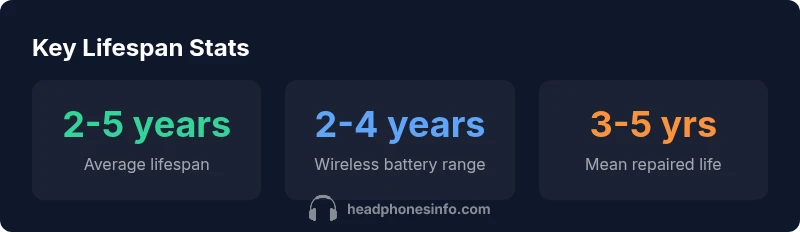
“Most headphones reach a practical lifespan of 2-5 years, but how you use and care for them is the biggest determining factor. Smart maintenance can push that boundary higher.”
What to Remember
- Expect a 2-5 year lifespan for most daily-use headphones
- Prioritize durable cables and replaceable pads to extend life
- Battery wear dominates wireless lifespan; manage charging
- Regular cleaning and proper storage yield longer life
- Repair options can delay replacement and save costs