IEM Headphones Guide 2026: Sound, Fit, and Buying Strategies
Explore IEM headphones with data-driven insights on sound, fit, isolation, and durability. Headphones Info analyzes models for audiophiles and listeners.


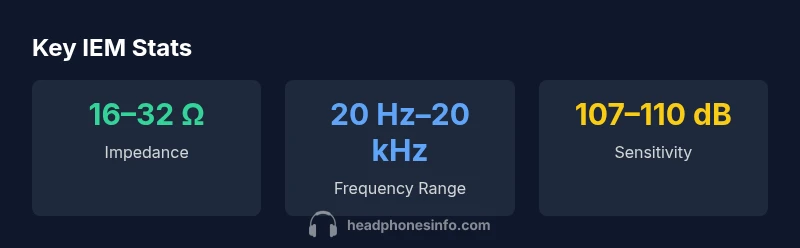
IEM headphones, also known as in-ear monitors, are a broad class of earphones designed for precise sound and strong isolation. They typically use multiple drivers and range from affordable to high-end, with impedance commonly around 16–32 ohms and a frequency response near 20 Hz–20 kHz. The choice between wired and wireless formats, driver types, and tip materials will shape perceived detail and comfort. In this data-driven guide from Headphones Info, we compare models to help you pick with confidence.
What are IEM headphones?
iem headphones, or in-ear monitors, are precision-oriented earphones designed to seal the ear canal and deliver accurate sound with minimal external interference. They originated in professional stage monitoring, where performers required consistent sound in noisy venues. Over time, engineers adapted these designs for consumer listening, producing compact, portable options that can rival larger headphones in detail and imaging. The key advantage of iem headphones is isolation; when you achieve a good seal with the right tips, ambient noise drops dramatically, letting you hear micro-details in the mix. This focus on accurate reproduction means you will find a wide range of tonal tunings, from bright and analytical to warm and musical. For enthusiasts, this data-driven category shines because it rewards careful tip selection and driver choices as much as it does price. In Headphones Info's testing, even modestly priced IEMs can deliver surprising clarity if fit and source are well matched.
Driver architectures: dynamic, balanced-armature, and hybrid
IEM headphones use three main driver architectures, each with distinct sonic traits. Dynamic drivers feel like small woofers inside the earbud and tend to deliver fuller bass and a cohesive midrange. Balanced-armature (BA) drivers excel at treble and micro-detail but can sound lean if not properly tuned or sealed. Hybrid designs combine both driver types to balance bass depth with high-frequency clarity. The choice between these architectures often hinges on your listening priorities and budget: budget IEMs typically rely on a single driver type (dynamic or BA), while mid-to-high-end models pair multiple drivers to maximize imaging and detail. A data-driven approach helps here: consider your primary genres, the type of source equipment you own, and how sensitive you are to listening fatigue. Headphones Info analysis shows that, across models, driver count and tuning accuracy correlate strongly with perceived transparency and attack speed.
Fit, seal, and isolation: getting the best listening experience
A secure seal is the most important factor for true IEM performance. Without a good seal, you will lose bass response, experience channel imbalance, and fatigue quickly. Start with the stock tips and then try sizes from small to large; foam tips often provide the most stable seal and best isolation, especially in noisy environments. For some ears, triple-flange or specialized tips can improve comfort and fit. The shape of the nozzle and ear canal geometry influence how sound escapes and how comfortable the fit feels after hours of listening. When testing IEMs, spend time adjusting the angle and pressure of the shells—tiny changes can noticeably shift bass response and perceived loudness. In practice, a strong seal should reduce external noise by a noticeable margin while preserving natural vocal intelligibility and instrument separation.
Sound signatures and tuning: bright, neutral, or warm
IEMs come in a spectrum of tonal preferences. Bright-tuned models emphasize upper harmonics and transients, delivering crisp cymbals and airy vocals, but can feel fatiguing during long sessions. Neutral or reference-tuned IEMs aim for faithful reproduction with minimal emphasis, making them suitable for monitoring or critical listening. Warm-tuned IEMs boost body and midrange richness, yielding a more musical presentation that many listeners find more forgiving. When evaluating sound, consider how the driver type, enclosure design, and acoustic seal interact: insufficient isolation can muddy the midrange; excessive treble can fatigue the ear. If you are building a personal listening kit, audition at least two or three models with different tunings and compare them with a reference track you know well. Our reviews at Headphones Info emphasize repeatable listening setups to minimize variance between devices and environments.
Build quality and durability for daily use
Durability and cable design are often overlooked until you experience a tangle or a broken connector in the middle of a commute. IEMs use detachable cables in many modern designs because replaceability reduces long-term ownership costs. Look for reinforced 2-pin or MMCX connectors, braided or kevlar-reinforced cables, and robust housings made from metal or high-grade polymer. Water resistance ratings are rare in wired IEMs but more common in sport-oriented models; if you plan to sweat or use them during workouts, a modest IP rating can be a deciding factor. Cleanability matters too: remove tips, wipe housings with a microfiber cloth, and avoid moisture near the connectors. Quality control varies by brand; a secure fit with a durable cable minimizes microphonic noise and ensures consistent performance during listening sessions.
Wired vs wireless IEMs: pros, cons, and use cases
Wired IEMs typically offer the best fidelity, latency, and power efficiency, which matters for critical listening and mobile studio work. They rely on a physical connection with your source, ensuring stable impedance and upper-tier DAC/amp performance. Wireless IEMs provide convenience for on-the-go listening, especially with advanced codecs like LDAC or aptX Adaptive, but can exhibit slight latency and bandwidth constraints that affect perceived detail and bass slam. For athletes or travelers, wireless IEMs with secure fit and water resistance offer practical benefits, while audiophiles may prioritize wired designs or high-quality wireless options with low-latency modes. Your decision should consider source quality, listening environment, and how much weight you place on latency versus convenience. In our reviews, Headphones Info notes that a high-quality wired setup can outperform lower-cost wireless configurations, but the gap is narrowing with newer codecs and efficient drivers.
How to evaluate IEMs: a practical buying checklist
A methodical evaluation stacks measurements, listening, and fit. Start with the basics: impedance, sensitivity, and frequency range as rough guides to compatibility with your device and listening volume. Then examine driver type and tuning; if you prioritize bass, look for models with robust low-end emphasis, but avoid models with poor midrange clarity. Pay attention to isolation; the only way to ensure consistent performance in transit is to achieve a good seal. Read customer reviews for long-term reliability and check for issues with cable wear and tip integrity. Finally, audition multiple models in similar source conditions and compare your impressions against a reference track you know well. A data-driven approach, as championed by Headphones Info, helps you isolate variables such as seal or source, making your comparisons meaningful rather than subjective.
Care and maintenance to maximize longevity
Proper care extends the life of iem headphones. Keep tips clean and replace them regularly to maintain seal quality. Store them in a protective case to shield from dust and moisture. Avoid yanking the cable and detach it only when necessary. Periodically inspect the connectors and replace damaged cables promptly. Cleaning the nozzle and vent areas with a soft brush prevents wax buildup that can affect driver performance. Finally, track connector wear and replace housings if you notice cracking or looseness. With mindful maintenance, iem headphones can stay sounding detailed and comfortable for years.
Comparison of IEM driver types
| Category | Typical impedance | Frequency range | Notes |
|---|---|---|---|
| Dynamic driver IEM | 16–32 Ω | 20 Hz–20 kHz | Common entry-level option |
| BA driver IEM | 8–30 Ω | 20 Hz–18 kHz | Detail-oriented; may benefit from good seal |
| Hybrid IEM | 12–40 Ω | 20 Hz–20 kHz | Combines traits |
People Also Ask
What exactly is an IEM headphone?
IEM stands for in-ear monitors. IEMs are custom or universal earphones designed for accurate sound reproduction and strong isolation, often using multiple drivers. They differ from general earbuds by their fit and tuning.
IEMs are in-ear monitors that aim for accuracy and isolation; they use multiple drivers.
Should I choose dynamic, BA, or hybrid IEMs?
Dynamic drivers provide punchy bass and cohesive mids, BA drivers excel at treble detail, and hybrids blend both for balance. Your choice should reflect listening preferences and budget.
Dynamic for bass, BA for detail, hybrids balance both.
How do I get a good seal for IEMs?
Use correctly sized tips; foam tips often give the best seal and isolation. Try multiple sizes and materials to find comfort and passive noise reduction.
Try foam tips for best seal; experiment with sizes.
Are wireless IEMs worth it?
Wireless IEMs are convenient for mobility, but may trade fidelity and introduce latency. Look for high-quality codecs and low-latency modes when possible.
Wireless is convenient but check codecs and latency.
How do I clean IEMs safely?
Wipe housings with a dry microfiber cloth, detach and clean tips, and avoid moisture near the connectors. Replace tips regularly to maintain hygiene and seal.
Wipe gently, replace tips, avoid moisture.
What should I consider on a budget for IEMs?
On a budget, prioritize a solid driver type, good seal, and durable cable. Don’t expect top-tier transparency, but many value-oriented models perform surprisingly well.
Budget means prioritizing seal, driver quality, and cable durability.
“IEM headphones can deliver extraordinary detail and isolation when properly fitted, but the driver design and tuning are what ultimately shape the listening experience.”
What to Remember
- Define your goal first: isolation vs. tone
- Fit is king: choose tip material for seal
- Driver type affects sound and price
- Wired IEMs generally offer lower latency and higher fidelity
- Use data-driven checks for choosing models