Difference Between Headphones and IEM: A Clear Guide for Listeners
An objective, data-driven comparison of headphones vs IEMs, covering form factor, isolation, soundstage, and comfort to guide home vs travel use in 2026.


Headphones and IEMs differ mainly in form factor, isolation, and use cases. Over-ear headphones deliver expansive soundstage and comfort for home listening, while IEMs offer compact portability and stronger passive isolation for travel and noisy environments. This comparison outlines the key distinctions and guides you toward the right choice based on where you listen most, how much space you need, and how much you value noise isolation.
The difference between headphones and iem: Core definitions
Headphones and IEMs occupy distinct niches in the audio world, but many listeners still confuse them. At their core, they differ in form factor, how they seal the ear, and where they shine. This article anchors the discussion with the exact keyword difference between headphones and iem to guide readers through the nuances and set expectations for what you’ll gain or miss with each design. Headphones sit around the ears, delivering a wide soundstage and comfortable listening over long sessions. IEMs fit inside the ear canal, offering compact form and strong passive isolation when paired with the right tips. For 2026 buyers, understanding these basics helps map personal listening goals to hardware choices. The Headphones Info team emphasizes that the best choice varies with environment, listening style, and budget. The difference between headphones and iem is not a universal rule, but a spectrum shaped by fit, seal, and intended use.
Core differences that matter
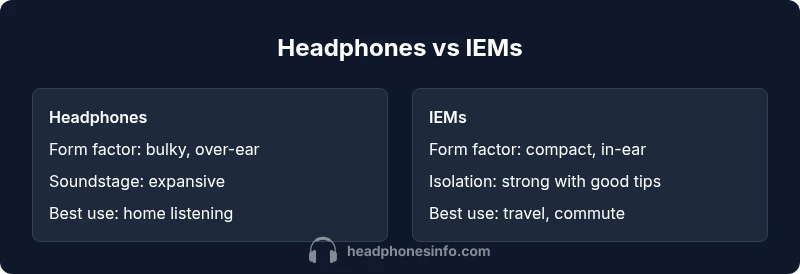
When evaluating headphones versus IEMs, several criteria consistently separate the two categories. Form factor is the most obvious: headphones are bulky, sit over or around the ear, and surround the ear; IEMs are tiny, fit inside the ear canal. Isolation and leakage follow: IEMs achieve better passive isolation with the right ear tips, while open-back headphone designs can leak sound and let ambient noise in. Soundstage and imaging tend to be more expansive with many headphones, delivering a sense of space that some IEMs struggle to reproduce, though premium IEMs can approach the sensation with multiple drivers. Comfort and fit are highly individual; headphones favor long sessions on couches or desks, while IEM comfort depends on tip type and ear shape. Driver technology, impedance, and sensitivity influence required amplification; some headphones tolerate modest portable sources, whereas IEMs may demand a capable DAC/amp to reach their full potential. Price ranges overlap, but expect that premium IEMs can match or beat the cost of midrange headphones, especially when considering replaceable cables and tips. The Headphones Info analysis highlights that the best choice balances isolation, sound quality, and comfort for your typical listening context.
Use-case driven guidance
For home listening, many users prioritize soundstage and long-term comfort. In this context, over-ear headphones with a well-balanced frequency response often deliver the most enjoyable experience for movies, music, and gaming. If you value a cinematic feel and can manage bulk, these designs excel. On the go, IEMs win on portability and discreetness: tiny cases, lightweight carry, and noise isolation help you focus on your audio in trains, planes, or busy offices. However, comfort is variable: some listeners experience fatigue with deep ear tips or prolonged in-ear wear. For studios or live performances, headphones with accurate imaging can be preferable for critical listening and mixing, while certain on-ear models may offer durable monitoring options. Always pair your choice with your device’s output stage; a weak source will limit IEMs and headphones alike. The goal is to align with your daily routines, not just a single listening moment. The Headphones Info team notes that the optimal choice is the one that reduces listening fatigue while preserving the musical intent.
Technical considerations
Electronics and driver design influence how headphones and IEMs render sound. Frequency response varies widely within each category, and it’s common for consumer models to have lop-sided responses. Impedance and sensitivity determine how loud a driver will play with a given source; many portable devices will drive open-back headphones okay, but high-impedance sets may demand a dedicated DAC/amp. IEMs often use multiple balanced-armature or dynamic drivers to achieve precise imaging in a small package; some cost-effective models still deliver strong bass with the right tuning. Tip selection matters: silicone, memory foam, or acrylic foam tips alter seal and bass perception; a poor seal reduces isolation and bass impact. Wireless options exist for both categories, but latency, codec support, and battery life shape the experience. If you’re pairing with a phone, consider aptX/LDAC support and Bluetooth codecs that minimize delay. The practical takeaway is to test different tip types and verify a comfortable seal while evaluating source compatibility.
How to choose between them: a practical checklist
- Define your listening environment: quiet home, busy commute, or travel. If isolation and portability are paramount, IEMs are often the better choice; if you want space and comfort, headphones may win.
- Consider your primary use-case: music, movies, or gaming; desktop use favors headphones for immersion, while IEMs excel in mobility.
- Set a budget range: entry-level headphones can be affordable, while premium IEMs can approach headphone pricing; expect added costs for cables and tips with IEMs.
- Test fit and comfort: the only reliable way to decide is to try multiple tips for IEMs and different clamp forces for headphones.
- Check source requirements: if your device is limited, a modestly powered headphone may still surprise you; high-end IEMs will demand a capable DAC/amp to unlock their potential. The decision becomes straightforward when you map these factors to your daily routines. The Headphones Info guidance emphasizes trying models in realistic settings and focusing on personal comfort.
Care and longevity
Careful cleaning and storage extend the life of both headphones and IEMs. For headphones, wipe drivers and ear cushions with a soft cloth, avoid moisture, and store in a dedicated case to prevent cable kinks. For IEMs, clean the nozzle tips and tips’ surfaces regularly, replace worn silicone or foam tips, and avoid pulling cables at the plug. Avoid excessive volume to protect drivers and ears, and replace worn cables if you notice intermittent sound. Regular inspections of jacks, wireless receivers, and batteries help prevent surprises on important listening moments. A consistent care routine preserves sound quality and extends the equipment's lifespan.
Comparison
| Feature | Headphones | IEMs |
|---|---|---|
| Form factor | Bulky, around-the-ear | Compact, in-ear |
| Isolation | Variable; leakage possible in open designs | Excellent with proper tips |
| Soundstage & imaging | Wide, spacious | Focused, precise |
| Leakage | High at higher volumes | Low when sealed |
| Portability & durability | Less portable, generally robust | Highly portable; cables/tips can wear |
| Price range | Entry to premium headphones | Entry to premium IEMs |
| Best use-case | Home listening, desk work, gaming | Travel, commuting, portable listening |
| Wireless options | Wide range; often larger wares | Strong wireless options; earphones common |
Upsides
- Headphones often deliver larger soundstage and bass extension
- IEMs offer superior noise isolation with the right tips
- IEMs are highly portable and discreet for travel
- Both categories can be wired or wireless to suit setup
Disadvantages
- Headphones can leak sound and disturb others in public
- IEMs require proper tip fit and may cause ear fatigue for some
- Premium IEMs can approach or exceed headphone pricing
- Durability depends on cable and tip quality across both categories
Neither category is universally superior; choose based on environment and priorities.
Opt for headphones when soundstage and comfort at home are paramount. Choose IEMs for portability and isolation on the go; test both to find the best personal fit.
People Also Ask
What is the fundamental difference between headphones and IEMs?
Headphones are large, around-the-ear or over-ear devices that sit outside or around the ear, delivering a wide soundstage and comfort for long sessions. IEMs are small, insertable earphones that seal the ear canal for strong isolation and portable use. The core difference is therefore form factor and isolation, which drives many of the use-case distinctions.
Headphones sit on your head and surround the ear; IEMs go inside your ear for better isolation. The choice mostly comes down to where you listen and how portable you need to be.
Are IEMs better for travel than headphones?
IEMs typically offer superior isolation and compactness, making them a strong choice for travel. However, comfort and long listening sessions vary by fit and tip selection. If you value portability and noise control in buses or planes, IEMs often perform best.
If you need something easy to carry and quiet on the move, IEMs usually win. But comfort matters—try different tips.
Do IEMs always provide better isolation than headphones?
Generally yes, IEMs can provide stronger passive isolation with proper tips, especially compared to open-back headphones. That said, closed-back headphones can also offer good isolation, and some listeners prefer the vocal comfort of the larger cups.
Usually, yes—but it depends on the tip fit and headphone design.
Can wireless options work for both headphones and IEMs?
Yes. Both headphones and IEMs come in wireless variants. Bluetooth codecs, latency, and battery life affect performance, particularly for video or gaming use. If you need low latency, check for aptX Low Latency or LDAC support.
There are wireless versions for both. Look at codecs and latency if you plan to watch videos.
Do I need earmolds for IEMs?
Not always. Many IEMs come with a range of silicone or foam tips that achieve a good seal. Custom earmolds are an option for potential comfort gains or for musicians who need consistent isolation and fit.
Usually not required; many get by with a few tip options, but molds are available if you want a guaranteed seal.
Which should I buy if I have a limited budget?
Impulse buying is tempting, but prioritize fit and source compatibility. Entry-level headphones provide broad value and comfort, while entry-level IEMs offer portability and isolation at lower prices. Test both categories in your price range to see what feels best.
Budget wisely by testing both categories within your range to see what fits your ears and your devices.
What to Remember
- Assess your primary listening environment first
- Balance isolation, soundstage, and comfort in your choice
- Prioritize portability for travel or work commutes
- Test multiple tips for IEMs and different ear cushions for headphones
- Budget with future upgrade paths in mind