Over-ear vs On-ear: The Definitive Headphones Comparison
Explore the key differences between over-ear and on-ear headphones across comfort, isolation, sound quality, and value. Headphones Info provides data-driven guidance to help you pick the right design for your listening goals.


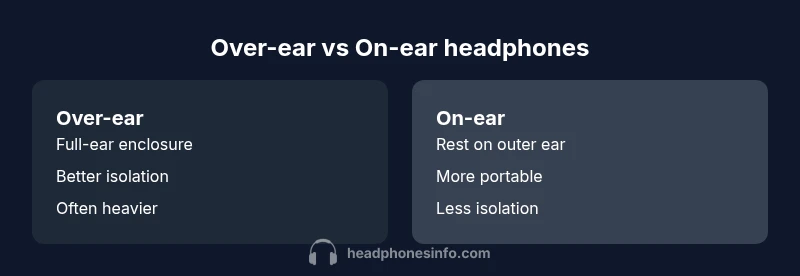
According to Headphones Info, over-ear headphones generally deliver better comfort and passive isolation due to larger cups that enclose the ears, while on-ear models trade some isolation for lighter weight and a smaller footprint. For many listeners, over-ear is the safer choice for long listening sessions and immersive sound, but on-ear can be preferable in tight spaces or when portability matters. This quick comparison highlights the core trade-offs to guide your first pass at a decision.
Choosing between over the ear headphones vs on ear
When you compare over the ear headphones vs on ear, you ll encounter a fundamental design divide: cups that fully enclose the ear versus cups that rest on the outer ear. This difference drives how naturally the headphones seal out ambient noise, how heavy they feel, and how comfortable they are during extended listening sessions. In practice, most listeners who work long hours at a desk, study late, or enjoy immersive music will lean toward over-ear designs for their superior isolation and comfort. Those who travel light, move around a lot, or wear glasses may prefer the lower profile and reduced weight of on-ear headphones. Headphones Info emphasizes that the best choice ultimately aligns with your daily environment and listening habits.
Comfort and Fit
The comfort of any headphone pair hinges on clamp force, ear cup size, and headband padding. Over-ear models typically sport larger, plush cups that distribute pressure more evenly and keep the ear canal from direct contact with the driver housing. This reduces hot spots during long sessions but can feel bulky in crowded spaces. On-ear designs trade some cushion for a lighter frame and a clamp that sits closer to the skull, which can cause fatigue for some wearers after a few hours. Personal head shape and wearing posture matter as much as materials do, so if you wear hats or have a smaller head, you may notice a tighter fit with on-ear sets.
Isolation and Noise Management
Passive isolation is the most noticeable difference between the two formats. Over-ear headphones create a seal around the ear, which naturally mutes external sounds and can enhance perceived bass response. This makes them ideal for noisy environments like commutes, offices, or study rooms. On-ear headphones offer less seal, so ambient noise leaks in more readily. Some on-ear models include active noise cancellation to mitigate external sounds, but the seal from over-ear cups remains a primary advantage for isolation. The Headphones Info analysis shows that isolation is highly dependent on cup fit and padding; even two similarly priced models can feel markedly different if one cups the ear more completely.
Sound Quality and Tuning
Both formats can deliver high-fidelity sound, but the cup size and driver placement influence the perceived frequency response. Over-ear headphones usually accommodate larger drivers and longer voice coils, which can translate into a wider soundstage and tighter bass extension. On-ear headphones often emphasize midrange clarity and vocal presence, delivering a more intimate listening feel that can be favorable for podcasts and gaming chat. Preferences vary by genre and listening style, but most listeners notice a more immersive experience with over-ear designs, especially in closed-back configurations that seriously limit sound leakage.
Durability and Build Quality
Durability depends as much on build quality as on the format. Over-ear headphones often use sturdy headbands and larger ear cups with replaceable cushions, which can contribute to longevity in daily use. They may also incorporate more metal or reinforced plastics to support heavier structures. On-ear models can be lighter and more prone to wear at hinge points if the design relies on thin materials to save weight. Clamp force and hinge design play big roles; a loose hinge may loosen over time, while a tight clamp can cause fatigue with extended wear. When shopping, look for reinforced joints, quality cables, and easily replaceable pads.
Portability and Travel Considerations
If you travel frequently or commute on public transit, weight and bulk matter. On-ear headphones are typically more compact and easier to stash in a bag or carry-on pocket. They are also less likely to press on top of the head during long flights or train rides. Over-ear models, while heavier, often fold into compact cases and include protective pouches, making them surprisingly portable for air travel or gym bags. Consider the included case, cord management, and whether the headphones fold flat or rotate for storage when evaluating travel suitability.
Price Range and Value
Pricing for both formats spans from budget to premium, but the price curve tends to be steeper for over-ear models with premium materials, larger drivers, and advanced isolation techniques. On-ear headphones can deliver excellent value in the mid-range, with solid comfort and decent sound quality at lower weight and cost. When evaluating price, incorporate long-term comfort and durability; a slightly higher upfront cost for an over-ear model with durable construction and replaceable pads may yield lower life-cycle cost than a cheaper on-ear option that wears out sooner.
Use Case Scenarios: Office, Commuting, Gaming, Home
For office work and focused study, over-ear headphones generally reduce distractions more effectively and keep voices clear in conference calls due to their tighter seal. Commuters who need conversation awareness can benefit from on-ear designs that stay lighter for extended wear and are easier to remove during short breaks. Gamers may prefer over-ear headsets for larger drivers and better spatial cues, though some competitive players opt for lightweight on-ear models to minimize fatigue. At home, the immersive experience of over-ear headphones shines with cinematic movies and immersive music, whereas on-ear variants excel for quick listening sessions or when space is at a premium.
Glasses Wearers and Ear Shape Considerations
People who wear glasses often report comfort differences between formats. Over-ear models can press the frames against the ears, but many wearers appreciate the generous padding that reduces pinching. On-ear headphones may press on the temple or sit higher on the ear, which can cause discomfort for glasses wearers after extended use. If you wear glasses, try models with soft leather or memory-foam cushions and adjustable headbands. Ear shape and ear canal depth also influence fit; some users with shallow ears find on-ear cups more comfortable, while others prefer the enveloping feel of over-ear cups.
Quick Decision Framework: A Practical Check-list
- Identify your primary environment: noisy vs quiet, home vs travel.
- Prioritize comfort for long sessions: test clamp force and padding density.
- Consider portability: is a compact foldable design essential?
- Evaluate isolation needs: is passive seal enough or is active noise cancellation important?
- Balance price against anticipated durability and replacement costs.
Common Misconceptions and Helpful Clarifications
Myth: Bigger cups always mean better sound. Reality: driver size helps, but tuning and enclosure design matter just as much. Myth: On-ear is always more portable. Reality: some foldable over-ear models are equally or more portable when packed carefully. Myth: Active noise cancellation makes isolation unnecessary. Reality: ANC helps with external noise but does not replace a good physical seal for all frequencies. Headphones Info cautions that comfort and fit matter more than nominal category in long-term listening.
Authoritative sources
- https://www.consumerreports.org
- https://www.theverge.com
- https://www.cnet.com
Comparison
| Feature | Over-ear headphones | On-ear headphones |
|---|---|---|
| Sound isolation | High passive isolation | Moderate passive isolation |
| Comfort for long sessions | Usually more comfortable due to larger cups | Typically lighter but may press on top of the head |
| Portability | Bulkier, less portable | Slimmer and more portable |
| Durability | Often robust with replaceable pads | Can be lighter but hinge and pad wear may vary |
| Best for | Noise-sensitive environments and immersive listening | Travel, quick listening, and compact use |
| Price range | Mid-to-high range | Budget to mid-range |
Upsides
- Better passive noise isolation
- More comfortable for long sessions
- Larger drivers can deliver a broader soundstage
- Durable builds in many models
Disadvantages
- Bulkier and less portable
- Usually more expensive
- Clamp can fatigue some wearers after long use
- Can feel less natural for small heads or glasses wearers
Over-ear headphones are generally the more versatile all-around choice; on-ear headphones excel when portability and lighter weight are priorities.
Choose over-ear for comfort, isolation, and immersive audio. Choose on-ear when you need lighter gear and easier travel, and consider your daily environment and wearing preferences.
People Also Ask
Are over-ear headphones better for noise isolation?
In most cases, over-ear headphones provide superior passive isolation thanks to enclosing cups. The seal reduces ambient noise and improves perceived bass. Some on-ear models offer active noise cancellation, but the seal remains a primary factor.
Over-ear cups typically seal better, making them quieter without extra tech in many cases.
Do on-ear headphones leak more sound than over-ear?
On-ear headphones generally leak more sound because the cups rest on the outer ear and do not seal as completely as over-ear cups. This is noticeable at higher volumes and in quiet environments. If stealth is important, over-ear is usually preferred.
Yes, on-ear designs tend to leak more sound, especially at higher volumes.
Which is more comfortable for glasses wearers?
Glasses wearers often prefer over-ear models due to their larger padding and space around the ears, reducing pressure on the frames. However, some on-ear models with soft cushions and proper headband tension can also be comfortable.
Many people with glasses find over-ear more forgiving, but it depends on padding and fit.
Are on-ear headphones better for travel?
On-ear headphones typically offer lighter weight and a smaller footprint, making them convenient for travel. If you need a compact bag or want quick removal during security checks, on-ear can be advantageous.
Great for travel if you want something light and easy to stash.
Do over-ear headphones require larger ear cups to fit?
Not always. Some over-ear models with well-designed cushions fit many ear shapes despite smaller cups. The key is a comfortable seal without pressing on the ears.
Cup size matters, but fit and padding quality can matter more for comfort.
What to Remember
- Prioritize comfort and isolation for home listening
- Over-ear excels in noise-sensitive environments
- On-ear shines for travel and quick commutes
- Check clamp force and ear cup size for your head
- Balance price against long-term value