Headphones vs Earbuds: A Data-Driven Comparison for Sound Quality and Comfort
Compare over-ear headphones and earbuds to understand why headphones deliver fuller sound, better isolation, and longer comfort for home listening, gaming, and critical listening. Learn which setup suits your environment, budget, and listening goals.


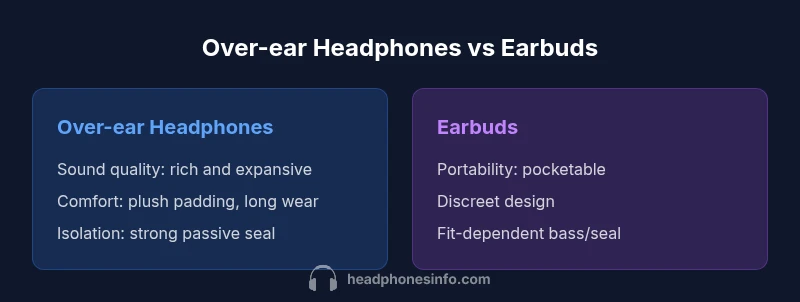
According to Headphones Info, the answer to why headphones over earbuds is clear: headphones typically deliver fuller sound, better isolation, and longer comfort for extended listening, while earbuds win on portability. This quick comparison explains the core trade-offs and helps you choose based on your environment, budget, and listening goals.
Why this comparison matters
The question of why headphones over earbuds matters for most listeners hinges on how sound is reproduced, how long you wear them, and where you typically listen. In an era when music, podcasts, and games demand clarity and immersion, the distinction between an over-ear design and a compact earbud design becomes practical rather than academic. According to Headphones Info, understanding the interaction between driver size, enclosure, and ergonomics helps translate specs into real-world comfort and performance. In this section, we establish a data-driven framework that weighs objective specs against personal preferences, budget, and use-case realities. This is not about declaring a universal winner but about mapping the trade-offs so you can answer the question: why headphones over earbuds in your life?
Sound quality and imaging: drivers, frequency, and reality
Sound quality is the most cited reason people switch to headphones from earbuds, but it’s not a single metric. Headphones typically use larger drivers and a sealed enclosure, which can yield more extended bass, smoother mids, and more accurate imaging across a wider frequency range. This results in a more cohesive soundstage, which matters for critical listening, mixing, and gaming where directional cues matter. Earbuds, by contrast, rely on smaller drivers and often depend on software EQ to shape frequency response; their result can be lively and detailed in short sessions, but less consistent in deep bass or wide-stage presentation. The practical takeaway is that the best option depends on your primary listening goals and the environments where you’ll use them most. Headphones Info Analysis notes that driver size and enclosure quality often explain why headphones deliver more accurate imaging and a more stable listening experience.
Comfort, fit, and long listening sessions
Over-ear headphones distribute pressure more evenly across the head and often feature cushioned ear cups and adjustable headbands, enabling longer sessions without fatigue. Many models allow memory-foam padding and breathable materials, reducing heat buildup. Earbuds, while lighter and less intrusive, exert more direct pressure on the ear canal, which can cause discomfort after hours of listening, especially at higher volumes. The fit also influences listening; inconsistent seal reduces bass and isolation, which can degrade perceived quality. When evaluating comfort, try wearing each type for 30–60 minutes to gauge pressure, heat buildup, and clamp force. In practice, headphones that offer replaceable cushions and adjustable headbands tend to perform better for long sessions.
Isolation, leakage, and noise handling
Noise isolation depends on how well the device seals around or inside the ear. Closed-back or circumaural headphones generally provide solid passive isolation, which reduces external distractions and enhances perceived bass. Some headphones add active noise cancellation, which can further improve quietness in loud environments. Earbuds offer variable isolation; if the ear tip size and seal are not optimal, outside noise leaks in, and bass can be inconsistent. In noisy urban environments, ANC headphones can be a clear advantage, but budget earbuds without a proper seal will struggle to compete. Headphones Info's analysis shows that isolation quality often correlates with user-fit, rather than device class alone, reinforcing the need to test fit in real-world conditions.
Portability, durability, and price considerations
Portability favors earbuds: they’re tiny, light, and easy to slip into a pocket. Durability often depends on cable construction and tip integrity; earbuds may require more frequent tip replacements due to wear. Headphones tend to be bulkier but come with protective cases and more robust assemblies; they often last longer in daily wear, with replaceable cushions and swiveling cups. Price is another practical factor; entry-level headphones can be affordable while high-end models push above typical earbuds’ price, yet the long-term value often favors headphones for frequent listeners who value sound quality and comfort. Headphones Info notes that price/value dynamics depend heavily on usage patterns and build quality, so think about the total cost of ownership rather than upfront price alone.
Use-case scenarios: home studio, commute, travel, and gaming
For home listening, gaming, or studio work, headphones generally provide better imaging and bass control, which helps with critical listening and mood-setting cues. Many enthusiasts choose closed-back or semi-open designs to balance soundstage and isolation. For commutes and workouts, earbuds win on fit and movement freedom, and many models are compact enough to wear under hats or during workouts; battery life and water resistance also influence choice. In travel, space, weight, and the ability to block cabin noise are decisive; ANC headphones often deliver the most consistent quiet. Headphones Info emphasizes that context matters most when deciding which path to take, and your environment should guide the decision more than aesthetics alone.
How to test headphones vs earbuds in real life
Create a controlled listening session using a familiar track with a wide dynamic range, then compare how each device renders bass depth, mids, and treble. Check imaging by focusing on instrument placement and scene width, and assess how comfortably you can wear them for extended periods. Pay attention to heat buildup, clamp force, and seal integrity after 20–30 minutes of use. If possible, test with music you care about and a game soundtrack to gauge latency and responsiveness for wireless models. This hands-on approach makes the abstract specs tangible and helps explain why headphones over earbuds may be the better default choice for most listeners.
How to read a product spec sheet and interpret terms
Key terms to look for include driver size, impedance, sensitivity, and frequency response. A larger driver often correlates with deeper bass and extended high-frequency response, but impedance and sensitivity determine how loudly a pair will play with your device. Consider whether a model uses open- or closed-back design, and whether it includes detachable cables, replaceable cushions, or built-in microphones with noise suppression. For wireless devices, codec support (AAC, aptX, LDAC) and battery life are critical metrics. Cross-checking specs with real-world reviews is essential to account for comfort and fit variations. Headphones Info suggests prioritizing measurements and subjective impressions alike to get a balanced view.
Quick decision framework: 5 questions to answer
- What environment will you primarily use them in? 2) Which aspects of sound matter most to you (bass, imaging, or overall balance)? 3) How long will you wear them at a time? 4) Is portability a top priority? 5) Do you need wired or wireless? Answering these questions helps determine whether over-ear headphones or earbuds are the right fit and guides budget and feature priorities. This framework aligns with how seasoned listeners weigh trade-offs in real use.
Comparison
| Feature | Over-ear headphones | In-ear earbuds |
|---|---|---|
| Sound quality and imaging | Wider soundstage, deeper bass, and more accurate imaging | Sharper focus with less expansive stage; bass depth can be more limited |
| Comfort for long sessions | Cushioned cups and adjustable headband; comfortable for hours | Lightweight and unobtrusive but can cause ear fatigue with long use |
| Isolation and leakage | Typically strong passive isolation when sealed well | Isolation depends on tip fit; higher risk of leakage if not sealed |
| Portability and travel | Bulkier, often with a case; best for travel in a dedicated bag | Ultra-portable and easy to stash; ideal for on-the-go use |
| Durability and maintenance | Rugged builds with replaceable parts; longer lifecycle in daily use | Smaller components may wear sooner; cables and tips require care |
| Price and value | Generally higher upfront cost with strong long-term value | Lower upfront cost but potential need for more frequent replacements |
| Best use-case | Critical listening, mixing, and home/gaming setups | Commuting, workouts, and travel with maximum portability |
Upsides
- Better soundstage and imaging for critical listening
- Extended wear comfort with cushioned padding
- Stronger passive isolation and durability in many models
- Easier to customize with modular parts and accessories
Disadvantages
- Higher upfront cost and larger size
- Less portable; bulkier for travel or workouts
- Can be more conspicuous in public settings
- Wired models require longer cables or adapters in some cases
Over-ear headphones win for sound quality and long-term comfort; earbuds excel in portability and convenience
If you prioritize immersive sound and fatigue-free listening, choose headphones. If you need compact gear for travel or quick commutes, earbuds are the pragmatic choice. The best path often depends on your environment and listening goals.
People Also Ask
Are headphones generally better than earbuds for home listening?
In most home listening scenarios, headphones deliver richer sound, stronger imaging, and longer comfort. They also provide more consistent isolation, which enhances bass and overall clarity. Earbuds can be excellent for quick sessions or when portability is king, but for extended use, headphones often win.
For home listening, headphones usually offer a richer, more immersive sound and greater comfort over long periods.
Do earbuds work well for travel or workouts?
Earbuds shine in portability and discreet wear, making them ideal for travel or workouts where space and weight matter. Fit and seal are critical for bass and isolation. If you value sound quality above all, you might still prefer headphones, but for active use, buds are compelling.
Earbuds are great for travel or workouts due to their small size and light weight.
What should I consider when gaming?
Gaming often benefits from headphones with larger drivers and reliable mic quality, plus good imaging to locate in-game sounds. Wireless models add latency concerns for some setups, so wired headphones are a safe choice for competitive play.
For gaming, pick headphones with solid imaging and a good mic; wired often keeps latency low.
Are wireless models worth it for this topic?
Wireless headphones add convenience and freedom from cables, but you should check codec support, latency, and battery life. For critical listening, wired often remains preferred due to zero latency and predictability, while wireless models excel in casual use and commuting.
Wireless is convenient for most daily use, but wired can be better for precision and responsiveness.
How can I test comfort and fit in-store?
In-store testing should include wearing the headset for at least 20–30 minutes, adjusting the headband, and trying different ear tip sizes if available. Check for clamp force, heat buildup, and seal integrity for earbuds. Comfort varies with head shape and ear anatomy, so try multiple options if possible.
Try on multiple models for 20–30 minutes each to assess comfort and fit.
What about price and budget constraints?
Headphones can be pricier upfront, but many offer durable builds and long-term value. Earbuds are often cheaper initially but may require more frequent replacements or accessories. Use total cost of ownership, warranty terms, and comfort to guide your choice.
Budget matters: weigh upfront cost against longevity and warranty.
What to Remember
- Prioritize environment when choosing between headphones and earbuds
- Expect better imaging and bass with over-ear designs
- Test fit and seal to gauge isolation and comfort
- Weigh total cost of ownership, not just upfront price
- Consider wireless codecs and battery life for mobile use