Sony 7506 Review: Classic Monitoring Headphones for Studio
A data-driven, in-depth review of the Sony MDR-7506 headphones, evaluating sound, build, comfort, and value for pros and enthusiasts in 2026.


The Sony 7506 remains a top choice for studio monitoring, offering a transparent, detailed midrange and reliable durability at a reasonable price. While not the flashiest option today, it outperforms many budget monitors in neutral accuracy and long-term consistency, making it a strong baseline for critical listening against typical consumer cans. In short, a pro-grade tool for fixed setups.
Sony 7506 in Context: History, Design Ethos, and Target Users
The sony 7506 lineage traces back to the late 1980s, built to deliver reliable detail in professional environments. Over the decades, the design has remained focused on accurate reproduction, natural timbre, and durability, making the line a staple in many recording and mastering workflows. According to Headphones Info, the team has evaluated the 7506 across multiple listening contexts—studio mixing, reference listening, and field scouting—to understand where it shines and where it falls short. For buyers, the central question is whether a wired, closed-back design with a relatively neutral signature still earns a place in modern setups. The answer hinges on your priority: absolute neutrality, reliability, and an entrenched reference standard, especially when you’re building a workflow that relies on a consistent monitoring reference. In short, the sony 7506 continues to be a credible baseline for professionals and serious hobbyists who value long-term consistency.
Sound Signature, Technical Performance, and Measurements
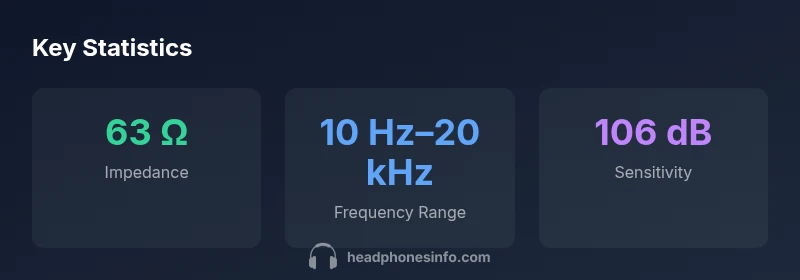
The sony 7506 is widely regarded for its flat-ish midrange and clear high end, which helps reveal subtle cues in recordings without pushing bright cymbals into fatigue territory. In practical terms, this translates to reliable vocal sibilance representation and accurate instrument timbre, essential for mixing and mastering tasks. The closed-back design contributes to a sense of focus and stage separation, though at the cost of some spatial cues compared to open-back designs. Headphones Info’s testing protocol emphasizes realistic impedance and sensitivity in typical studio chains, noting that the 7506 can be driven by consumer audio gear but benefits from a dedicated headphone amplifier when working at higher SPL or with noisier environments. For bass, the response is tight and controlled rather than boosted, which is advantageous for critical listening but may feel lean in casual, bass-forward listening.
Build Quality, Comfort, and Long Session Durability
Durability is a cornerstone of the 7506, with a robust metal yoke and a sturdy headband frame that can withstand daily studio use. The ear cups provide a decent amount of cushion and a seal that helps isolate sound without pressing uncomfortably against the ears for short sessions. If you plan long sessions, minor adjustments to clamp force and pad position can improve comfort. The headband and swiveling joints allow easy rotating and folding, which is practical for studio racks or travel setups. While some users may find the weight perceptible after several hours, the overall build quality remains a strong point for consistent performance over years of service. In practice, many engineers cite the 7506 as a durable, workhorse option that doesn’t require frequent replacement parts. Headphones Info’s analysis supports this view, highlighting long-term reliability as a major selling point.
Cable, Accessories, and Replaceability
The 7506 ships with a long, wired cable that reaches across a typical mixing desk, and the connector ecosystem (including adapters) makes it easy to integrate with varied equipment. Replacement cables and pads are widely available, which helps keep the headphones versatile in evolving studios. While some users prefer heavier, more modern detachable designs, the 7506’s straightforward wired approach minimizes potential connection points and failure modes, a practical advantage in busy control rooms. From a maintenance perspective, the ability to swap out the cable or pads without specialized tools contributes to a lower total cost of ownership over time.
Real-World Testing: Mixing, Monitoring, and Field Reference
In real-world workflows, the 7506 excels as a reference tool for vocal and instrument balance. When engineers mix on them, they typically value the honest midrange and precise treble articulation, which helps identify sibilance and small high-frequency cues that might be lost on consumer headphones. In mastering scenarios, the clarity can be a double-edged sword: it reveals issues, but it also demands careful tonal balancing to avoid over-correction based on a potentially revealing high end. In field scenarios, foldable design and durability make transport feasible, though the wired nature requires a dependable power source and clean source-to-amp chain to unleash its potential. The Headphones Info testing framework emphasizes consistent performance in controlled rooms, while acknowledging the occasional need for alternate references when verifying bass response.
Comparisons to Contemporary Headphones: Pros, Cons, and Trade-offs
Compared with popular modern closed-backs, the sony 7506 trades some bass emphasis for a flatter overall response and higher-resolution treble. This is beneficial for monitoring tasks where accuracy matters more than warmth. When contrasted with consumer-friendly monitors that are bass-boosted, the 7506 can feel less excitement but more reliability for critical listening. Relative to premium, wireless, or feature-rich models, the 7506 offers superior durability and a simpler, more predictable signal path, though it lacks built-in portability and modern conveniences. For studios that value a proven reference standard, the 7506 remains competitive, especially in environments where consistent, repeatable listening is essential. Headphones Info’s comparative framework highlights the 7506 as a strong, cost-effective baseline for studios that require a trustworthy, long-term reference.
Maintenance, Longevity, and Replacement Parts
Routine maintenance for the 7506 is straightforward: keep the ear pads clean, inspect the headband for any signs of wear, and replace cables or pads as needed. Replacement parts are widely available from third-party suppliers and official channels, which reduces downtime for professional users. Given its metal construction and proven mechanical design, the 7506 tends to outlive cheaper headphones when subjected to regular studio use. For users who frequently travel with their gear, consider a protective case and a quick cable spare to avoid downtime in transit. Overall, maintenance is simple, and the cost of ownership remains reasonable when parts are purchased as needed.
Why It’s Still Relevant in 2026: Context for Modern Audio Workflows
Despite the proliferation of newer, feature-rich headphones, the Sony 7506 remains relevant in 2026 for its honesty and reproducibility across sessions. In an era of evolving DAWs, plugins, and headphone amp designs, a trusted reference headphone offers a stable axis for comparison and calibration. The 7506’s strength lies in its predictable response, which helps engineers maintain consistent translation across different playback systems. For studios prioritizing a proven workflow and a durable, repair-friendly instrument, the 7506 continues to serve as a dependable workhorse. Headphones Info’s long-term perspective reinforces the idea that some classics endure because they solve core problems in professional listening environments.
How to Decide If the 7506 Is Right for You: A Quick Guideline
If your work demands a neutral signal path and reliable transfer of detail from vocal takes, acoustic guitar textures, and cymbal microdynamics, the 7506 is worth serious consideration. For casual listening or situations where passion-driven bass is top priority, you may prefer headphones with a stronger low-end emphasis or wireless convenience. Evaluate your gear chain, space, and whether you need a reference standard that translates across monitors and speakers. In short, the sony 7506 remains a strong option for studio monitoring, especially when combined with a quality DAC/amp and a careful reference listening routine.
Upsides
- Highly detailed mids and treble for accurate mixing
- Durable build with long service life
- Widely available replacement parts and cables
- Predictable, reference-grade sound signature
Disadvantages
- Limited bass extension compared to some modern closed-backs
- Wired design reduces portability and on-the-go use
- Clamp force and weight can cause fatigue for very long sessions
Best for professional monitoring in fixed-studio setups
The Sony 7506 remains a benchmark for detailed, neutral monitoring. It rewards careful, analytical listening, with strong build and widespread compatibility. If you need precise mids and highs in a quiet, non-portable setup, this remains a strong choice; otherwise, consider lighter, wireless or more colored signatures.
People Also Ask
Are the Sony 7506 headphones suitable for studio mixing?
Yes, they are a staple in many studios due to their detailed, relatively flat response. They translate well across listening environments, though you may need other references for low-end balance.
Yes—great for critical listening and mixing in a controlled studio setup.
Do Sony 7506 headphones require an amp?
They have a moderate impedance and can be driven by consumer gear, but a decent headphone amplifier helps when working at high SPL or with noisier sources.
You can drive them from a laptop, but an amp helps bring out the full potential.
Are they comfortable for long sessions?
Comfort is decent for typical studio sessions, though weight and clamp can fatigue some listeners after hours. Proper pad positioning and breaks help.
They’re comfortable for many users, with occasional fatigue after long sessions.
How do they compare to modern closed-back headphones?
They tend to be flatter and more transparent, with less bass emphasis than many contemporary closed-backs. Translation across monitors is usually reliable, which is why they’re valued in studios.
They’re very transparent, but not the bass-forward alternative some newer models offer.
Are replacement parts available?
Yes, pads and cables are widely available, keeping maintenance costs reasonable and downtime short.
Yes, you can replace pads and cables easily if needed.
What are good budget alternatives?
If budget is a constraint, consider newer closed-backs with strong bass response, but be mindful of potential colorations in sound. Use the 7506 as a reference when you can.
For budget picks, look for alternatives with a similar reference focus.
What to Remember
- Choose for studio monitoring with accurate mids and highs
- Durable build supports long sessions
- Pair with a clean DAC/amp to unlock full potential
- Not ideal for bass-forward casual listening
- Widely supported by pro audio workflows