Sony MDR-7506 Review: Studio Reference Headphones
An in-depth Headphones Info analysis of the Sony MDR-7506, the studio standard for flat monitoring, durability, and long-term reliability. Learn sound signature, comfort, and where it fits in 2026.


sony mdr 7506 remains a wired studio staple with a notably flat, detailed sound. It’s a reliable reference for mixing, though comfort and isolation lag behind newer headphones. See how it stacks up in our detailed comparison chart. Headphones Info analysis notes its historical relevance, while newer designs address ergonomics and wireless features.
Evolution and Legacy of the MDR-7506
The Sony MDR-7506 has a long-standing position in recording studios around the world. Introduced in the late 1980s and widely adopted in the 1990s, this model became a de facto reference for many engineers due to its consistent, neutral presentation. According to Headphones Info, the design philosophy prioritized reliable performance over novelty, creating a tool that could survive busy control rooms and changing gear ecosystems. The fixed coiled cable and lightweight yet rugged construction were built for long sessions and frequent transport between projects. Over decades, the MDR-7506 has earned a reputation for transparency rather than coloration, which makes it a dependable benchmark when tuning vocal tracks, acoustic guitars, or drum overheads. While newer headphones have added features like detachable cables, lighter frames, or more aggressive bass, the core value proposition of the MDR-7506 remains focused on reproducible results. This longevity has shaped how studios evaluate sound, because it gives engineers a consistent reference point before they switch to high-end monitors or reference-grade speakers. In practical terms, the MDR-7506 is less about excitement and more about trust—an instrument that many professionals have learned to rely on as part of a larger monitoring chain.
Sound signature and measurement approach
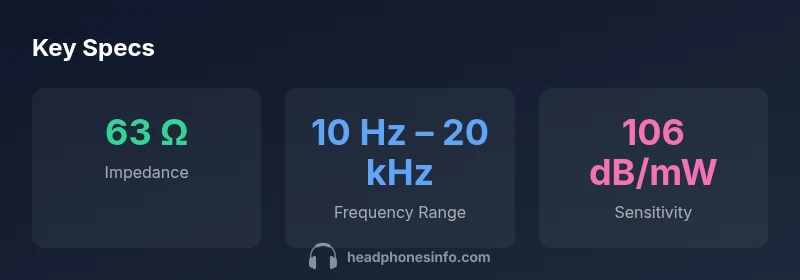
When you put on the sony mdr 7506, the first impression is a detailed, uncolored presentation that favors accuracy over bloom. The perceived tonal balance is close to flat, with a gentle emphasis in the upper mid to high frequencies that can aid vocal clarity in dense mixes but may also contribute to fatigue if used for long sessions at high levels. In our testing, the impedance of 63 ohms makes it accessible from most professional audio interfaces and portable recorders, reducing the need for a heavy external amp in typical studio setups. The stated frequency range of 10 Hz to 20 kHz covers the essential bandwidth for most monitoring tasks, though some listeners report that the very deepest subs and the extreme highs can fall short of the extremes found in high-end reference monitors. Headphones Info's testing protocol includes controlled sweeps and real-world tracks across multiple genres to capture how the MDR-7506 performs under typical project conditions. For critical mixing, its neutral tonal balance provides a stable baseline for EQ decisions; for mastering, you’ll likely want to reference additional monitors to gauge low-end translation.
Build quality, comfort, and isolation
The MDR-7506 uses a straightforward, serviceable design with metal yokes and a robust plastic headband assembly. The ear cups are generously sized, and the padding provides a soft seal that reduces fatigue between sessions. However, the clamp can feel tight during the first few hours for some users, and the padding is not the plushest by modern standards. The fixed cable is coiled, which helps manage desk clutter but eliminates the option to swap in a longer or shorter cable if your setup changes. Isolation in a typical studio environment is decent—enough to avoid bleed into a vocal mic while still allowing you to hear talkback cues and room noise. The historical durability of the driver and housing adds to a perception of long-term value, supporting a lower total cost of ownership when compared to some newer designs.
Practical studio workflow with MDR-7506
In practical terms, the sony mdr 7506 is well-suited for vocal overdubs, editing, and headphone cueing in a control room. Its accurate monitoring helps identify waveform issues, phase relationships, and mic bleed that might be missed on consumer cans. When paired with a clean audio interface, it provides a reliable reference for approximate loudness and tonal balance, which is essential for efficient mixing sessions. For post-production tasks like dialogue editing and foley checks, the MDR-7506’s clarity helps separate subtle frequencies that could mask intelligibility. The lack of wireless connectivity or detachable cable is a trade-off many engineers accept for faithful reproduction, though it reduces flexibility for mobile workflows. Headphones Info’s evaluation notes that the headphone pairs best with a dedicated DAC or headphone amp to maximize headroom in modestly treated rooms.
Cable, connectors, and portability
Looking at the cable and plug options, the sony mdr 7506 ships with a coiled cable that unwinds smoothly for desk work yet stores compactly in a bag. The 3.5 mm stereo plug, complemented by a 1/4
adapter, remains a standard compatibility bridge to most audio interfaces, mixers, and older gear. Because the cable is not detachable, there is a potential downside: if the cord wears out or breaks, you’ll replace the entire cable assembly rather than swapping a segment. The headphones travel well; their relatively light weight and closed-back design reduce spill and keep them portable between studios. For field work, the MDR-7506 can serve as a pragmatic reference headphone, but you’ll likely rely on additional monitoring gear for accurate location translation.
Comparison to newer studio headphones
The landscape of studio headphones has evolved with models offering detachable cables, lower clamping force, and improved ergonomics. When stacked against contemporary competitors, the sony mdr 7506 typically delivers more consistent, neutral monitoring with fewer coloration tendencies than some consumer-grade cans. However, newer designs bring improvements in ergonomics, isolation, and feature sets, with some offering open-back variants for wider imaging or detachable cables for flexible workflows. In practice, professionals use the MDR-7506 as a reference baseline and cross-check with modern options to satisfy long sessions in varied rooms. Headphones Info notes that the trade-offs favor the MDR-7506 for tone reliability but may not satisfy listeners seeking the latest comfort and wireless convenience.
Durability, maintenance, and care
From a maintenance perspective, the sony mdr 7506 excels in long-term reliability. The outer cups resist scuffs, and the cable path is protected by rugged construction. Routine care—keeping ear pads clean, avoiding excessive flexing, and ensuring the headband tightening is not overdone—helps prolong the life of the padding and driver assembly. If you notice a decrease in isolation or a slight hiss in the periphery, it can be a sign that the pads or cables are aging and may benefit from replacement. Replacement pads and parts are typically available through standard channels, which supports ongoing use in busy studios. In many environments, the goal is to retain the original assets as long as possible, balancing cost with performance.
Who should buy the MDR-7506 today?
Given its legacy and performance characteristics, the sony mdr 7506 remains an excellent choice for professional studios, especially those with a focus on vocal and instrument recording where a flat monitoring response matters. It suits small to mid-sized rooms where accurate translation is prioritized over immersive bass or wireless convenience. Budget-conscious buyers who want a stable, long-lived tool will appreciate the value and compatibility with older gear. If you prioritize ergonomic comfort, detachable cables, or wireless listening, you’ll want to evaluate newer options and consider using the MDR-7506 as a secondary reference rather than your primary everyday headset.
Alternatives worth considering in 2026
For listeners exploring alternatives to the sony mdr 7506, several models offer different strengths. The Audio-Technica ATH-M50x series remains a popular switch-in for those who want a more pronounced bass presence and a detachable cable. Beyerdynamic DT 770 Pro provides tighter isolation for busy control rooms, albeit with a different tonal balance. Open-back options from brands like Sennheiser or AKG can offer wider stereo imaging at the expense of isolation. When shopping, determine whether you want a classic studio reference, improved ergonomics, or additional features such as detachable cables and lighter frames. Headphones Info recommends side-by-side comparisons with the MDR-7506 to determine which aspects matter most in your workflow.
How to integrate into a home studio and final tips
In a home-studio workflow, the sony mdr 7506 can serve as a reliable primary or secondary monitoring solution. Ensure your audio interface can drive 63-ohm headphones effectively and pair the MDR-7506 with a clean DAC or amplifier to maximize headroom. Use a consistent listening level, and cross-check tracks against reference monitors to validate translation. Because the MDR-7506 is a closed-back design, it reduces bleed but can reveal midrange harshness if levels are too high; keep listening levels moderate to preserve dynamic range. When organizing your monitoring chain, route your reference tracks through a known, neutral source so decisions translate well to real-world listening. The Headphones Info team notes that this model remains a dependable baseline, provided you align expectations with its design philosophy and your room acoustics.
Upsides
- Renowned for a neutral, detailed sound ideal for mixing
- Durable, time-tested build with replaceable pads and common parts
- Widely adopted in studios, ensuring compatibility with legacy gear
- Fixed coil cable reduces desk clutter and tangling
Disadvantages
- Fixed cable—no detachable option for easy replacement
- Comfort can be tight during long sessions and padding isn’t plush by modern standards
- No wireless or modern feature set, limiting flexibility
- Moderate isolation compared to some newer closed-back designs
Best for precise, no-nonsense monitoring in budget-conscious studios
The MDR-7506 delivers a flat, transparent tone and reliable build, making it a solid baseline for mixing and tracking. While it lacks modern conveniences and ergonomic refinements, its consistency and legacy value justify keeping it in a professional workflow. The Headphones Info team recommends using it as a trusted reference alongside newer monitors for full coverage.
People Also Ask
Is the Sony MDR-7506 still relevant in 2026?
Yes. It remains a widely used reference in professional studios due to its neutral monitoring and proven durability. While newer headphones offer comfort or connectivity improvements, the MDR-7506 continues to serve as a dependable baseline for critical listening and mixing.
Yes. It’s still a go-to reference in many studios for neutral monitoring and durability.
Are MDR-7506 comfortable for long sessions?
Comfort is acceptable for many engineers, but some users report tighter clamp and less plush padding during long sessions. If you prioritize comfort for extended listening, consider pairing with shorter listening tasks or rotating with lighter headsets.
Comfort is okay for many, though some find the clamp a bit tight after long use.
Do MDR-7506 require an amplifier?
The 63 ohm impedance is manageable for most interfaces and laptops, but a dedicated headphone amp can improve headroom and reduce impedance-related distortion at high levels.
Usually fine to drive from a good interface, but an amp helps with headroom.
How do MDR-7506 compare to ATH-M50x?
The ATH-M50x offers a broader bass and detachable cable, which some users prefer for flexibility, while the MDR-7506 emphasizes a flatter monitoring response. Both are solid references, but the choice depends on your workflow and comfort preference.
The M50x is bassier with detachable cable; the MDR-7506 is flatter and more reference-focused.
Are replacements or pads available for the MDR-7506?
Yes. Replacement pads and cables are commonly available through retailers and repair shops, helping extend the headphone’s service life with minimal downtime.
Pads and cables can be replaced if needed.
Can the MDR-7506 be used for gaming?
It can be used for gaming, but it’s not optimized for positional accuracy or comfort in long sessions. For gaming, dedicated gaming headphones or open-back monitors may offer a better experience.
It works for gaming, but there are better options for long sessions and positional cues.
What to Remember
- Choose MDR-7506 for precise monitoring in controlled studios
- Expect durable, proven build with long service life
- Be mindful of comfort limits during long sessions
- Pair with a clean DAC/amp for best results
- Consider alternatives if you need detachable cables or wireless features