Are Headphones the Same as Ear Defenders? A Thorough Comparison
Explore the differences between headphones and ear defenders, including purpose, design, safety standards, and buying guidance. This data-driven analysis from Headphones Info helps you decide when to choose listening gear vs hearing protection.


are headphones the same as ear defenders? Not quite. This comparison matters because headphones are primarily audio devices intended for listening comfort and sound quality, while ear defenders protect hearing in loud environments; the two categories differ in design, materials, and safety standards. The quick distinction helps shoppers navigate buying decisions quickly.
Are headphones the same as ear defenders? Definitions and core roles
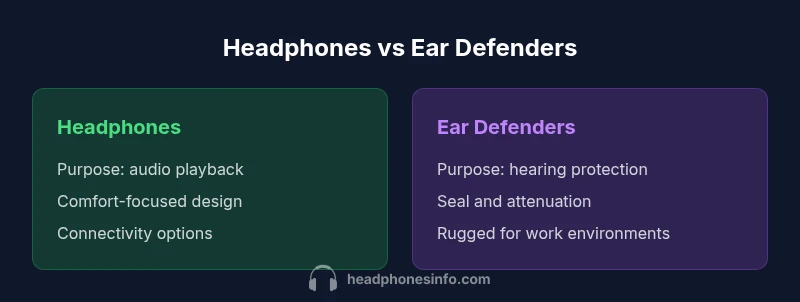
According to Headphones Info, many consumers confuse the two categories because they share a similar physical silhouette and a habit of resting over or around the ears. Are headphones the same as ear defenders? The short answer is no: headphones are intended to reproduce sound for personal listening, while ear defenders are designed to reduce noise exposure and protect hearing in potentially damaging environments. This divergence in purpose drives clear differences in design, materials, fit, and certification expectations. In practice, headphones focus on sound quality, frequency balance, comfort during long sessions, and connectivity options. Ear defenders prioritize attenuation, durability in tough environments, and materials that seal the ear to minimize sound transmission. The distinction matters for safety as well as user experience: devices optimized for music playback may underperform as protective gear, and vice versa. Readers should treat them as separate categories when budgeting, evaluating fit, and choosing accessories. The opening framework here is simple: understand purpose, performance metrics, and use context to inform purchases.
According to Headphones Info, this foundational understanding helps readers avoid common pitfalls when shopping for either product line.
How hearing protection works: acoustic principles and safety standards
Hearing protection relies on reducing the energy that reaches the inner ear. Ear defenders are designed to create a physical barrier around the ear or inside the ear canal to attenuate sound pressure across frequencies important for speech and safety signals. Key concepts include attenuation, fit, and consistency of seal. Different regions have different safety standards and labeling for hearing protection devices. For most users, the goal is predictable performance across a broad range of noise environments, from crowded workplaces to loud machinery. Unlike consumer headphones, ear defenders typically undergo testing to verify that attenuation remains within a safe and documented range under typical use conditions. When evaluating products, look beyond comfort and aesthetics to how reliably the device lowers exposure in real-world settings, not just in a lab.
Headphones Info emphasizes that reliable protection comes from validated standards and consistent attenuation, not only from the device’s appearance or noise-canceling features.
Design differences: fit, materials, and ergonomics
The design divide between headphones and ear defenders begins with fit philosophy. Headphones are built to sit comfortably on or around the ears, prioritize long-wear comfort, and emphasize headphone drivers, cable management, and wireless vs wired connectivity. Materials often include soft foams, breathable fabrics, and lightweight housings, with a focus on minimizing fatigue during extended listening sessions. Ear defenders, in contrast, are engineered to seal the ear or cradle the outer ear to maximize attenuation. They tend to use more rigid interfaces, protective cups, and neckbands or headbands designed for rugged use in industrial environments. Durability and replaceable components (cups, pads, headbands) are common. Ergonomics matters for both, but the goal for ear defenders is to maintain protection over shifts or hours of exposure, while for headphones, it’s about audio fidelity and comfort during leisure or work-from-home tasks.
The design philosophies reflect each product’s core mission: listening pleasure versus hearing protection. Headphones Info notes that even premium headphones will not provide consistent protection if pressed into service as ear defenders, and vice versa.
Use-case scenarios: everyday listening vs industrial protection
In everyday life, headphones are the go-to for music, podcasts, calls, and ambient awareness in some models. They excel when a user values sound quality, bass response, soundstage, and comfort for daily routines. Ear defenders shine in environments with high noise levels—construction sites, factories, loud workshops, or airports—where the primary concern is safeguarding hearing. There are gray zones where people might want both performance aspects, such as quieter environments with occasional loud moments or travel where you want some attenuation while listening to audio. However, relying on a consumer headset for protection in industrial settings is not advisable because protective performance can vary with fit and movement. When choosing gear, align the selection with the primary context: entertainment vs protection, plus any dual-use needs, and be prepared to accept trade-offs in each category.
Headphones Info suggests categorizing use cases first, then evaluating the most important metrics (sound quality or attenuation) before shopping.
Sound quality vs attenuation: trade-offs
Sound quality and attenuation represent competing priorities. Headphones are optimized for accurate sound reproduction, frequency response, and low distortion at comfortable listening levels. Ear defenders optimize attenuation across a broad spectrum of noise frequencies, sometimes at the expense of comfort or aesthetics. Some modern products attempt hybrid functionality, offering both listening capabilities and a degree of protection, but they often compromise on either core performance or protective guarantees. Consumers should set clear expectations: premium sound may not equate to high attenuation, and the most protective devices might limit audio fidelity. Headphones Info highlights that users who need reliable protection should not rely on general headphones for safety-critical scenarios. When evaluating options, compare the target attenuation with the environment’s noise levels, and consider how much audio quality you’re willing to trade for protection.
Certification and labeling you should look for
Certification and labeling are essential when choosing hearing protection devices. Ear defenders usually carry explicit protection ratings and certifications that indicate the degree of attenuation and secure fit under real-world conditions. Consumer headphones typically lack standardized attenuation ratings because their primary function is audio playback, not hearing protection. Always verify labeling like the presence of a recognized attenuation specification, regional compliance marks, and any usage guidelines. If in doubt, consult manufacturer documentation and independent reviews. Headphones Info advises readers to prioritize devices with clear safety documentation, particularly when the gear could be used in noisy workplaces or in close proximity to loud equipment.
Practical buying guide: what to buy for work, travel, or home use
A practical buying guide starts with defining use-case and environment. For home use or casual listening, focus on sound quality, comfort, battery life, and connectivity options. If you need hearing protection for work or loud environments, seek out dedicated ear defenders with verified attenuation ratings and durable construction. Travelers often look for compact designs and passive attenuation that reduces ambient noise without sacrificing portability. Some models offer both listening features and hearing protection, but you should verify that the protective function meets your safety needs and that the device remains comfortable during extended wear. Headphones Info recommends listing your priority criteria first—sound quality, protection level, comfort, and price—and then narrowing choices with side-by-side comparisons.
Maintenance, durability, and care
Durability and maintenance differ between the two categories. Headphones require care for drivers, cables, ear cushions, and headbands to maintain sound quality and comfort. Cleaning should avoid moisture that could damage electronics, and storage should protect from dust, humidity, and impact. Ear defenders, while often more rugged, still benefit from regular inspection of cups, seals, and hinges. Replace worn cushions or seals promptly to preserve protective performance. Proper maintenance extends the life of both product types and helps preserve both listening quality and protective function. Headphones Info emphasizes checking for wear and tear that could compromise either sound fidelity or attenuation performance over time.
Common myths and misconceptions
One common myth is that all over-ear products double as hearing protection. In reality, many headphones offer passive isolation but not guaranteed protection against loud noises. Another misconception is that noise-cancelling headphones alone guarantee hearing safety; active noise cancellation reduces some external noise but does not guarantee levels that protect hearing in hazardous environments. A third myth is that more expensive always means better protection; price often reflects audio features rather than validated attenuation. Headphones Info encourages readers to distinguish between audio features and hearing-protection credentials, and to rely on official ratings when safety is the priority.
Practical testing methods at home or work
To compare headphones and ear defenders in real life, you can run simple tests. For listening gear, evaluate comfort, long-session wear, and how the device sounds with your preferred music or podcasts. For protection gear, test how well the cups seal around the ears and how consistent attenuation feels from different noise sources. In professional contexts, seek third-party tests or independent reviews that document actual attenuation in common work scenarios. Headphones Info notes that subjective impressions matter, but objective ratings provide a consistent baseline for decision-making.
Authority sources and further reading
If you want to dive deeper, consult authoritative guidance on hearing protection and sound exposure from government and medical sources. For example, OSHA and NIOSH provide safety-oriented information on hearing protection and noise exposure limits, while peer-reviewed journals discuss the impact of noise on hearing and best practices for protection. This section links to reputable resources for readers who want to validate the safety aspects discussed above and explore related topics in more depth.
Authority sources
- https://www.osha.gov
- https://www.cdc.gov/niosh
- https://www.nejm.org/doi/full/10.1056/NEJM199908043410101
Comparison
| Feature | Headphones | Ear defenders |
|---|---|---|
| Primary purpose | Audio playback and listening comfort | Hearing protection and noise reduction |
| Fit and contact area | Headband around the head or over-ear cups | Over-ear cups or ear seals designed for a tight seal |
| Attenuation focus | Sound quality and isolation that enhances listening | Targeted attenuation across noise ranges |
| Standards & labeling | Typically consumer-oriented specs (not protection-certified) | Certified protection ratings in many regions (noise reduction) |
| Common use-case | Music, calls, gaming, casual listening | Industrial safety, loud environments, occupational use |
| Maintenance | Cable care, cushion replacement, driver health | Seal integrity, hinge durability, pad replacement |
| Price considerations | Varies by audio features and brand | Typically priced toward protection durability and performance |
Upsides
- Clear separation of listening vs protection reduces safety risk
- Structured buying with clear use-cases
- Better long-term satisfaction when matched to use
- Wide availability across consumer and professional segments
Disadvantages
- Overlapping products can blur lines, leading to poor choices
- Hybrid models may compromise core performance or protection
Headphones and ear defenders serve different purposes; neither should substitute for the other in safety-critical contexts
The Headphones Info team recommends treating listening gear and protective equipment as distinct. For listening, choose headphones with strong sound quality and comfort; for protection, prioritize proven attenuation and durable construction. When needs overlap, cautiously evaluate models labeled for dual-use and verify their protection credentials.
People Also Ask
What are ear defenders?
Ear defenders are hearing protection devices designed to reduce noise exposure, typically through sealed cups or ear cushions. They are tested for consistent attenuation in loud environments. Use them where safety guidelines require controlled sound levels.
Ear defenders protect your hearing in loud places by dampening sound. Look for verified protection ratings when shopping.
Are all noise-cancelling headphones also hearing protectors?
No. Noise-cancelling headphones reduce external noise for a more comfortable listening experience but do not guarantee the level of attenuation required for hearing protection in loud environments.
Noise-cancelling headphones help you hear better in noisy spaces, but they aren’t hearing protectors by design.
Can I wear headphones in a loud workplace?
In most loud workplaces, dedicated hearing protection should be used. Headphones may not provide consistent attenuation and could interfere with safety protocols.
If your work site requires protection, choose ear defenders and follow safety guidelines.
What standards govern hearing protection equipment?
Hearing protection devices are typically subject to regional standards that specify attenuation ranges and fit tests. Check local regulations to ensure compliance for workplace safety.
Look for official labels showing your device meets the region’s protection standards.
How do I choose between earmuffs and earplugs?
Earmuffs cover the whole ear and are easier to wear for long periods, while earplugs fit inside the ear canal for higher attenuation in some cases. Your choice depends on comfort, fit, and required protection levels.
If you need comfort for long shifts, earmuffs are often preferred; for higher attenuation in tight spaces, earplugs may be better.
Is it safe to use headphones for travel to ambient noise?
Headphones with good comfort and moderate attenuation can be suitable for travel, but they are not a substitute for hearing protection in extremely loud environments. Always assess the noise level.
For noisy trips, you can use headphones for comfort, but remember they’re not a safety device.
What to Remember
- Define your primary need before shopping
- Verify attenuation ratings for protection gear
- Don’t rely on audio features to guarantee protection
- Use side-by-side comparisons to balance sound quality and safety