Difference Between Headphones and Hearing Aids: A Practical Comparison
A rigorous, data-driven comparison of headphones vs hearing aids, covering purpose, regulation, technology, fit, safety, and pricing to help you choose the right device for listening or hearing support.


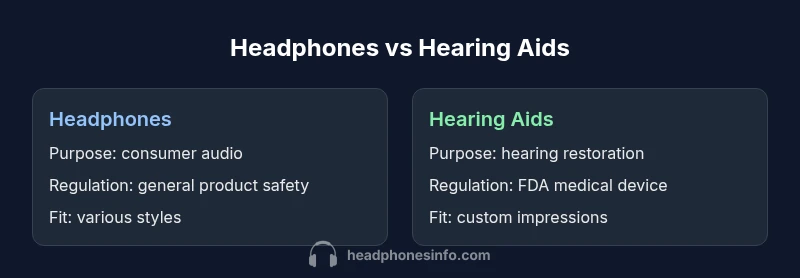
The difference between headphones and hearing aids is primarily about purpose, regulation, and customization: headphones are consumer audio devices designed for listening to media, while hearing aids are medical devices that amplify sound for hearing loss and require professional fitting. While they may look similar, they serve different needs and carry different expectations for safety and maintenance. For everyday listening, headphones are the practical choice; for hearing impairment, consult a licensed audiologist to choose certified devices.
What fundamentally differentiates headphones from hearing aids
The difference between headphones and hearing aids is more than aesthetic variety or price. Headphones are consumer electronics created for entertainment, media consumption, and general listening. They come in several form factors (over-ear, on-ear, in-ear) and deliver audio to the user without medical intent. Hearing aids, on the other hand, are medical devices designed to improve hearing for people with diagnosed hearing loss. Their core function is to amplify, modify, and route sound to the ear in ways that compensate for impaired auditory processing. This fundamental distinction drives downstream differences in regulation, fitting, technology, and daily use. According to Headphones Info, recognizing the purpose and intended user is essential for making an informed choice. In this article, we examine the boundary between these two device classes with a critical eye toward safety, efficacy, and long-term value. The goal is a practical framework you can apply whether you are shopping for music or seeking hearing support. The contrast is not just about sound quality; it is about the device’s role in health, daily life, and personal priorities.
Regulatory and clinical implications
Regulatory pathways for headphones and hearing aids diverge sharply. Headphones operate as consumer electronics and fall under general product safety standards and consumer protection rules. They do not require medical clearance or clinical testing for basic function. Hearing aids, by contrast, are medical devices that typically require clinical evaluation, audiology fitting, and ongoing monitoring. In many jurisdictions, devices are prescribed or recommended after an audiologist tests a patient’s hearing and establishes an amplification profile. This process reflects the devices’ health implications and the need to balance benefits against potential risks such as feedback, distortion, or improper amplification. For buyers, this means that a hearing aid purchase is more than a one-off transaction; it often includes fitting sessions, programming, and follow-up care. The Headphones Info team notes that understanding these regulatory contours can prevent misaligned expectations and surprise costs later in the ownership journey.
Acoustic performance: amplification vs playback fidelity
Headphones prioritize playback fidelity, bass extension, and spatial cues for music, movies, or gaming. They offer a range of tuning options (EQ presets, customizable profiles) to optimize sound for different genres and environments. Hearing aids prioritize audibility and comfort across the speech and hearing spectrum. They automatically adjust gain based on the user’s audiogram, listening environment, and feedback control, aiming to provide a natural sound that compensates for hearing loss without oversaturating the ear. In many cases, hearing aids feature directional microphones, noise reduction, and patient-specific programming, which differ markedly from the generic processing found in most consumer headphones. The Headphones Info analysis highlights that users should not expect hearing aids to deliver the same musical richness as premium headphones; their value lies in improved communicative access and day-to-day listening in challenging environments.
Fit, comfort, and wearability
Fit and comfort are central to both devices but for very different reasons. Headphones are designed for prolonged listening sessions; comfort depends on weight, clamp force, cushion materials, and ear geometry. They are often adjustable and replaceable, with a broad market that supports many head sizes and preferences. Hearing aids require precise fitting, often involving ear impressions or customized earmolds. Comfort is critical here because a poorly fitted device can cause irritation, feedback, or inconsistent amplification. Some users require multiple fittings to arrive at an optimal fit. The Headphones Info perspective emphasizes that comfort considerations should be aligned with the device’s primary function—music enjoyment versus reliable, comfortable hearing support—since long-term wear behavior strongly influences satisfaction.
Technology and features: listening devices vs medical devices
Modern headphones emphasize features such as wireless connectivity, active noise cancellation, battery life, and app-based customization. They may support multipoint Bluetooth, passive or active noise reduction, and a variety of codec options. Hearing aids emphasize clinical sound processing, individualized amplification, feedback suppression, tinnitus management, and wireless streaming to other devices via dedicated protocols. Some models provide rechargeable batteries, tele-audiology capabilities, and compatibility with assistive listening devices. The Headphones Info framework highlights that while some crossover features exist (bluetooth streaming, FRS-like provisions), the core technologies serve distinct goals: immersive listening for headphones vs safe, effective hearing support for hearing aids.
When a hearing professional is involved
If you suspect a hearing loss, a professional assessment is essential. An audiologist can determine the degree and type of hearing loss and recommend appropriate amplification strategies. In many regions, a prescription or professional fitting is required before obtaining hearing aids. Even when considering “over-the-counter” options, professional guidance remains valuable to interpret audiograms, verify fitting accuracy, and adjust programs. This collaborative process is designed to ensure safety and maximize benefit, reducing the risk of discomfort or ineffective amplification. The Headphones Info stance is that professional involvement improves outcomes for hearing-impaired users and provides a clearer, safer path to improvement.
Use-case scenarios: music, gaming, conversations
For pure entertainment, headphones are often the preferred choice because they deliver high-fidelity sound across musical genres and provide immersive experiences during gaming or movies. Hearing aids are chosen when there is a measurable hearing deficit; they aim to improve conversational access in daily life, work meetings, and social interactions. Some users may use assistive listening devices in addition to hearing aids or rely on amplification features built into modern hearing aids. Across scenarios, your priorities—sound quality for pleasure versus intelligibility for communication—should guide your selection. The Headphones Info framework helps separate media-centric needs from health-related goals.
Care, maintenance, and safety considerations
Headphones require periodic cleaning, cable management, and battery maintenance, but their safety risks are generally hardware-related (e.g., ear fatigue, loudness exposure). Hearing aids demand meticulous care: daily cleaning, battery management, moisture precautions, and regular professional checkups. Improper handling can lead to skin irritation, device malfunction, or reduced therapeutic benefit. Consumers should follow manufacturer guidelines and clinician instructions, particularly around insertion techniques, cleaning regimens, and scheduling follow-ups. The Headphones Info perspective emphasizes proactive maintenance as a core habit for both device classes to preserve function and comfort.
Pricing, value, and long-term cost of ownership
Pricing dynamics differ substantially. Headphones are widely available across price points, enabling broad accessibility and frequent upgrades based on preference or new features. Hearing aids carry higher upfront costs and ongoing maintenance, but they provide targeted hearing assistance with evidence-based benefits. Long-term value assessment should consider durability, service plans, the need for replacements, and the potential impact on communication and quality of life. The analytical view from Headphones Info suggests weighing initial cost against long-term gains in daily functioning when evaluating hearing aids versus headphones.
How to compare models: a practical checklist
Develop a structured comparison checklist before購買. Start with core purpose: are you shopping for media enjoyment or hearing support? Evaluate regulatory status, fitting requirements, and after-sales care. For headphones, assess comfort, sound signature, battery life, and portability. For hearing aids, prioritize audiology compatibility, gain settings, feedback controls, and support services. Use a simple decision tree to filter out options that do not meet essential criteria, then test in realistic listening environments. The payoff is a device chosen with clear alignment to your primary goal, informed by credible guidance from clinicians and reputable consumer guides, including Headphones Info.
Making the choice: a decision framework
A disciplined decision framework helps bridge the gap between consumer electronics and medical devices. Start by clarifying the intended use, hearing status, and willingness to engage with clinicians. If your priority is music or casual listening and you want broad compatibility with devices and content, headphones are the appropriate default. If you have diagnosed hearing loss, you should pursue professional assessment and a hearing aid solution designed to address the specific audiogram, with ongoing care to optimize performance. The Headphones Info team recommends a two-step approach: (1) define your primary objective, (2) consult reputable sources and clinicians to confirm suitability and safety. This process minimizes gaps between expectation and outcome and supports sustainable, satisfying use over time.
Comparison
| Feature | Headphones | Hearing Aids |
|---|---|---|
| Purpose | Consumer audio playback and media consumption | Medical device for hearing restoration/amplification |
| Regulation/Certification | General safety standards for consumer electronics | FDA-regulated medical device with clinical approval |
| Sound Customization | Pre-set EQs and user adjustments | Audiologist-driven amplification with individualized programs |
| Fit & Comfort | Over-ear/on-ear/earbuds; diverse forms | Custom impressions or earmolds; precise fit required |
| Power/Battery | Rechargeable or replaceable batteries; broad market availability | Rechargeable or replaceable batteries; often higher maintenance |
| Cost & Value | Wide range; generally accessible | Higher upfront cost; long-term therapeutic value |
| Durability & Care | Durable consumer wearables; easy replacements | Careful cleaning and professional servicing |
| Best For | Music, movies, casual listening | Individuals with diagnosed hearing loss seeking amplification |
Upsides
- Clarifies the intended use for buyers and clinicians
- Reduces mis-purchases by distinguishing health vs entertainment devices
- Supports safety by aligning device choice with medical needs
- Encourages professional evaluation when needed
- Highlights that headphones are not a substitute for hearing aids
Disadvantages
- Differences can be subtle to non-experts, causing confusion
- Hearing aids require clinical fitting and ongoing care
- Higher upfront and ongoing costs for hearing aids
- Device availability and insurance coverage vary by region
Headphones are best for entertainment needs; hearing aids are essential for hearing impairment when medically indicated.
The two device classes serve different purposes and have distinct regulatory and professional considerations. Choose based on the primary goal: music and media enjoyment for headphones; medical hearing support for hearing aids. When in doubt, consult a clinician to ensure safety and efficacy.
People Also Ask
Can headphones substitute for hearing aids in any case?
In general, headphones cannot substitute for hearing aids when addressing diagnosed hearing loss. They do not provide the calibrated amplification and clinical oversight that hearing aids offer. However, some people with mild hearing changes may use headphones to improve listening comfort in certain situations, but this is not a medical solution for hearing loss.
Generally, headphones aren’t a substitute for hearing aids if you have a diagnosed hearing loss. A clinician can confirm your needs and recommend appropriate devices.
Do hearing aids require a prescription or fitting?
Most hearing aids require an audiology assessment and professional fitting before use. The fitting establishes the amplification profile tailored to your audiogram, life situation, and goals. After fitting, follow-up visits help refine settings as your hearing or environment changes.
Yes—usually you need an audiology assessment and fitting, with follow-ups to optimize performance.
Are there devices that combine headphones with hearing aid features?
There are devices and accessories that bridge the two spaces, such as Bluetooth-enabled amplifiers or earbuds with selectable listening modes, but these are not medical hearing aids. They can improve accessibility in some cases but should not replace clinically prescribed aids for hearing loss.
There are hybrid options, but they aren’t substitutes for medically prescribed hearing aids.
How should I care for hearing aids to maximize lifespan?
Care involves daily cleaning, moisture management, battery maintenance, and regular clinical checkups. Follow manufacturer instructions and schedule audiology follow-ups to ensure ongoing benefit and comfort.
Daily cleaning and regular clinician follow-ups help hearing aids work best.
What is the typical cost differential between headphones and hearing aids?
Headphones cover a wide price range, often affordable at the entry level with premium options. Hearing aids have higher upfront costs and ongoing maintenance, reflecting their medical purpose and customization. Insurance and warranties can influence the final outlay.
Headphones are usually cheaper upfront; hearing aids cost more but may be covered by insurance in some cases.
Can children use hearing aids or headphones safely?
Both can be used safely with proper supervision and guidance. Special care with volume levels is important for children, and pediatric hearing care should include age-appropriate fitting, ongoing assessment, and parental involvement.
Yes, but kids need supervision and proper fitting with pediatric considerations.
What to Remember
- Define the primary goal before shopping
- Hearing aids require clinical fitting and ongoing care
- Headphones offer broad accessibility and range of styles
- Safety and regulatory considerations differ materially
- Consult a professional for hearing concerns