Difference Between Headphones and AirPods: A Data-Driven Comparison
Analytical, data-driven comparison of headphones vs AirPods: form factor, sound quality, features, battery life, ecosystem, and use cases to help you decide what fits your listening life.


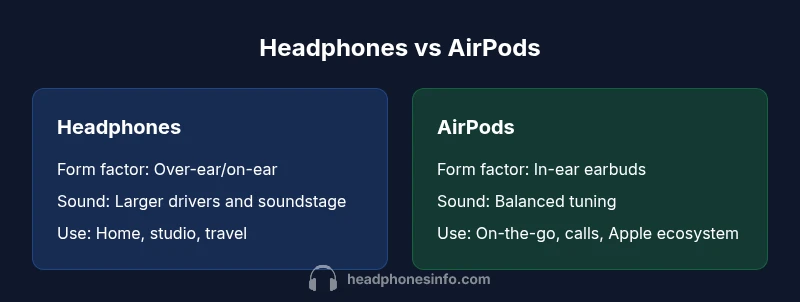
The difference between headphones and AirPods isn’t just size—it’s form factor, ecosystem, and feature sets. Headphones are typically larger on-ear or over-ear devices offering broader soundstage, longer listening comfort, and a wider range of models. AirPods are compact wireless earbuds designed for portability and seamless Apple integration. For most listeners, decide first by portability needs, ecosystem affinity, and intended use—calls, gaming, travel, or home listening.
Defining the Categories: Headphones vs AirPods
Headphones are a broad category of wearable audio devices designed to sit over or on the ears. They typically feature larger drivers, a wider sound stage, and can be wired or wireless. AirPods, by contrast, are Apple’s line of wireless earbuds designed for compactness and effortless pairing with iOS devices. The core difference between headphones and AirPods extends beyond size: form factor, intended use, and ecosystem integration drive the decision. According to Headphones Info, the evaluation framework should consider comfort, durability, battery life, and software features alongside price and portability. This article outlines the major distinctions to help you choose the right tool for your daily listening routines.
Form Factor and Ergonomics
Form factor is the most immediate differentiator. Headphones wrap around or sit over the ears, yielding a substantial weight and bulk but often delivering long-wearing comfort with memory foam cushions and adjustable headbands. AirPods are compact, lightweight earbuds designed for all-day wear without the bulk of a headset. Ergonomics matter: long sessions with headphones can be more comfortable for some users, while others prize the almost disappear-in-your-pocket convenience of AirPods. For travel, commuting, or workouts, the choice hinges on how you prioritize bulk versus portability and how you value a secure fit during movement.
Audio Quality and Soundstage
Sound quality is highly model-dependent in both categories, but there are general trends. Headphones typically offer a broader soundstage, deeper bass extension, and more precise transient response due to larger drivers. AirPods deliver a balanced tuning intended to sound good across a wide range of devices, with AirPods Pro and Max offering improved bass presence and spatial audio features. Open-back headphones can produce a more expansive, airy feel, while closed-back designs emphasize isolation. Headphones also tend to give listeners more customization via EQ and driver choices, whereas AirPods rely more on the manufacturer’s tuning and software features.
Features and Technology
Feature sets diverge in notable ways. AirPods (especially Pro models) bring active noise cancellation (ANC), transparency mode, and spatial audio—features that leverage Apple’s ecosystem and onboard processing. Many headphones offer ANC, ambient modes, and adjustable sound profiles via apps, but the user experience can be less uniform across brands. AirPods are renowned for simple pairing, device handoff, and seamless integration with iPhone, iPad, and Mac. For users who value ecosystem cohesion and quick switching, AirPods shine; others who want full-feature control over sound may lean toward headphones with richer customization options.
Connectivity and Latency
Both categories use Bluetooth, but the pairing experience and latency vary. AirPods leverage Apple’s custom chips for fast pairing and efficient processing, delivering low-latency performance primarily on Apple devices, with reliable multipoint functionality in newer models. Headphones span a broad range of codec support (SBC, AAC, aptX, LDAC) and often offer lower latency on high-end Bluetooth transceivers, particularly for gaming and media that demand precise lip-sync. If you game, look for headphones explicitly designed for low latency; AirPods can be competitive on iOS but aren’t a universal gaming solution.
Ecosystem and Compatibility
AirPods are tightly integrated with the Apple ecosystem, featuring instant pairing, automatic device switching, and advanced features like Spatial Audio when used with compatible devices. Headphones from other brands usually prioritize cross-platform compatibility, with some models offering apps to customize EQ, shading, and ANC, but the experience may vary across Windows, Android, and macOS. If you live inside Apple’s walled garden, AirPods offer frictionless use; if you mix devices or want broader compatibility, a more traditional pair of headphones may deliver a smoother cross-platform experience.
Battery Life and Charging
Battery life varies widely by model. AirPods generally offer several hours of listening time per charge with a compact charging case that adds additional cycles. Some over-ear headphones provide longer battery life per charge, plus larger cases or detachable cables for longer sessions away from power. AirPods Pro and AirPods Max extend listening time beyond standard AirPods but still rely on portable charging cases. If you travel frequently, prioritize devices with longer per-charge life or a charging case you’re confident carrying.
Durability, Comfort, and Maintenance
Durability often correlates with price and design intent. Headphones with metal frames and replaceable parts can be more robust over time but may require more maintenance (cushions, headbands). AirPods are highly portable and rugged enough for daily commuting, but the small components and charging case can be more prone to loss or damage in rough conditions. Comfort is also practice-based: some listeners suffer fatigue with on-ear or over-ear designs after hours, while others find earbuds with proper seals less intrusive. Regular cleaning, cushion replacement, and proper storage extend the life of either option.
Price Range and Value Proposition
Price ranges vary widely for both categories. Headphones span budget to premium tiers, with some models emphasizing pure sound quality and robust build. AirPods typically occupy a mid-to-premium segment, especially for Pro variants with ANC and Spatial Audio, but there are affordable wireless earbuds that still deliver solid performance. When evaluating value, consider not just sticker price but the total cost of ownership, including replacement parts, charging accessories, and the ecosystem advantages that a particular platform offers.
Decision Framework: How to Choose
To decide between headphones and AirPods, start with a few guiding questions: Where will you primarily listen (home, commute, gym, travel)? How important is portability versus sound immersion? Do you value ecosystem integration (especially if you use Apple devices)? Finally, what is your budget and tolerance for maintenance? A practical approach is to list your top three use cases, assign a priority score to each (portability, sound quality, ecosystem), and then compare devices that align with your highest-priority factors. If you want a concrete recommendation, the Headphones Info team suggests prioritizing your primary use-case and verifying comfort with a short trial period where possible.
Comparison
| Feature | Headphones | AirPods |
|---|---|---|
| Form factor | Over-ear/on-ear, larger chassis | In-ear wireless earbuds; highly portable |
| Sound stage | Typically wider and deeper, more bass control | Balanced tuning, solid for on-the-go listening |
| Noise control | ANC available on many models, great passive isolation | ANC available on AirPods Pro/Max; standard AirPods rely on passive noise isolation |
| Battery life (per charge) | Longer per-charge playback, plus larger charging cases | Typically shorter per charge, complemented by a compact case |
| Latency / gaming suitability | Low-latency options exist, especially in gaming-oriented models | Excellent on iOS for general use; gaming performance varies by model |
| Ecosystem integration | Cross-brand compatibility; best on multi-device environments | Best-in-class integration with Apple devices; features like Auto-Pairing and Spatial Audio |
| Price range | Budget to premium headphones across a wide spectrum | Mid-to-premium range with some affordable earbuds available |
Upsides
- Headphones can deliver immersive sound with expansive soundstage
- AirPods offer exceptional portability and quick pairing
- Both categories have expanded Bluetooth codecs and multipoint options
- Active noise cancellation is available in multiple models across both formats
- Ecosystem features ( Spatial Audio for AirPods, app EQ for headphones) enhance tuning
Disadvantages
- Headphones are bulkier and less convenient for travel
- AirPods can have smaller drivers and limited passive isolation (depending on model)
- Sound customization may be limited on AirPods compared to many headphones
- Premium AirPods models can be expensive; some headphones offer similar value at lower prices
Headphones excel in sound quality and long-wear comfort; AirPods dominate portability and Apple ecosystem convenience.
If your priority is immersive listening at home or in the studio, choose headphones. If you prioritize portability and seamless iPhone/macOS integration, AirPods are the better fit. For many users, a hybrid approach—noise-cancelling headphones for travel and AirPods for daily errands—provides the best overall value.
People Also Ask
What is the main difference between headphones and AirPods?
The main difference is form factor and ecosystem. Headphones are larger, over-ear or on-ear designs offering a broader soundstage, while AirPods are compact wireless earbuds designed for portability and seamless Apple device integration. The choice depends on where and how you listen, plus ecosystem preferences.
Headphones are larger and immersive, AirPods are compact and Apple-friendly. The best pick depends on where you listen and whether you value ecosystem integration.
Are AirPods better for calls than traditional headphones?
AirPods often perform well for calls due to built-in microphones and beamforming tech, especially in Pro models. Traditional headphones may offer larger mics and more comfortable long-term wear for desk work. If you need mic quality on the move, AirPods are convenient; if you require the best mic pickup, a dedicated headset may be better.
AirPods handle calls well on the go, but some dedicated headsets offer better mic quality for long calls.
Can I use AirPods for gaming?
AirPods can work for casual gaming, especially on Apple devices with low-latency modes; however, dedicated gaming headphones or headsets typically provide lower latency, richer audio cues, and more comfortable long sessions. For competitive gaming, consider wired or low-latency wireless headphones.
AirPods work for casual gaming, but dedicated gaming headsets usually perform better for competitive play.
Do all headphones have ANC like AirPods Pro?
Not all headphones include active noise cancellation, but many do, especially mid-to-high-end models across brands. AirPods Pro and certain headphones offer ANC, with Apple’s system-level features enhancing the experience on compatible devices.
ANC is common in many headphones and in AirPods Pro, but not universal.
Which should I buy if I want the best value?
If portability and Apple ecosystem are priorities, AirPods can offer strong overall value. If sound quality, comfort for long sessions, and cross-device flexibility matter more, a well-reviewed over-ear headphone may deliver better long-term value.
Value depends on your priorities: portability and ecosystem with AirPods, or fidelity and comfort with headphones.
How do price ranges compare between the two?
Prices span a broad spectrum for both categories. Headphones range from budget to premium, while AirPods overlap in the mid-to-premium area, particularly for Pro variants. Consider total cost of ownership, including charging accessories and ecosystem benefits.
Prices vary widely; expect a broad range for both categories with premium AirPods models in the mid-to-high end.
What to Remember
- Prioritize form factor: over-ear vs in-ear depends on where you listen
- Ecosystem matters: AirPods unlock seamless Apple integration
- Consider use case: calls, gaming, travel, or home listening
- Account for battery life and charging routines
- Evaluate price vs value within your budget