Hearing Aid and Headphones: A Data-Driven Comparison
A practical, data-driven comparison of hearing aids and headphones, showing how each serves distinct goals—from medical amplification to high-fidelity playback—so you can choose with confidence.


Hearing aids and headphones address different listening needs. A hearing aid amplifies sound for people with hearing loss, prioritizing speech clarity and comfort. Headphones are playback devices that deliver high-fidelity audio for music, movies, and calls. For most users, the right choice depends on whether the goal is medical amplification or general listening; testing and professional guidance help tailor the decision.
Why Hearing Aid and Headphones Overlap
The phrase hearing aid and headphones often comes up when people discuss personal audio, but these devices historically sit in different categories. In everyday life, both tools shape how we perceive sound, but their core goals diverge. A hearing aid is designed to compensate for auditory deficits, emphasizing speech intelligibility, background-noise suppression, and comfortable long-term wear. Headphones, by contrast, are consumer playback devices that prioritize accurate musical reproduction, immersive soundscapes, and portability. For listeners who wear hearing aids, certain headphones can enhance overall listening comfort when compatible streaming or telecoil features exist. In practical terms, understanding where they converge helps you avoid mis-buying and sets the stage for a more informed trial or purchase. Headphones Info’s approach emphasizes objective evaluation, accessibility, and value, ensuring both categories serve your needs without unnecessary overlap.
How to Read This Guide
To maximize clarity, this article keeps a strict comparison framework: purpose, form, performance, and price. We review two core options—Hearing Aids and Headphones—against common criteria: sound delivery, fitting and comfort, power and maintenance, and long-term value. Expect practical guidance, scenario-based examples, and a data-informed verdict that helps both audiophiles and everyday listeners decide with confidence. Throughout, we reference general industry practices and standards rather than specific product SKUs, to keep the guidance timeless and widely applicable.
Defining the Core Goals: Medical Amplification vs General Listening
At the heart of this comparison is goal alignment. A hearing aid’s primary objective is to improve speech understanding for individuals with measurable hearing loss. Features like programmable gain, frequency shaping, and noise reduction are tuned to the wearer’s needs, often under clinical guidance. Headphones, meanwhile, aim to reproduce audio with fidelity, breadth, and comfort for extended sessions. They cover a wide range of use cases—music, gaming, calls, and media consumption—without clinical fitting. When you plan a purchase, differentiate whether you seek therapeutic assistance or simply an optimized personal listening experience. This distinction drives budget, expected maintenance, and aftercare expectations.
Personalization and Sound Quality: Tailoring Experience
Personalization is central to both categories, but the emphasis differs. Hearing aids tailor amplification to the wearer’s audiogram, with programs that adapt to environments like quiet rooms, crowds, or traffic. The goal is speech clarity and comfortable loudness across situations. Headphones offer customizable sound signatures—neutral, energetic, or bass-forward—and many models support EQ adjustments via apps or device controls. For someone with hearing loss, headphones alone cannot replace the benefit of a properly prescribed hearing aid, but they can complement amplification by enabling better music enjoyment, streaming, or communication via wired or wireless connections. The right pairing can thus blend medical necessity with everyday enjoyment.
Fitting, Comfort, and Accessibility Considerations
Fitting and comfort drive long-term satisfaction. Hearing aids require an audiologist or dispenser to take ear impressions, select appropriate models, and program devices to the user’s needs. A proper fit minimizes irritation and maximizes day-long wearability. Headphones are more about mechanical comfort—the weight, clamp force, ear-pad materials, and seal against the ears. For people who wear hearing aids, choosing headphones with soft ear cushions, compatible volume control geometry, and wireless streaming capabilities can reduce listening fatigue. Investigate telecoil compatibility, Bluetooth streaming support, and wind noise handling to ensure neither device interferes with the other. This section emphasizes practical decisions you can verify during a trial period.
Power, Durability, and Maintenance: Longevity in Real Life
Hearing aids operate on replaceable or rechargeable batteries and demand routine maintenance, including cleaning, wax management, and annual professional checkups. Durability varies by model and usage; many devices are water-resistant to some degree, but user care matters. Headphones rely on built-in batteries or removable ones, and their longevity hinges on build quality, cable integrity (for wired models), and charging routines. Wireless models add considerations like standby power, Bluetooth version compatibility, and firmware updates. In both categories, manufacturer warranties and service plans shape total ownership costs and confidence in ongoing support. A clear maintenance plan reduces long-term costs and preserves device performance.
Connectivity and Compatibility: Staying Linked Across Devices
Connectivity is a frequent sticking point. Hearing aids often offer Bluetooth streaming, telecoil compatibility, and compatibility with smartphone apps for adjustment. Headphones provide Bluetooth or wired connections, sometimes with latency considerations for gaming or calls. When you use both, ensure you can route audio without delay and that streaming compatibility is preserved across devices (phones, computers, TVs). For some users, a dedicated streaming accessory or a compatibility bridge can simplify integration. In short, the right balance of speed, stability, and control determines a seamless listening experience.
Use Cases: Daily Listening, Work, and Leisure
No single device fits all scenarios. A hearing aid excels in daily communication, especially in conversations and social settings where speech intelligibility matters most. Headphones shine for music, movies, and immersive experiences in private spaces. For many, the best outcome is a nuanced approach: use hearing aids for amplification in daily life and pair them with high-quality, comfortable headphones for entertainment or long sessions. Gamers and remote workers may benefit from low-latency headphones that cooperate with hearing aids’ streaming options. The goal is to reduce listening effort while maximizing enjoyment and accessibility across environments.
Price, Value, and Longevity: Understanding the Investment
Prices reflect build quality, feature sets, and clinical involvement. Hearing aids typically involve a higher upfront cost and ongoing care, but most users value ongoing aftercare and the benefit of speech clarity. Headphones span a broad price range, from budget to audiophile, with variable durability and warranties. When evaluating value, consider the total cost of ownership: the device price, maintenance or replacement parts, and the expected lifespan. A careful assessment of your needs—whether medical, recreational, or a blend—helps you choose a solution that remains useful over time.
How to Test and Compare Before Buying: A Practical Plan
A structured test plan reduces buyer’s remorse. Start with a clear use-case list: daily conversations, streaming music, work calls, and travel scenarios. For hearing aids, obtain a professional fitting and request trial periods to assess speech understanding in real environments. For headphones, audition a few models that cover your sound preference, comfort, and connectivity needs. During trials, compare comfort, battery life, latency, and real-world audio quality, including how well streaming from devices performs. Document impressions and revisit decisions after a week of use. This disciplined approach ensures you pick devices that truly fit your lifestyle.
Integration Tips for Everyday Life: Making It Work
Seamless integration requires a few practical steps. Use Bluetooth streaming when available to minimize wires and glitches, and select headphones with compatible controls for volume and playback. If you wear hearing aids, explore accessories that assist with wireless streaming, such as streamer devices or direct-to-device connections. Keep your devices updated with software or firmware to maintain performance and security. Finally, establish a simple maintenance routine—daily wipe-downs, monthly inspections, and quarterly professional checks—to preserve comfort and effectiveness. With thoughtful setup, hearing aid and headphone experiences become complementary rather than competing demands.
Future Trends in Hearing Tech: What’s Next for the Field
The next wave of hearing tech emphasizes smarter, more integrated solutions. Expect improved auto-adjustment algorithms, deeper integration with mobile platforms, and better cross-device interoperability to reduce latency and improve speech clarity in noisy environments. Advances in miniaturization, battery technology, and AI-driven sound processing will likely expand the range of devices that can support both amplification and high-fidelity playback. As these trends unfold, users can anticipate more affordable access, enhanced comfort, and more flexible options for everyday listening and communication.
Comparison
| Feature | Hearing Aids | Headphones |
|---|---|---|
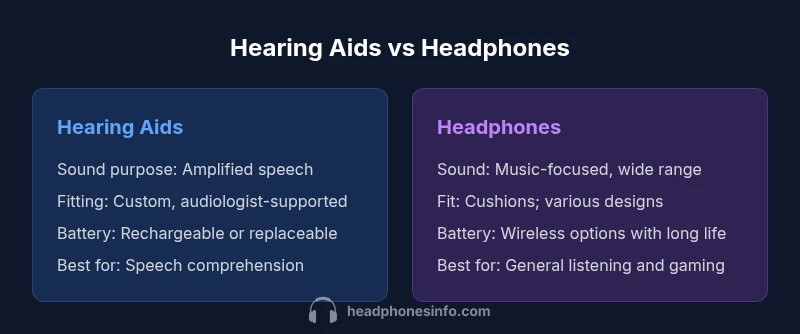
| Sound purpose | Amplified speech, tailored profiles | General audio playback, diverse sound signatures |
| Fitting & Comfort | Custom molds or ear impressions; appointment-based | Various designs; adjustable cushions; wireless options |
| Power & Battery | Rechargeable or replaceable batteries; regulated device lifecycle | Rechargeable or replaceable batteries; long listening times |
| Durability & Care | Professional maintenance; some models water-resistant | Everyday wear and tear; cable vs wireless simplicity |
| Price Range | $1,000–$5,000 per device | $30–$1,500 for consumer models |
| Best For | Speech clarity, hearing loss management | Music, gaming, calls, casual listening |
Upsides
- Clarifies expectations by separating medical amplification from general listening
- Helps budget planning with realistic price ranges
- Improves decision confidence with structured criteria
- Supports accessibility and inclusivity in audio tech
Disadvantages
- Prices for hearing aids can be high and require ongoing care
- Regulatory differences can complicate warranty and service
- Overlap in features may still cause confusion
- Limited cross-compatibility between devices
Hearing aids and headphones serve different, complementary roles; choose based on need.
A medical amplification need points you toward hearing aids; for music, calls, and casual listening, headphones are typically better. Use a structured comparison to balance comfort, price, and long-term value.
People Also Ask
Can hearing aids double as headphones for listening to music?
Hearing aids primarily amplify speech and sounds for hearing loss; they are not designed to replace headphones for music playback. Some hearing aids support Bluetooth streaming, but they do not replicate high-fidelity audio or a wide sonic range like dedicated headphones. For music, use headphones or earphones as your playback device, and consult your audiologist about compatible streaming options.
Hearing aids aren’t substitutes for headphones in music listening, though some can stream audio. For music, use dedicated headphones and discuss streaming options with your provider.
Are there headphones designed to be more hearing-loss friendly?
Yes. Some headphones are marketed as accessibility-friendly, offering features like customizable EQ profiles, low-latency streaming, and comfortable designs for longer sessions. While they don’t treat hearing loss, they can improve perceived loudness and comfort for people using hearing aids. Always test for comfort and compatibility with your devices.
There are accessibility-friendly headphones that help with comfort and listening. They won’t replace hearing aids, but they can improve overall usability.
Do I need a prescription to obtain a hearing aid?
Most regions require a professional assessment for a hearing aid, including audiometric testing, device fitting, and programming. A licensed audiologist or dispenser typically handles these steps and provides a trial period. Some regions offer over-the-counter devices for milder hearing loss, but professional guidance remains important for optimal outcomes.
Yes, in many places you’ll need a professional assessment and fitting for hearing aids, though OTC options exist in some regions.
How does Bluetooth streaming interact with hearing aids?
Many modern hearing aids support Bluetooth streaming, which can route audio from phones, computers, and TVs directly to the device. This can reduce effort for calls and media, but latency and compatibility vary by model. If you rely on streaming, verify your devices’ compatibility and consider telecoil options for better performance in public spaces.
Most modern hearing aids stream Bluetooth audio, but check compatibility and latency for your setup.
Can I use traditional headphones alongside my hearing aids without interference?
In many cases, yes. Choose headphones with a comfortable fit that don’t push the ear too hard against the hearing aid components. Look for models with compatible volume controls and consider wireless options to minimize cables near the device. If interference occurs, consult your audiologist for pairing advice and recommended accessories.
You can often use headphones with hearing aids; pick comfortable, wireless options to minimize interference.
What maintenance do hearing aids require?
Maintenance includes regular cleaning, wax management, and battery checks. Schedule periodic professional tune-ups to ensure the devices stay calibrated and perform optimally. Proper storage and daily care extend device life and comfort.
Regular cleaning and professional check-ups keep hearing aids performing well.
What to Remember
- Define your primary goal: amplification vs playback
- Expect professional fitting for hearing aids
- Test comfort and latency with headphones
- Factor total cost of ownership in decisions
- Consider integration with other devices for seamless use