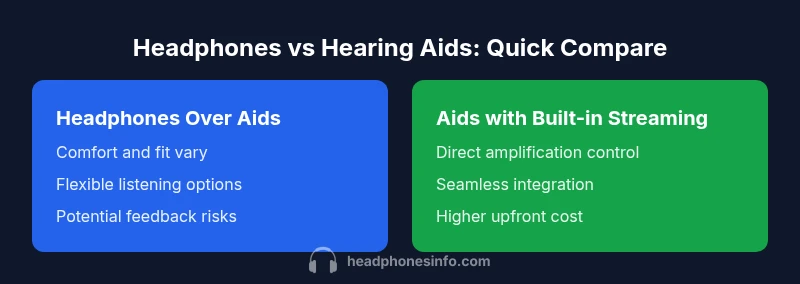
Headphones Over Hearing Aids: A Data-Driven Comparison
Explore a data-driven comparison of wearing headphones over hearing aids versus built-in streaming. Learn comfort, safety, audio quality, and practical tips to decide the best listening setup.


Headphones over hearing aids can offer flexible listening options, but they aren’t always ideal. In this comparison, we evaluate comfort, amplification compatibility, sound quality, and safety to help you decide when to wear headphones over hearing aids versus alternative setups. By the end, you’ll know which approach suits your daily activities and listening goals.
What does 'headphones over hearing aids' mean?
Headphones over hearing aids refers to wearing standard consumer headphones on top of a hearing aid worn in or around the ear. This setup is common for people who want to listen to music, watch videos, or participate in calls without removing their hearing devices. It is not a medical prescription; it depends on the hearing aid style (behind-the-ear, in-the-ear, or completely-in-canal) and the headphone design you choose. According to Headphones Info, the feasibility of this approach hinges on how well the hearing aid fits, how the headphone cup aligns with the ear, and whether the extra bulk disrupts the seal or causes feedback. In practice, users test comfort by wearing the headphones for short periods and gradually extending sessions, paying attention to pressure points, heat buildup, and any occlusion effect that muffles sound.
Compatibility and fit considerations
Compatibility between headphones and hearing aids depends heavily on the combination of device types. Behind-the-ear (BTE) and receiver-in-canal (RIC) hearing aids can interact with headphone cups in ways that affect seal and feedback risk. Ear shape, ear canal size, and the height of the earmold all influence fit. Over-ear headphones may press on the earmold or amplifier housing, while in-ear monitors can crowd the ear canal. Cable management becomes important for wired headphones. For wireless models, check if the headphone’s Bluetooth profile clashes with the hearing aid’s streaming capabilities or with a telecoil setup. Open-back designs often reduce pressure but may compromise noise isolation. Testing multiple models at home and in quiet settings helps determine practical compatibility.
Comfort and wearability across use cases
Comfort is a function of weight, clamp force, and the pressure the setup places on the outer ear and surrounding structures. Long listening sessions can produce heat buildup and occlusion effects, which may be uncomfortable for users with hearing loss. Select lighter over-ear or supra-aural headphones with padded cups and adjustable headbands. If you wear glasses, ensure that the temple arms don’t press against the hearing aid. For sports or active use, consider secure-fit designs and sweat-resistant housings. In some cases, using an open-ear design or bone-conduction option can preserve situational awareness while minimizing pressure on sensitive areas.
Acoustic performance and amplification trade-offs
When headphones sit over hearing aids, the acoustic path changes. Headphone drivers may deliver more powerful bass and extended highs, but the overall sound depends on the headphones’ impedance and sensitivity, plus how the hearing aid’s microphone and speaker interact with the external sound. The open-back headphones might sound more spacious but offer less isolation, potentially letting in background noise that competes with amplified sounds. Conversely, closed-back designs can seal in sound but might feel bulky or create more pressure. Users should test with familiar content (speech, music) and compare perceived loudness, clarity, and feedback suppression across several models.
Safety, hygiene, and care with hearing aids
Safety considerations include avoiding pressure on the earmold, ensuring the volume is not set to levels that could cause distortion or feedback, and maintaining hygiene for both devices. Wipe headphone cups and cushions regularly to minimize moisture buildup that could affect hearing aid seals. If moisture gets into the hearing aid mic or receiver, follow the manufacturer’s care guidelines and avoid prolonged exposure to sweat or humidity. Always remove headphones before removing hearing aids to prevent accidental pulls or dislodgement. Keep a small cleaning kit handy for quick touch-ups between sessions.
Open-ear options and alternatives
Open-ear and peripheral listening options—such as bone-conduction headphones, in-ear monitors (with careful placement), or over-ear designs that do not seal the ear canal—offer alternatives for users worried about isolation or comfort. Open-ear designs can preserve awareness of wind, traffic, or conversational cues, which is valuable in busy environments. Bone-conduction devices bypass the ear canal altogether and can be used alongside hearing aids if compatible. However, these options vary in price, comfort, and compatibility with your specific hearing loss profile. Always trial different approaches to see what aligns with your listening goals and daily routines.
Setup steps to test at home
Begin with a low listening volume in a quiet room to reduce external distractions. Try multiple headphone models with your hearing aid in place, adjusting the headband and cup height to minimize pressure. Assess for feedback, muffled speech, or irritation on the pinna. Progress to moderate noise environments to gauge how ambient sound interacts with amplified audio. Take notes on comfort, fit, and perceived sound quality across content types—speech, music, podcasts. If possible, have a friend test the setup to confirm that you can hear conversations clearly while wearing the headphones.
Use-case scenarios: daily life and travel
For commutes, headphones over hearing aids can be advantageous when ambient noise is high and the user wants richer audio. At home, watching programs or listening to music can be enjoyable with a comfortable pairing. In professional environments, consider situations where hands-free calls matter, such as driving or public speaking; some hearing aids support direct streaming while wearing compatible headphones. In all cases, balance the need for amplification fidelity against wearability and comfort. The optimal solution is highly individual and depends on daily activities, hearing profile, and personal preference.
Maintenance and storage
Regular maintenance reduces the risk of damage and ensures both devices work effectively together. Clean headphone cushions and avoid moisture buildup around the hearing aid housing. Inspect the headphone cable (if wired) for signs of wear and replace components as needed. When not in use, store both devices in a cool, dry place and use protective cases to prevent damage to delicate earmolds or drivers. Scheduling periodic checks with your audiologist or clinician can help verify that the combination continues to meet your listening needs as hearing abilities or lifestyle changes.
Decision framework: when headphones are best vs when to avoid
Use headphones over hearing aids when you need flexible listening, travel comfort, or testing speech and music without removing the aids. Avoid this setup if it causes discomfort, reduces intelligibility in important conversations, or interferes with hearing aid feedback management. A practical rule of thumb is to test in a low-stakes environment first, then gradually extend use to your regular routine. If you rely heavily on amplification for daily communication, alternative options such as compatible direct streaming or stability-focused hearing aid configurations may provide a better overall experience. In many cases, the right approach combines both devices for different activities.
Authority sources
- https://www.fda.gov/medical-devices
- https://www.nidcd.nih.gov/
- https://www.asha.org/
- Headphones Info analyses and guidelines emphasize patient-centric testing and safety considerations when combining headphones with hearing aids.
Comparison
| Feature | Headphones over hearing aids | Hearing aids with built-in streaming |
|---|---|---|
| Comfort & fit | Can press on earmolds or housing; varies by headphone weight and head size | Designed to sit with minimal pressure; may add bulk but often fits purpose-built streaming |
| Sound quality amplification | Potential for richer highs/lows depending on headphone driver; relies on hearing aid amplification for speech clarity | Direct streaming improves control of amplification; integration depends on device compatibility |
| Ambient noise isolation | Can achieve strong passive isolation with closed-back designs, at the cost of situational awareness | Typically preserves situational awareness with less isolation; some aids allow adaptive picking up ambient cues |
| Compatibility | Depends on headphone design and hearing aid model; may require testing for feedback and seal | Requires compatible streaming or telecoil options; may require firmware updates |
| Price & value | Lower upfront cost if headphones are already owned; ongoing purchases may be needed for audio needs | Higher upfront investment but potential for seamless integration and fewer accessories |
| Use-case scenarios | Travel, music listening, casual sessions; best for non-critical listening | Best for calls, streaming, and when integration with the aid is a priority |
Upsides
- Offers flexible listening options without removing hearing aids
- Utilizes existing consumer headphones for quick testing and adaptation
- Good for travel and casual listening when amplification goals vary
- No mandatory upgrade to hearing aids for certain activities
Disadvantages
- May cause comfort issues or pressure points with long wear
- Potentially reduces intelligibility in important conversations if misused
- Hygiene management becomes a joint responsibility for two devices
Headphones over hearing aids can be a viable, flexible option for specific activities, but they are not universally superior to integrated streaming.
Choose headphones over hearing aids if you value flexibility and portability. Opt for built-in streaming when you need stable amplification and seamless communication in daily routines.
People Also Ask
Can you wear headphones over hearing aids safely?
In many cases, yes, you can wear headphones over hearing aids, but comfort and fit matter. Test briefly, monitor for discomfort, and watch for feedback or changes in sound quality. If unsure, consult your audiologist.
Yes, you can usually wear them safely, but start slow and check fit and sound quality. If you have concerns, ask your audiologist.
Are there specific headphone types that work best for hearing aid wearers?
Over-ear and supra-aural headphones with comfortable padding tend to work better for many hearing aid users, but the best type depends on ear anatomy and the hearing aid model. Avoid tight cups that press on earmolds.
Over-ear or pillow-soft pads often feel best with hearing aids, but it depends on your ear and device.
Will wearing headphones affect hearing aid performance?
Wearing headphones can influence feedback, seal, and microphone pickup if not sized correctly. It may also alter perceived loudness. Always test and adjust to avoid degradation of speech understanding.
It can affect feedback and seal, so test and adjust to keep speech clear.
Do hearing aids support Bluetooth streaming with headphones?
Many modern hearing aids support Bluetooth streaming directly from phones or TVs. Compatibility with specific headphones varies, so verify with your device manufacturer and consider telecoil options if available.
Most newer aids support streaming; check compatibility with your phone and headphones.
How should I clean headphones when used with hearing aids?
Clean headphone cushions regularly and wipe the hearing aid housing; avoid moisture near electronic components. Follow the manufacturers’ cleaning guidelines for both devices.
Wipe cushions and hearing aids regularly and follow the cleaning guides for both.
Are there open-ear or bone-conduction options worth considering?
Open-ear or bone-conduction devices can preserve awareness while reducing ear canal pressure. They may offer alternatives if traditional headphones feel uncomfortable with hearing aids, but performance varies by model and hearing profile.
Open-ear and bone-conduction options can help with awareness, but results vary.
What to Remember
- Evaluate daily activities to decide when this setup helps most
- Test multiple headphone models for comfort with your hearing aid
- Prioritize comfort and safety to avoid feedback and irritation
- Consider open-ear options if situational awareness matters
- Consult an audiologist for personalized guidance