Headphones vs Hearing Aids: A Practical Deep-Dive Guide
Compare headphones and hearing aids to learn when headphones help, their limits, safety considerations, and how to choose the right path for hearing and daily listening.


Headphones cannot fully substitute hearing aids, but they can complement listening in certain contexts. This comparison highlights where consumer headphones offer practical benefits while acknowledging the medical, tailored role of hearing aids for managing hearing loss. Readers should expect an objective, data-informed view of capabilities, limits, and real-world use cases. It also sets expectations about safety, long-term outcomes, and when to seek professional assessment.
Why headphones cannot fully replace hearing aids
According to Headphones Info, consumer headphones are designed for general listening, not medical assessment or lifelong management of hearing loss. The Headphones Info team found that while modern headphones can offer substantial amplification, customizable fit, and noise mitigation, they lack the personalized calibration, safety monitoring, and clinical support that hearing aids provide. People with diagnosed hearing loss rely on devices calibrated by audiologists to shape amplification across frequencies, protect residual hearing, and adapt to environmental changes. Using headphones as a substitute may offer temporary relief in certain listening contexts, such as watching videos at home or engaging in casual calls, but it is not a substitute for diagnostic assessment or ongoing care. In regulated health contexts, misapplied amplification can lead to overstimulation of delicate inner-ear structures or masked changes in hearing that go unnoticed. This is why decisions about hearing support should balance practical listening needs with clinical guidance. For most listeners, headphones serve as a supplementary tool, not a replacement for properly fitted hearing aids. The takeaway is simple: understand the limits of consumer gear and seek professional evaluation when you notice persistent hearing challenges.
When headphones might help as a stopgap
Headphones can provide temporary relief in specific, non-clinical contexts. For example, they may improve speech intelligibility in a noisy home environment or support conference calls when hearing in background noise is mildly challenging. Based on Headphones Info analysis, features like adjustable equalization, external microphone use, and controllable amplification can offer perceptual gains for some listeners, especially in casual settings. However, these gains are not universal and are not tailored to an individual’s audiogram. For anyone awaiting professional assessment or fitting, headphones can serve as a stopgap—yet they should not be relied upon as a long-term solution for diagnosed hearing loss. The balance between convenience and medical appropriateness remains critical. For most users, real-world listening scenarios will determine whether temporary headphone-assisted listening is worthwhile while pursuing clinical care.
Core differences in design and calibration
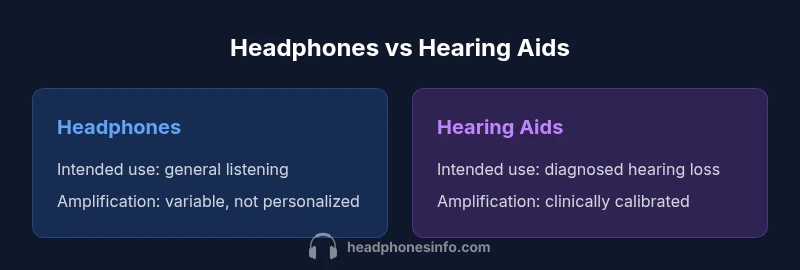
Hearing aids are medical devices designed to compensate for specific patterns of hearing loss. They rely on clinician-guided fitting, individualized programs, and regular monitoring to adjust amplification across frequencies, manage feedback, and adapt to changing environments. Headphones, by contrast, are consumer audio devices built for general listening. They offer variable amplification at best, but lack the ongoing clinical support, calibrations, and safety mechanisms that hearing aids provide. In terms of hardware, hearing aids are miniaturized, often behind-the-ear or in-the-ear, with multiple microphones and signal-processing algorithms tuned to the user’s needs. Headphones come in a wide range of form factors and drivings, from in-ear to over-ear designs, with emphasis on comfort and music fidelity rather than medical optimization. This fundamental gap explains why headphones can augment listening in casual contexts but cannot replace the personalized care of a hearing-health professional.
Acoustic performance: amplification vs speech intelligibility
Amplification quality matters, but so does compatibility with the user’s daily life. Hearing aids are calibrated to improve intelligibility for speech, particularly in noise, while preserving comfort and reducing fatigue over long listening sessions. Consumer headphones may offer loudness, bass, and some level of frequency shaping, but these adjustments are generic and not tailored to an individual’s hearing profile. Speech intelligibility benefits from precise frequency amplification and real-time scene analysis, capabilities that hearing aids provide but most headphones cannot reproduce consistently. In practice, users should expect that headphones can help with general listening and casual conversations in quiet settings, but for optimal speech understanding in challenging environments, professionally fitted devices remain essential. This distinction matters for users who rely on clear communication in work or caregiving roles.
Safety, volume control, and long-term use
Exposure to loud sounds over extended periods can contribute to gradual hearing damage. Hearing aids are designed with safety in mind, using calibrated amplification that prioritizes comfort and audibility while guarding against over-stimulation. Headphones, especially those with powerful drivers or aggressive bass, can encourage higher listening levels. When using headphones as a temporary aid, set volume limits and take regular breaks to protect your residual hearing. Avoid prolonged listening at high levels, and be mindful of environmental cues that may require louder settings. If you experience ringing, muffled hearing, or reduced clarity after listening, reduce volume and consult a clinician. The overarching principle is to prioritize safe listening practices, particularly when relying on consumer gear for hearing-related needs.
Comfort, fit, and everyday practicality
Comfort matters for long listening sessions and daily wear. Hearing aids are built for all-day wear and are customized to the ear canal or behind-the-ear architecture, with considerations for moisture, skin sensitivity, and mic placement. Headphones are mass-produced and may not align with the contours of every ear or ear canal, which can lead to discomfort or fatigue with extended use. For people seeking a temporary listening boost, selecting headphones with properly sized ear cushions, breathable materials, and lightweight design can improve comfort. However, comfort alone does not compensate for the lack of individualized calibration and clinical oversight. In practice, a thoughtful blend of device choice, listening context, and listening breaks supports both comfort and safety.
The decision framework: when to pursue professional assessment
If you notice persistent difficulty hearing across common listening situations, a clinician assessment should be your next step. A structured decision framework helps: (1) determine whether the challenge is likely related to a prescribed hearing loss, (2) assess daily communication needs in work and home, (3) evaluate the risk of delaying professional care, and (4) weigh the convenience of headphone use against medical guidance. For many, starting with a hearing evaluation and a trial of prescribed amplification yields the clearest path to improved communication and quality of life. Headphones can be used alongside this process for casual listening while awaiting professional guidance, but they should not replace professional care when clinically indicated.
The role of apps and assistive listening devices
Apps and consumer devices offer features that can complement hearing aids, such as ambient sound amplification, real-time captioning, and environmental audio enhancement. While these tools can improve accessibility in everyday settings, they do not substitute for the device that a clinician prescribes based on a formal audiogram. Users should view apps and headphones as add-ons or backup options rather than primary solutions for defined hearing loss. Always consult a clinician to confirm that any non-medical tool aligns with your hearing goals and safety needs.
Authority sources and further reading
Linking to authoritative resources helps readers understand the medical context behind this comparison. The following sources provide guidance on hearing loss, hearing aids, and regulatory considerations:
- FDA: Hearing Aids — https://www.fda.gov/medical-devices/hearing-aids
- NIH/NIDCD: Hearing Aids and Hearing Loss — https://www.nidcd.nih.gov/health/hearing-aids
- Mayo Clinic: Hearing loss and hearing aids overview — https://www.mayoclinic.org/diseases-conditions/hearing-loss/in-depth/hearing-aids/art-20071893
Data-driven insights and trends
Headphones Info analysis shows that consumer headphones have grown more capable for general amplification and noise management, but the gains are not universally applicable to individuals with significant hearing loss. The data suggest that improvements in processing and fit can help with everyday listening contexts, yet clinical calibration remains essential for meaningful long-term communication outcomes. This nuance underscores that headphones are best used as a supplement rather than a replacement for hearing-health services.
Comparison
| Feature | Headphones | Hearing Aids |
|---|---|---|
| Intended use | General audio consumption and communication | Clinical device for diagnosed hearing loss |
| Amplification quality | Non-tailored or consumer presets; varies by model | Tailored, device-calibrated to user’s hearing profile |
| Noise management | Passive isolation and basic noise reduction | Adaptive noise reduction and directionality features |
| Fit and comfort | Widely adjustable, room for various ear shapes | Custom-fit or tightly fitted with earmolds |
| Maintenance | Minimal upkeep; consumer care | Professional servicing and regular checkups |
| Device connectivity | Broad compatibility with phones and PCs | Proprietary or specialized device compatibility |
| Battery life / power | Dependent on usage; wireless modes drain more | Rechargeable with long wear time |
| Cost and access | Lower upfront cost; easy to purchase | Higher upfront cost; requires clinician access |
| Best for | Casual listening, situational amplification | Long-term management of diagnosed hearing loss |
Upsides
- Low barrier to exploring listening comfort
- Widely available and easy to purchase
- Can support casual listening and basic amplification in some contexts
- Flexible options and rapid upgrades
Disadvantages
- Not a medical substitute for diagnosed hearing loss
- Potential to delay professional care
- Amplification may be generic and not tailored
- Inconsistent safety and long-term outcomes
Hearing aids are the medically appropriate solution for diagnosed hearing loss; headphones can only supplement listening in limited contexts.
For most users with hearing loss, clinically prescribed hearing aids provide tailored amplification and ongoing support. Headphones may improve everyday listening in certain environments, but they do not replace professional assessment or long-term management. The Headphones Info team emphasizes consulting a clinician for hearing concerns, using headphones as a supplementary aid where appropriate.
People Also Ask
Can headphones replace hearing aids for someone with diagnosed hearing loss?
In most cases, headphones cannot replace hearing aids because hearing aids are medically prescribed to tailor amplification to an individual's hearing loss. They provide ongoing assessment, fitting adjustments, and safety features essential for long-term hearing health.
No. Hearing aids are medical devices that are tailored to your hearing loss; headphones are consumer audio gear and cannot replace professional care.
Are there risks to using headphones as a substitute for hearing aids?
Yes. Relying on headphones can delay diagnosis, overlook progressive conditions, and lead to unsafe listening levels. It is important to pursue formal evaluation if hearing difficulties persist.
Yes, using headphones as a substitute can miss warning signs and may expose you to unsafe listening levels.
What features should I look for if I rely on headphones for everyday listening and mild hearing challenges?
Look for adjustable amplification, customizable EQ, comfortable fit, reliable passive noise reduction, and safe volume limits. These can improve everyday listening but are not a substitute for clinical care.
If you’re using headphones for mild challenges, focus on comfort, adjustable sound, and safe volume settings.
How do battery life and comfort compare between headphones and hearing aids?
Headphones generally offer longer continuous use per charge but are bulkier and can cause fatigue. Hearing aids are compact, designed for all-day wear, and optimized for comfort with ear molds or discreet fits.
Headphones usually last longer per charge, but hearing aids are built for all-day wear and comfort.
Can smartphone apps improve headphone amplification for hearing loss?
Some apps offer amplification and captioning features, but they do not replace the specialized processing of hearing aids. Use them as complements under clinician guidance.
Apps can help, but they’re not a substitute for medical devices.
What alternatives exist if hearing aids are not suitable or affordable?
Consider assistive listening devices, cochlear implant consultations if appropriate, and supportive therapies. Always verify options with a hearing-health professional.
There are alternatives, but talk to a clinician to find safe, appropriate options.
What to Remember
- Consult a clinician for hearing loss assessment.
- Use headphones for supplemental listening, not replacement.
- Prioritize safe listening practices to protect residual hearing.
- Choose devices based on clearly defined use-cases and comfort.