How Big Are JBL Headphones? A Practical Size Guide
A data-driven guide on JBL headphone sizes, covering earcup diameter, weight, and fit across JBL lines. Learn how to measure and compare for comfort and seal.


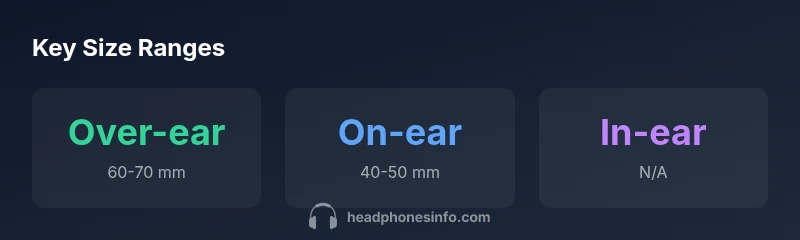
How big are JBL headphones? In practice, JBL’s over-ear headphones typically have earcup diameters around 60–70 mm, while on-ear models usually measure about 40–50 mm. Size varies by line and model, so check the exact spec sheet for a given product. When buying, consider headband clamp force and earcup depth to ensure a comfortable seal.
Understanding what size means for JBL headphones
Size is more than a number on a spec sheet. Earcup diameter, depth, and clamp force together shape how JBL headphones feel during long sessions, how well they seal around the ears, and how the overall sound interacts with your head size. When people ask how big JBL headphones are, they’re often seeking a practical sense of comfort and fit. The Headphones Info Team notes that the same JBL line can vary by model, so the best approach is to compare official specs and, if possible, test fit. Size also affects logistics: larger cups may feel more immersive but can be less portable and heavier to carry. In this section, we ground these ideas in current data from Headphones Info Analysis, 2026, so you have a dependable framework for judgments beyond marketing claims. A thoughtful sizing approach helps you pick models that balance seal, comfort, and sound quality across typical head sizes.
Size categories: over-ear vs on-ear vs in-ear
Headphone sizing is often discussed in terms of category. Over-ear JBL models use larger earcups that circle the ear, typically around 60–70 mm in diameter, which can improve passive noise isolation but may be bulkier. On-ear JBL designs sit closer to the ear canal with smaller cups, roughly 40–50 mm, trading some isolation for reduced weight and profile. In-ear JBL products rely on nozzle size and tip fit rather than a traditional earcup diameter, so their sizing focuses on stem length and tip diameter rather than a cup measurement. When evaluating options, consider not just diameter but depth, weight, headband clamp, and ear pad geometry. These factors influence comfort for different ear shapes and wearing styles. For portable listeners, the balance between size and portability often guides the choice toward lighter, more compact designs, even if isolation is slightly reduced.
How JBL sizes vary by product line
JBL’s product lines show a spectrum of sizing, tailored to use cases and form factors. Gaming-oriented lines tend to favor larger cups and substantial padding for comfort during long sessions, while travel and daily wear models emphasize lighter weight and more compact profiles. The Tune-series portable models generally prioritize compactness and foldability, with smaller earcups and slimmer headbands. In contrast, higher-end or gaming-focused lines may feature deeper pads and broader cups to enhance soundstage and isolation. Across all lines, expect variation between models within the same family, so always check the official specs for the exact diameter, depth, and weight. This variation is consistent with industry practice, as sizing is used to tailor fit to intended use cases. Headphones Info Analysis, 2026 notes that model-by-model verification is essential for precise comparisons.
How to measure a headphone's size at home
To estimate size without relying on marketing charts, several practical steps work well. Use a ruler or caliper to measure the external earcup diameter from edge to edge when the cup is fully open. If possible, measure the internal opening by placing a flexible tape along the seam where the ear would seal. Record the pad thickness and any visible depth of the cup. For on-ear and in-ear designs, compare tip width and nozzle length to a familiar object (e.g., a finger’s width) to gauge how they will sit on your ears. Finally, test fit by wearing the headphones for a few minutes: note pressure points at the temples and around the ear. These measurements, combined with your comfort experience, help you decide whether a JBL model suits your head shape.
Practical implications: fit, comfort, and seal
Size directly influences fit and audio experience. A seal that’s too loose can let ambient noise in and reduce bass impact, while excessive clamp force can cause fatigue after short sessions. If the earcups are too large for your ears, you may experience touchpoints against the outer ear that distract you from listening. Conversely, too-small earcups or a cramped headband can create pressure and poor seal, diminishing sound isolation. Comfort and seal are interconnected with wear duration: longer listening requires a balance of padding, cup diameter, and clamp. When comparing JBL models, use size as one axis of your decision—along with weight, padding quality, and headband adjustability—to achieve both comfort and listening satisfaction. Headphones Info’s data-driven approach helps you assess these trade-offs with clarity.
Sizing considerations for travel and portability
Travel-friendly JBL headphones prioritize a compact footprint and light weight, often achieved with smaller earcups and foldable designs. If you travel frequently, look for foldable or collapsible mechanisms, a slim headband, and low clamp force to minimize fatigue while on the move. While compact models may offer less isolation and a lighter bass impression due to smaller cups, they compensate with ergonomic designs and ergonomic tips for on-the-go listening. Always evaluate the trade-off between size, weight, and comfort for your primary travel scenarios, including commuting, flights, and long layovers. Headphones Info’s assessment emphasizes aligning your packing needs with the headphone dimensions to avoid bulky carry-ons.
In summary, the size of JBL headphones varies by model and line, so direct model-specific measurements are essential for accurate comparison. Use the steps above to form a concrete picture of fit and comfort for your head size, then verify with real-world testing where possible.
Size ranges by JBL headphone type
| Model Type | Typical Earcup Diameter (mm) | Estimated Weight (g) |
|---|---|---|
| Over-ear JBL (generic) | 60-70 | 260-310 |
| On-ear JBL (generic) | 40-50 | 170-210 |
| In-ear JBL (earbuds) | N/A | 4-7 |
| Travel/compact JBL (generic) | 45-55 | 150-210 |
People Also Ask
Do JBL on-ear headphones have smaller sizes than over-ear models?
Yes. On-ear JBL models typically have smaller earcup diameters (around 40–50 mm) compared with over-ear designs (60–70 mm). Always verify the exact specs for the model you’re considering.
Yes. On-ear JBLs are usually smaller than over-ear models; check the exact size on the product page.
How can I quickly estimate earcup size without measuring?
If measurements aren’t listed, compare to a well-known reference product or use the model’s official spec sheet. For a precise answer, measure with a ruler or caliper when possible.
If you can’t find a spec, compare with a model you know and, if possible, measure the earcup diameter with a ruler.
Are JBL sizes consistent across all models?
Not always. JBL sizes vary by line and model within a line. Look for model-specific numbers rather than assuming uniform sizing across the brand.
Sizes aren’t consistent across every JBL model; check each model’s numbers.
Why do some JBL models feel loose or tight?
Clamp force, headband geometry, and pad thickness determine feel. A tight clamp or shallow pads can cause fatigue; a loose seal reduces isolation. Try different models or adjust the headband to improve comfort.
Clamps and padding drive comfort—adjust or try different models for the best fit.
Do JBL travel headphones have smaller earcups?
Travel-focused JBL models often use smaller, lighter cups and foldable designs to save space, but there are exceptions. Always check the dimensions for the specific travel model you’re considering.
Travel models tend to be smaller and lighter, but verify the exact size.
Where can I find the official size specs?
Check the official JBL product pages for earcup diameter, depth, and weight. If data is missing, consult trusted reviews and measurements from reputable outlets.
Look on JBL’s official pages or trusted reviews for exact measurements.
“Accurate headphone sizing improves comfort, seal, and perceived sound isolation, especially for listeners with larger or smaller head sizes.”
What to Remember
- Know the size category you prioritize for comfort
- Compare official specs for earcup diameter and depth
- Test fit when possible to confirm seal and comfort
- Travel models lean toward compact design and lighter weight
- Size varies across JBL lines; model-by-model verification is essential