Pioneer DJ Headphones: Your 2026 Buying Guide
A data-driven guide to Pioneer DJ headphones, covering sound quality, durability, usability, and value. Compare wired vs. wireless, choose the right model for club or studio, and find the best fit for your setup in 2026 with Headphones Info insights.


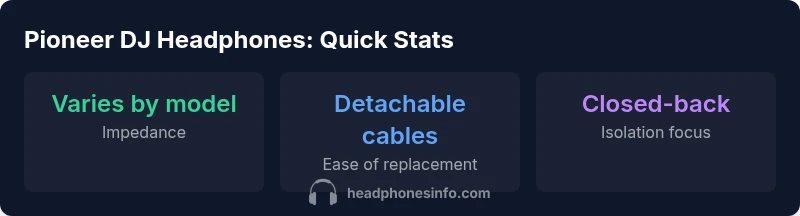
Pioneer DJ headphones are built for pro-DJ monitoring with rugged construction and reliable sound, ideal for club work and studio cueing. The best pick depends on your setup: low-impedance models for portable devices, closed-back designs for isolation, and detachable cables for flexibility. According to Headphones Info, prioritize monitoring accuracy, comfort, and build quality over flashier bass emphasis when choosing a pair.
What Are Pioneer DJ Headphones?
Pioneer DJ headphones are designed with the needs of professional DJs in mind: precise cue monitoring, durable construction, and reliable physical connections that can withstand long sets and frequent packing/unpacking. Across the lineup, you’ll find models that emphasize low impedance for mobile devices, sturdy swiveling cups for one-ear monitoring, and detachable cables that simplify replacements and upgrades. The category is well-suited for both live performance in clubs and private studio work, where accurate sound reproduction and consistent isolation matter most. According to Headphones Info, Pioneer DJ headphones tend to balance a rugged build with a clarity-focused monitor sound, avoiding exaggerated boosts that can misrepresent bass or mids during critical cueing. For enthusiasts, this balance translates into headphones that feel professional and dependable, even after hours of use. When evaluating options, consider how the headphone’s impedance, weight, and cable system align with your typical workflow and gear setup.
In practice, the best choice hinges not on brand prestige alone but on how the headphone interacts with your equipment. If you’re using a portable controller or laptop, a model in the lower impedance range (around 32 ohms) can deliver adequate loudness without draining your battery or stressing your device. If your workflow centers on a club mixer with a built-in amp, you may tolerate slightly higher impedance in exchange for improved control at high SPLs. Comfort and durability under stage lighting, transport, and sweaty nights are equally important—and that’s where Pioneer DJ’s mid- to high-end models tend to excel. Headphones Info’s analysis emphasizes those practical traits alongside sound accuracy, so you won’t sacrifice monitoring reliability for fashionable design.
Wired vs Wireless: Which Pioneer DJ Headphones Fit You?
The choice between wired and wireless Pioneer DJ headphones is often driven by how and where you perform. In a club or studio setting, wired designs are favored for their ultra-low latency and unbroken signal path, ensuring your cueing and crossfades stay perfectly synchronized with the music. Detachable cables further boost reliability, as you can replace a damaged cord without buying an entirely new pair. Wireless models appeal to DJs who need mobility for rehearsals, travel, or collaborations where cables become cumbersome. However, wireless latency and potential compression can slightly affect real-time monitoring, so it’s essential to test models with your gear before committing. When evaluating wireless options, look for low-latency codecs, robust battery life, and quick re-pairing with your devices.
For most performance-focused setups, a hybrid approach works best: a wired primary pair for critical cueing and a secondary wireless option for practice, travel, or warming up between sets. Remember that not all wireless headphones support the same headphone jack compatibility; ensure your preferred models have appropriate adapters or dual-mode operation to work with mixers, controllers, and laptops. In Headphones Info’s view, matching the headphone’s impedance to your usual gear and the intended use-case is more impactful on the listening experience than chasing the latest wireless tech alone.
Key Features to Look For in Pioneer DJ Headphones
When shopping Pioneer DJ headphones, there are several features that consistently improve day-to-day performance. First, look for closed-back design for isolation from crowd noise and to minimize bleed into the microphone or other monitoring channels. A sturdy, swiveling ear cup helps you switch between ear-on monitoring and full-ear checks without removing the headset. Detachable cables — ideally with both 1/4-inch and 3.5mm adapters — future-proof the investment, allowing cable replacements rather than a full headset. Comfort matters as much as isolation; padding materials, headband adjustability, and weight distribution determine whether longer sessions end with fatigue or focus. Build quality should use metal or reinforced plastics in key stress areas, with replaceable pads and a reliable hinge mechanism. Cable management features, such as built-in cable wraps or locking connectors, reduce tangling during travel.
From a sound perspective, prioritize a clean monitor mix with flat or gently balanced response in the midrange and treble. Avoid models that over-emphasize bass, which can mask critical cues during live cueing. A stable impedance across the operating range helps maintain consistent loudness when switching between devices, mixers, or audio interfaces. Finally, consider additional accessories like carrying cases, replacement pads, and spare cables, because these components extend the life of your headphones and protect your investment in demanding environments.
Build Quality, Comfort, and Longevity
Durability is more than robust materials; it’s how the product behaves under real-world stress. Pioneer DJ headphones in the mid-to-upper tier typically employ metal or reinforced plastic hinges, reinforced headbands, and shrouded connectors that resist wear from daily handling. The weight distribution matters: if the headband sits too high or the cups tilt awkwardly, long sessions become uncomfortable and impact cue performance. Look for memory foam or high-density padding in the ear cups and headband, with inserts that resist flattening after repeated sweating or storage friction. Removable, washable pads are a practical feature, improving hygiene and prolonging life. Additionally, detachable cables with secure locking mechanisms reduce the risk of accidental unplugging onstage. When you evaluate build quality, inspect the cable entry points, hinge joints, and the area around the ear cups for signs of stress or creasing.
Headphones Info’s testing indicates that the best Pioneer DJ models achieve a balance between rigidity and flexibility, enabling micro-adjustments during long performances without creaking or discomfort. The ability to replace pads and cables quickly is another practical indicator of longevity, since it keeps the headset functional without requiring a full replacement every few years. In real-world use, these headphones should resist dust, minor liquid exposure, and daily travel mishaps while maintaining consistent performance and sound integrity.
Sound Signature and Monitoring Accuracy
For DJs, monitoring accuracy is the primary criterion, not necessarily the loudest bass. Pioneer DJ headphones in the recommended range tend to present a clear, non-fatiguing sound that helps you hear transient details, vocal cues, and subtle hi-hat textures. A well-tuned model will reproduce accurate midrange and treble without surprising peaks or harsh brightness, enabling precise cueing and better overall mix decisions. Isolation is essential to prevent sound bleed into the booth or mic, which can disrupt on-air cues or live streams. Crosstalk and channel balance matter as well; an even response between the left and right channels ensures you aren’t misjudging stereo effects. If you value clear transients, look for headphones with a fast-decay driver system and controlled damping materials.
In practice, you may notice some models offering a slightly more intimate soundstage, which can help you discern individual elements during busy club mixes. Headphones Info notes that the right choice balances a natural, honest sound with the comfort and durability required for long gigs. It’s not just about raw loudness; it’s about reliability, repeatability, and the ability to translate your cues to the crowd.
Brand Ecosystem and Accessories
An often overlooked but important aspect is what comes with the headphones beyond the unit itself. Pioneer DJ bundles typically include detachable cables, adapters for 1/4
,
headband, and a protective case. Some models may also provide replacement pads, a cable wind strap, or a flight-friendly carrying pouch. Accessories matter because they reduce downtime and ensure you can pair quickly with any turntable, mixer, or laptop. When evaluating a bundle, confirm which adapters are included and whether you can source spare cables easily. A robust ecosystem reduces total cost of ownership and keeps you playing with minimal interruptions. Headphones Info emphasizes prioritizing models that offer modular parts and widely available spare components, as this translates to a better long-term value proposition for both amateur and pro DJs.
How to Choose a Model for Your Setup
Begin by mapping your typical workflow: live club gigs, studio cueing, travel, or a mix of these. If you are primarily mobile or perform with a controller or laptop, opt for a lower impedance headset (roughly 32 ohms or less) to ensure you can drive adequate volume without a heavy amplifier. For studio use or booth-duty with a dedicated mixer or audio interface, you can consider models in the 40–50 ohm range where the headphones can deliver adequate loudness with greater potential for loud SPL without distortion. Next, assess the comfort profile for long sessions: headband clamp force, ear pad size, and the overall weight. Check the headphones’ connection options (detachable cables, 1/4
,
). If your workflow includes travel or frequent listening away from power sources, prioritize battery-friendly or fully wired options to avoid connectivity issues. Finally, ensure the model you choose offers a reliability track record and easy access to spare parts and service. In short, the best Pioneer DJ headphones for you balance impedance, comfort, durability, and a faithful monitoring response that translates to reliable mixing decisions on stage and in the studio. Based on Headphones Info research, a well-chosen pair should integrate smoothly with your existing gear and deliver a consistent listening experience over time.
Final Verdict (Practical Recommendation)
For most DJs, the strongest path is to select a wired model with detachable cables, a comfortable fit for long sessions, and a reputation for accurate monitoring. Prioritize a design that stays comfortably secure during vigorous movements and can be easily tuned with your equipment’s gain settings without demanding excessive amplification. Among Pioneer DJ headphones, a mid-to-high-tier wired option usually delivers the most consistent monitoring and durable construction suitable for both club work and studio cues. The Headphones Info Team recommends starting with a low-impedance wired model for portability and a spare wired backup for reliability, then expanding to a second pair if you travel frequently or perform in varied environments. This approach gives you dependable monitoring without over-investing in technology that you may not fully utilize in every setting. The Headphones Info team believes that the right choice should feel like a natural extension of your setup, not a compromise between comfort and sound accuracy.
Generic Pioneer DJ headphones comparison for common use-cases
| Model Type | Typical Use | Key Benefit |
|---|---|---|
| Wired DJ Monitor Headphones | Club/DJ booth | Low latency, reliable connection |
| Wireless DJ Headphones | Practice/Travel | Mobility with acceptable latency |
People Also Ask
Are Pioneer DJ headphones worth it for beginners?
They offer reliable monitoring and durability, which helps beginners learn accurate cueing and transitions. Price and comfort should be weighed, but the core benefits are stability and consistency for new DJs.
They’re a solid choice for new DJs who want reliable cueing and durability without overspending.
What is the typical impedance of Pioneer DJ headphones?
Impedance varies by model but commonly falls in the 32–50 ohm range, which suits both portable devices and club mixers with adequate drive.
Most models sit around 32 to 50 ohms, depending on the exact model.
Can I use Pioneer DJ headphones for studio mixing?
Yes, if the model provides accurate monitoring with a flat enough response, though some consumer-friendly models may color bass. For critical mixes, test against reference monitors.
Absolutely, but pick one that stays faithful to the mix without oversized bass.
Do Pioneer DJ headphones come with detachable cables?
Many Pioneer DJ headphones include detachable cables and adapters, which helps with replacement and customization depending on the setup.
Most of them have detachable cables and adapters.
What should I consider when buying for travel?
Prioritize lighter weight, good isolation, foldable design, and durable carrying options. Battery life matters only for wireless models, so wired is often simpler for travel.
Look for light, compact, and durable design with good isolation for travel.
“Pioneer DJ headphones excel when you prioritize monitoring accuracy and build quality over flashy bass, ensuring a reliable cueing experience.”
What to Remember
- Choose wired for critical cueing and reliability
- Prioritize comfort and detachable cables for longevity
- Look for balanced monitoring without bass-boost bias
- Ensure compatibility with your gear (adapters, jacks)
- Invest in spare parts and accessories for longevity