Top Gaming Headphones with Mic in 2026: A Data-Driven Comparison
A data-driven comparison of gaming headphones with mic, covering mic quality, latency, comfort, and value across wired, wireless, and Bluetooth models for PC, consoles, and streaming.


For most players, wired gaming headphones with a mic deliver the best latency and mic consistency for competitive play, while wireless models excel in comfort and freedom of movement for casual sessions. The fastest path to a strong choice is to prioritize mic clarity and low latency first, then evaluate comfort and platform compatibility. This head-to-head guide helps you pick the right balance for your head, your game, and your setup.
What matters when choosing headphones with mic game
Choosing headphones with mic game involves balancing mic quality, latency, sound, comfort, and platform compatibility. The Headphones Info team emphasizes that for most gamers the mic is the first differentiator; if a headset sounds slightly better but the mic is poor, your team experience suffers. According to Headphones Info, mic clarity, pickup pattern, and background noise rejection determine how well your teammates perceive your calls during frantic moments. In 2026, players increasingly expect headsets to perform reliably across PC, consoles, and cloud gaming services, with minimal echo and consistent volume. This guide uses a data-driven approach to highlight where to invest first: mic quality and latency are usually the highest leverage factors, followed by comfort for marathon sessions and proper fit for long tournaments.
Wired vs Wireless: Latency, Mic Clarity, and Stability
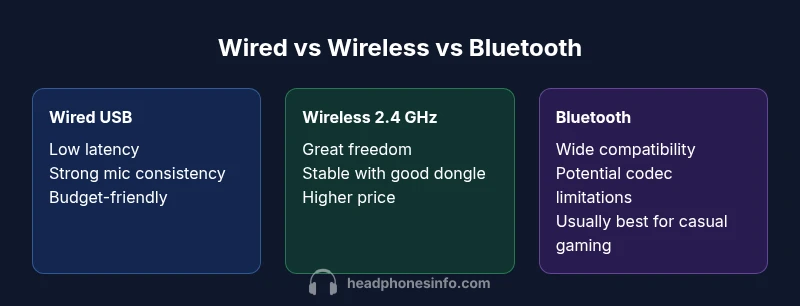
The choice between wired USB/3.5mm headsets and wireless models is one of the biggest decision points for headsets with mic game. Wired connections typically deliver the lowest latency, highest stability, and consistent mic performance, which matters in fast-paced titles like FPS and battle royales. Wireless options eliminate cables and improve comfort, but can introduce latency variation and occasional interference. When evaluating wireless headsets, look for low-latency modes, reliable dongles, and stable 2.4 GHz or encoded codecs; ensure you pair them with a compatible platform. Headphones Info analysis shows that the practical difference is most noticeable in competitive play, where a small latency delta can translate into a missed shot or a delayed call.
How Mic Quality Impacts Gameplay Across Genres
The mic quality on a gaming headset influences how teammates hear you, callouts, and in-game coordination. In team shooters, clear, consistent voice chat reduces miscommunication during high-pressure moments; in narrative-driven games, it helps with streaming and collaboration. A good mic should offer a cardioid pickup pattern, adjustable gain, and noise suppression, along with a reasonable wind- and breath-noise rejection. The Headphones Info Team notes that many users tolerate marginally colored sound if the mic remains clear at typical speaking distances.
Comfort, Fit, and Durability for Long Sessions
Long gaming sessions demand comfortable cushions, adjustable headbands, and lightweight design; otherwise you will fatigue quickly and compromise mic placement. Look for memory-foam earpads, breathable materials, and clamping force that is firm but not painful. Durability matters for tournaments and LAN events; reinforced cables, detachable mic, and rugged housings are signs of a headset built to last.
Soundstage, Imaging, and Spatial Cues for Immersive Gaming
While many headsets advertise virtual surround sound, the real value is in accurate stage imaging and directional cues that help you spot enemies and audio cues in the game. Pick a headset with a well-balanced sound signature that doesn't overwhelm dialogue or footsteps. For MOBA and RPG players, good spatial cues can help locate foes and allies in complex environments.
Connectivity and Platform Compatibility
Ensure your headset works with your primary gaming platform, whether PC, PlayStation, Xbox, or Nintendo Switch. USB-C, USB-A, and 3.5 mm jacks cover most setups; some models include adapters or software to tune mic and audio. If you stream or record, look for a headset with clean mic output and minimal latency across platforms. The compatibility matrix should include your preferred voice chat apps and in-game chat systems.
How We Compare: Methodology and Criteria
This comparison uses a consistent rubric across wired, wireless 2.4 GHz, and Bluetooth models. Key criteria include mic clarity, latency, sound fidelity, comfort, battery life, and price/value. We synthesize subjective impressions with user reviews, manufacturer claims, and independent lab notes from 2026 Headphones Info Analysis to provide a balanced, data-driven view of which headset fits which gaming context.
Practical Buying Scenarios and Recommendations
- Competitive FPS or esports: prioritize wired or low-latency wireless with strong mic and stable connection.
- Console gaming on the couch: consider a wireless headset with long battery life and comfortable fit.
- Streaming and content creation: ensure a high-quality mic and plug-in versatility for PC/console.
- Budget-conscious buyers: look for a solid wired option with good mic performance and durable build.
Testing and Setup: Getting the Most from Your Headphones with Mic Game
Test mic quality with teammates or a voice chat test; adjust mic gain and monitoring; calibrate to your voice and room; place mic at proper distance; update firmware; ensure software is configured; use test tracks and in-game cues to evaluate latency and audio balance. A quick mic-test routine can reveal compression, background noise, and pickup issues before a tournament.
Feature Comparison
| Feature | Wired USB Headset | Wireless 2.4 GHz Headset | Bluetooth Gaming Headset |
|---|---|---|---|
| Latency | Low latency, ideal for competitive play | Moderate latency, stable with good dongle | Higher latency due to Bluetooth codec limits |
| Audio Quality | Crystalline highs and strong midrange for positional cues | Balanced sound with reliable imaging | Good overall sound but potential codec-induced compression |
| Mic Quality | Clear and consistent pickup with adjustable gain | Solid mic with baseline noise suppression | Clear mic, but occasional codec and distance effects |
| Battery Life | No | Typical endurance varies by model | Battery-dependent with varying endurance |
| Comfort & Build | Lightweight with plush cushions and solid clamps | Decent comfort with flexible headband | Generally light but some designs feel bulky |
| Price Range | $40-$120 | $120-$250 | $60-$180 |
| Best For | Competitive FPS & esports | Casual gaming & couch co-op | Mobile gaming and commuting |
Upsides
- Clear mic transmission improves team coordination
- Wired connections offer the lowest latency for FPS
- Wireless options provide freedom of movement
- Broad price ranges cover multiple budgets
Disadvantages
- Wireless headsets can suffer from latency spikes and battery anxiety
- Mic quality can degrade with distance or motion
- High-end gaming headsets can be bulky or heavy
Wired headsets win for latency and mic consistency; wireless headsets win for comfort and range
If you prioritize speed and precise communication for competitive gaming, wired is usually best. If you value mobility and relaxed play, a well-chosen wireless model offers strong performance with good mic quality.
People Also Ask
What matters most for mic quality in gaming headsets?
Mic quality matters most for in-game communication. Look for a headset with a clear, consistent pickup pattern, adjustable gain, and good noise rejection. Check user reviews for real-world clarity and wind or breath noise handling.
Mic quality is the top concern for clear team chat. Look for a headset with a good pickup pattern and noise rejection.
Are wired headsets better for competitive gaming than wireless?
In most cases, wired headsets offer lower and more predictable latency, which helps in competitive play. Wireless models can be excellent if they have a proven, low-latency dongle and stable connections, but consistency is key.
Wired tends to be faster and more reliable for competitive gaming, though good wireless options exist.
How can I test mic quality quickly?
Do a quick test with teammates or a voice chat app. Listen for clarity, background noise, and consistency at typical speaking distances. Adjust mic gain and placement until speech sounds natural and steady.
Test with real teammates; adjust mic gain until you sound clear and consistent.
Do gaming headsets work with consoles like PS5 and Xbox?
Most gaming headsets work with consoles via USB for chat and 3.5 mm for audio; some use wireless USB dongles. Always verify platform compatibility and any required adapters or software.
Yes, most headsets work with PS5 and Xbox with USB or 3.5 mm connections.
Is surround sound essential for gaming?
Surround sound can enhance spatial cues, but it’s not essential. Focus on a balanced signature that preserves dialogue and footsteps, and use true positional cues in titles that support it.
Surround sound helps, but a balanced sound with good spatial cues is more important.
What should I do if mic noise is detected?
Investigate wind or breath noise, proximity to the mic, and mic gain. Use the headset’s software to enable noise suppression and ensure the mic is positioned correctly.
If you hear mic noise, adjust mic position and enable suppression in software.
What to Remember
- Prioritize mic quality and low latency for competitive play
- Consider comfort for marathon gaming sessions
- Wired options excel in latency; wireless options in freedom
- Check platform compatibility before buying
- Test mic in real-game scenarios to verify clarity