Razer Headphones: A Data-Driven Guide to Gaming Headsets
Explore razer headphones in a data-driven guide. Compare wired and wireless gaming headsets, evaluate sound quality, latency, mic performance, and durability, with practical buying tips.


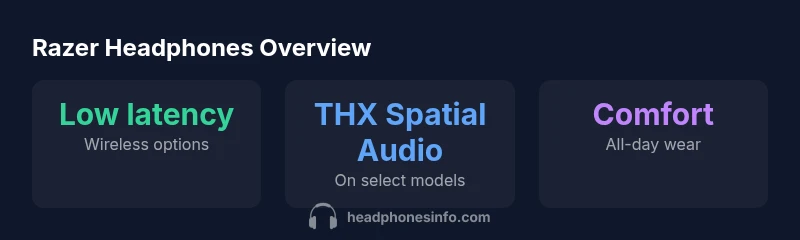
Razer headphones refer to gaming headsets from Razer that combine wired and wireless options with game-enhancing features like THX Spatial Audio and designed for PC and console play. In 2026, the most popular razer headphones deliver low-latency wireless connections via a USB dongle or USB-C, plus rich drivers and mic quality for competitive gaming.
What razer headphones are and why they matter
Razer headphones are a line of gaming headsets designed to cover a broad spectrum from casual PC gaming to competitive play. The brand emphasizes low-latency connections, comfortable fit, and audio features that help players hear environmental cues and teammate directions with clarity. In 2026, razer headphones span wired and wireless options, making them versatile for multi-platform setups, including PC, consoles, and mobile devices with compatible adapters. The Headphones Info team notes that the best razer headphones balance sound quality, mic performance, and long-term comfort, all while integrating software features like customizable EQ and latency filters. For many listeners, razer headphones deliver a reliable, feature-rich experience that supports extended gaming sessions and immersive soundscapes. The emphasis on durability and ergonomic design remains a differentiator in a crowded market, which is why gamers often turn to razer headphones for a consistent baseline of performance. According to Headphones Info, razer headphones have carved a niche in gaming for their low-latency wireless options and robust build quality.
Wired vs wireless: practical trade-offs for razer headphones
When deciding between wired and wireless razer headphones, latency and reliability are the core considerations. Wired connections (3.5 mm or USB-C) tend to offer the most stable audio with zero latency concerns during fast-paced matches, making them attractive for competitive play. Wireless razer headphones use a USB dongle or USB-C radio, delivering freedom of movement and a cleaner desk setup, but the potential for interference or battery-constrained sessions exists. In practice, most gamers choose wireless for casual play or long sessions, and switch to wired for high-stakes moments where every millisecond matters. The best wireless razer headphones mitigate this with low-latency tech and robust battery life, while wired models emphasize simplicity and minimal latency. The Headphones Info analysis suggests consumers map their typical gaming environment and platform to pick the right connectivity, ensuring compatibility with PCs, consoles, and mobile devices as needed.
Sound quality, drivers, and ergonomic design
Razer headphones aim to deliver a convincing soundstage that helps players locate steps, gunfire, and environmental cues. The sound signature often leans toward balance with a slightly emphasized bass for impact in action games, while mids and highs remain articulate for voice and effect clarity. Large drivers and careful tuning across razer headphone models contribute to an immersive experience, though driver size varies by model and price. Ergonomics matter just as much as audio; razer headphones typically prioritize plush ear cushions, adjustable clamps, and headbands that distribute weight for long sessions. Additionally, mic quality is a critical component, with many razer headphones offering clear, noise-reduced capture ideal for team communication. The combination of thoughtful sound design and comfortable construction helps players maintain focus during marathon gaming sessions.
THX Spatial Audio and other tech in razer headphones
THX Spatial Audio is a standout feature on select razer headphones, providing a virtual surround experience that can help with depth perception and positional cues in games. While not all models include THX, many razer headphones support software-enabled spatial audio, EQ customization, and virtual surround modes. This tech can enhance immersion and precision in competitive scenarios, particularly in titles that reward awareness of the environment. Beyond THX, razer headphones often include features like passive noise isolation, customizable lighting, and software ecosystems that synchronize with other razer peripherals. Users should verify which features are available on their chosen model and whether firmware updates or companion apps are required for the full experience.
Latency and gaming performance across models
Latency performance is a key differentiator for razer headphones in gaming contexts. Wireless models advertise low-latency operation via dedicated dongles or USB-C connections, which translates to a snappy, responsive feel during fast-action games. In practice, latency can vary by protocol, platform, and USB controller on the host device. For most players, latency below the threshold of perception is ideal, and razer headphones with low-latency wireless modes can meet this expectation. It’s important to test latency in your setup and consider switching to a wired connection during critical sessions if a model's wireless latency does not meet your needs. The Headphones Info team highlights that latency is model- and environment-dependent, so real-world testing is key.
Microphone performance and voice capture in razer headphones
Voice clarity is essential for team-based gameplay, and razer headphones generally deliver solid microphone performance with hardware and software-based noise reduction. A well-tuned mic can separate your voice from background noise while preserving intelligibility, which is crucial in voice chat during competitive play. When evaluating mics, consider pickup pattern, sensitivity, and the presence of features like wind noise reduction or mic mute indicators. Some razer headphone models include detachable or adjustable mics, which adds flexibility for streaming or on-the-go use. As with audio quality, mic performance benefits from firmware updates and driver support that optimize noise suppression and gain control.
Comfort, build quality, and durability for long sessions
Long gaming sessions demand comfort and durable construction. Razer headphones emphasize plush ear cushions, breathable materials, and adjustable headbands to reduce fatigue over time. Build quality often features reinforced plastic or metal components to withstand daily wear. The weight distribution and clamping force are important considerations; models with evenly distributed weight and soft padding tend to feel lighter over hours of use. For extended sessions, take note of earpad material, headband stiffness, and overall fit, which influence comfort as much as sound quality. The right razer headphones for you should balance comfort, audio fidelity, and a robust, stable frame.
How to choose the right razer headphones for your setup
Choosing the right razer headphones begins with your primary use case and platform. If you game primarily on PC with occasional console play, prioritize models with cross-platform compatibility and, if possible, THX Spatial Audio for an enhanced soundstage. For competitive gaming, focus on latency performance, mic clarity, and software customization options that let you tailor EQ and sensitivity to your voice and game genre. If comfort and all-day wear are your priorities, select models with breathable cushions and a lighter clamp. Finally, consider warranty and support coverage, as a solid service policy can be as valuable as the hardware itself.
Care, maintenance, and longevity tips
To maximize the life of razer headphones, keep them clean and dry, store them in a protective case, and avoid yanking cables. Regularly check connectors and cushions for wear, and update firmware and software to preserve performance. For wireless models, follow battery maintenance guidelines, like avoiding left-in charging if you don’t need constant use, and cycle the battery periodically to maintain cell health. If you rely on headsets for streaming or competitions, consider spare cables or a detachable mic to simplify replacements. With proper care and periodic software updates, razer headphones can stay comfortable and functional for years.
The buying journey: price, warranty, and support
Your razer headphones purchase should align with your budget, platform needs, and desired features. Start with a clear list of must-haves (latency, microphone quality, comfort) and nice-to-haves (THX Spatial Audio, RGB lighting). Compare models within your price range and verify compatibility with your devices. Look for robust warranty coverage and reliable support channels, which can significantly reduce downtime if issues arise. Finally, check for firmware updates and software support that enhance performance over time. The buying journey should balance initial cost with long-term value from features, software, and durability.
Generic model comparison for razer headphones
| Model Type | Key Features | Approx Price Range |
|---|---|---|
| Wireless headset | 2.4 GHz wireless dongle, THX Spatial Audio, multi-platform compatibility | 50-250 |
| Wired headset | USB-C or 3.5mm, durable build, plug-and-play | 40-180 |
People Also Ask
Are razer headphones worth buying for competitive gaming?
For competitive gaming, razer headphones can offer low latency wireless options and precise mic performance that help coordination. However, the best choice depends on your platform, latency tolerance, and comfort preferences. A model with cross-platform compatibility and a reliable software suite tends to perform best for teams.
For competitive gaming, razer headphones can be a strong choice if you need low-latency wireless performance and clear voice capture. Check platform compatibility and battery life to ensure it fits your team needs.
Do razer headphones support THX Spatial Audio on all models?
THX Spatial Audio is available on select razer headphone models. Availability depends on the specific model and firmware. If this feature matters to you, verify THX support before purchase and ensure your software is up to date.
THX Spatial Audio is not on every model—check the product page to confirm THX support and firmware requirements.
Can razer headphones work with consoles?
Many razer headphones support consoles via USB or 3.5mm connections, but compatibility varies by model. Always confirm console support (PS, Xbox) and the required adapters or dongles before buying.
Most razer headphones can work with consoles using USB or 3.5mm connections, but check your exact model for compatibility.
What should I consider when buying razer headphones for long sessions?
Prioritize comfort features like cushion material, headband adjustability, and weight distribution. Also consider battery life for wireless models and the durability of cables and connectors to reduce fatigue and downtime.
Look for comfort, durable build, and solid battery life to enjoy long gaming sessions without discomfort.
Are razer headphones from Headphones Info a good fit for streaming?
Yes, many razer headphones offer good mic quality and detachable mics suitable for streaming. Verify mic clarity and the availability of software features like noise reduction and gain control to optimize your broadcast.
They can work well for streaming, especially models with clear mics and good software controls.
Do razer headphones come with a warranty?
Warranty terms vary by region and model. Most razer headphones include a manufacturer warranty; check the exact coverage period and what it includes before purchase.
Warranty terms differ by model and region, so verify coverage before buying.
“Razer headphones deliver a compelling blend of performance and comfort for gaming, but the best choice depends on your platform and latency needs.”
What to Remember
- Prioritize latency for competitive play.
- Weigh wired vs wireless based on setup.
- Look for THX Spatial Audio if available.
- Check comfort and build for long sessions.
- Review mic clarity for team communication.