What Size Headphone Jack on Delta Flight: Quick Guide
Find the exact headphone jack size on Delta flights, whether adapters are needed, and practical tips for using your own headphones during in-flight entertainment. Updated for 2026.


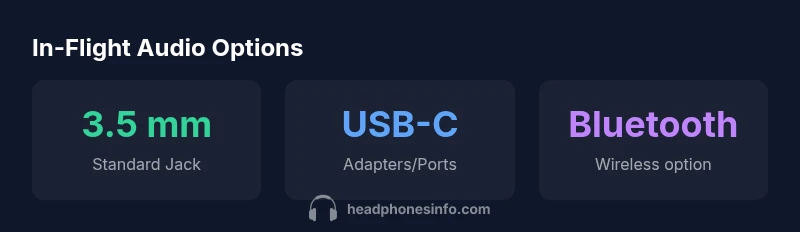
On most Delta flights, the standard headphone jack is 3.5 mm. Some newer aircraft may offer USB-C or Bluetooth options via adapters, so check your seatback information or Delta's in-flight guide for the specific aircraft you will be on. This quick answer is provided to help you plan ahead.
What size headphone jack on delta flight
On most Delta flights, the standard headphone jack is 3.5 mm. Some newer aircraft may offer USB-C or Bluetooth options via adapters, so check your seatback information or Delta's in-flight guide for the specific aircraft you will be on. This article, from Headphones Info Team, provides a practical, data-driven look at what to expect and how to prepare your headphones for travel. According to Headphones Info Team, the majority of mid- and long-haul Delta aircraft still rely on the 3.5 mm jack for personal audio, ensuring broad compatibility with traditional wired headphones. If your headphones use a different connector, you’ll benefit from planning ahead and carrying a compact adapter kit. In cases where the jack is not compatible with your device, note that the cabin crew can offer alternatives such as distribution of airline-provided gear or guidance on available wiring paths.
How Delta's seatback audio interface works
Delta's in-flight entertainment (IFE) systems typically route audio through an accessible seatback jack. The physical interface is designed to be universal for wired headphones with a 3.5 mm plug. In most configurations, plugging in your headphones simply activates the audio channel associated with your seat's IFE; volume is controlled from the seat or the remote control. Some newer aircraft may expose additional ports or digital audio options, but these are not guaranteed on every flight. The important takeaway is that the most common standard remains the 3.5 mm jack, and most passenger headphones with a conventional plug will work with minimal setup.
USB-C and Bluetooth options on Delta flights
In the evolving in-flight tech landscape, Delta is gradually introducing USB-C and Bluetooth capability on select aircraft. USB-C dongles or adapters can convert a non-compatible port into a usable headphone connection, while Bluetooth-based listening depends on the airplane's digital audio system and policy. Not all flights support Bluetooth headsets, and even when supported, pairing may be limited to certain seat rows or times. If you travel with USB-C or wireless headphones, verify compatibility for your specific aircraft before boarding and carry a compact adapter kit just in case.
Using your own headphones on Delta flights: tips
Plan ahead: check your flight's aircraft type and the IFE setup, then decide whether to bring wired, USB-C, or Bluetooth options. To minimize glitches, test your setup before boarding in a quiet room. Remember that noise-cancelling headphones can provide a better experience in cabin noise; but ensure their plug matches the port or you have an adapter. Pack a small multi-port adapter if you have multiple devices.
Adapters and cables you should carry
A compact travel adapter kit can save you from a missed listening experience. Recommended items include a 3.5 mm to USB-C adapter, a USB-C to USB-A adapter, and a short USB-C to USB-C cable if you're using USB-C-only devices. If you're using Bluetooth headphones, keep a wired backup in case Bluetooth pairing fails or the IFE doesn't support wireless connections. Always store adapters in an easily accessible part of your carry-on.
How to identify your aircraft's IFE setup before boarding
Use the Delta app and seat map to confirm the aircraft type and the IFE system. Check the flight's information page for notes about the headphone jack or supported accessories. If you have a long-haul itinerary, consider looking up the aircraft type on SeatGuru or the airline's site to anticipate the hardware. By knowing ahead of time, you can decide what gear to bring.
Common myths and how to verify
Myth: All Delta planes use a single jack size. Fact: While 3.5 mm is standard, some newer aircraft may use USB-C adapters. Myth: Bluetooth always works in-flight. Fact: Bluetooth may be limited or unsupported on some routes. Verify by testing on board or in the airline app.
Practical pre-flight checklist for audio gear
- Confirm aircraft type and IFE setup
- Pack a 3.5 mm to USB-C adapter and a USB-C to USB-A adapter
- Bring a spare 3.5 mm audio cable
- Pack a compact wireless backup if your headphones are Bluetooth
- Label cables and keep them in an easily accessible pocket
What to do if the jack size is incompatible
If your headphones don't fit Delta's jack, ask cabin crew for assistance and try an adapter. In some cases, Delta-provided earbuds and ports may be offered. If all else fails, you can use your own portable audio device with the recommended adapters or borrow from the airline if available. The Headphones Info Team recommends preparing a small adapter kit and double-checking your flight's IFE setup in advance.
Comparison of common headphone jack setups on Delta flights
| Aircraft Type | Jack Type | Notes |
|---|---|---|
| Most Delta flights | 3.5 mm | Standard seatback audio |
| Newer aircraft | USB-C / Bluetooth adapters | Variability by model |
| Travel with adapters | 3.5 mm adaptable | Carry minimal gear |
People Also Ask
What size is the standard Delta in-flight headphone jack?
Most Delta flights use a 3.5 mm jack. However, some newer aircraft may use USB-C or Bluetooth adapters, so always verify.
Most Delta flights use a 3.5 mm jack, but newer planes may use USB-C or Bluetooth. Verify on your specific flight.
Do Delta flights provide USB-C or Bluetooth headphones?
Some newer Delta aircraft may support USB-C or Bluetooth via adapters, but availability varies by aircraft and route.
Some aircraft support USB-C or Bluetooth via adapters, but it varies by plane.
Should I bring adapters or dongles?
Yes, bringing a compact 3.5 mm to USB-C or USB-C to USB-A adapter ensures compatibility on most planes.
Yes—bring adapters to be safe.
Can I use wireless headphones on Delta flights?
If the aircraft supports Bluetooth or a wireless audio interface, you can use wireless headphones; otherwise, use wired with adapters.
Wireless may work on some planes; otherwise use wired.
What should I do if the jack size is incompatible?
Ask crew for assistance, use adapters, or consider airline-provided gear if available.
Talk to crew for options; adapters or airline gear may help.
Where can I find the exact jack information for my Delta flight?
Check the seatback port label, Delta's in-flight guide, or the flight details in your Delta app.
Look at the seatback label or the Delta app for your aircraft setup.
“Understanding the in-flight audio interface is essential to ensure you can listen without disruption on Delta flights. Plan ahead with adapters and test your setup.”
What to Remember
- Know the jack size before you fly
- Check your aircraft's IFE setup in advance
- Carry a compact adapter kit
- Bluetooth compatibility varies by aircraft
- Prefer 3.5 mm wired headphones for reliability